News

More Power to the IS load

BEKA associates have introduced two new Power Isolators which although primarily intended for powering their Pageant Operator Panels, may be used with any certified apparatus having compatible input safety parameters.


Performing the same function as a conventional galvanic isolator, the new power isolators employ an alternative configuration which delivers more power into a hazardous area. The BA212 is a single channel device, delivering 4W of usable power into a IIA or IIB flammable gas, or a combustible dust atmosphere, within Zone 0, 1, 2, 20, 21 or 22.


The BA243 has four separate galvanically isolated outputs, each can deliver 1W of usable power into a IIC flammable gas. These four outputs may be remotely combined by a certified network to provide 3.6W of usable power into a IIC hydrogen atmosphere located in Zone 0, 1 or 2.


Both models have IECEx, ATEX and UKEX [Ex ia Ga] IIC intrinsic safety associated apparatus certification, plus Ex ec increased safety component certification allowing installation in Zone 2. The isolators are DIN rail mounting, have input and output LED indicators with tagging facilities.


BEKA Application Guide AG210, which can be downloaded from the BEKA website www.beka.co.uk describes the function of these isolators and how they can safely power Pageant Operator Panels.

For further information please visit https://www.beka.co.uk/power-isolators or phone the BEKA sales office on +44 (0) 1462 438301.

More than just a standard Highly specific safety concepts for hydrogen infrastructures

In the context of the desired decarbonisation, hydrogen is becoming increasingly important as an energy carrier (thermal utilisation) and as a starting material for chemical production lines (molecular utilisation). Plant operators and manufacturers of specific subcomponents often plan to use methane-hydrogen mixtures initially, and then to continuously increase their hydrogen content. The long-term goal is to completely substitute methane with hydrogen. However, it is often disregarded that the safety concepts and technologies suitable for the original methane operation are only functional to a limited extent or not at all for protecting plants, single components and infrastructure during operation with high hydrogen concentrations.

Particularly in the area of explosion protection, as well as pressure venting at medium to very high overpressures, the existing concepts must be carefully reviewed using the available models, and possibly re-evaluated. A comparison of the explosion characteristics of stoichiometric methane-air and hydrogen-air mixtures quickly makes this necessity clear.

E500B15B 9EEA 4315 8EFA 6EC97FE6CDDC


Fig1:Comparison of explosion characteristics under atmospheric conditions (20°C; 1.01 bar) 

Sources: BAM final report on research project 2539 and own investigations.

If the maximum explosion pressure at atmospheric conditions is about 8 bar in each case, significant increases can be observed both in the KG value (rate of pressure rise) and in the laminar flame propagation speed. This may mean that safety devices tested with methane explosions show too high inertia for the rapid pressure increase. Valve-type protective systems can be severely damaged when they respond that they do not return cleanly to their original state and their functionality is impaired or they are operated unsafely. Special care must be taken when designing and assessing the geometric dimensions and sizing. For example, certain length-to-diameter ratios of vessels and pipes, especially for hydrogen as a Class IIC gas, favour the tendency towards detonative transition. If explosions propagate from one vessel to another via a pipe, there is also the risk that the ignitable mixture is pre-compressed in the second vessel, which results in significantly higher explosion pressures compared to explosions under atmospheric conditions. A hydrogen-air mixture is also more susceptible to ignition than a methane-air mixture due to the lower ignition energies and ignition temperature. In addition to the expected more severe course of events, the probability of occurrence is also higher.

Hydrogen explosions under prepressure

In addition to the aforementioned secondaryprepressurisation in the event of an incident, there are applications in which ignitable mixtures are deliberately precompressed and can ignite uncontrollably under certain circumstances. For several reasons, these scenarios pose a special challenge with regard to the design of the corresponding equipment and to the constructive protection concepts.

Firstly, the existing normative regulations do not provide any models for the design of safety relief devices for gas explosions under prepressure. Due to the prepressure at high dynamics, the problem at hand is neither covered by DIN EN 14994 (Gas explosion venting protective systems) nor by DIN EN ISO 4126 (Safety devices for protection against excessive pressure). Thus, there are no assured design standards, which means that the problem is in the "grey area of safety technology". Secondly, the explosion dynamics are significantly influenced by barely assessable turbulence-generating effects, which primarily result from the geometry at hand. Thus, it is difficult to predict what explosion pressures, flame propagation speeds and rates of pressure rise are to be expected. Whether a detonative transition occurs and whether an explosion venting device is suitable to protect the present scenario therefore requires separate investigations.

One possible way to validate a safety concept for the "hydrogen explosion under prepressure" problem dealt with here – in addition to very complex numerical simulations – is experimental verification. For this purpose, the protection scenario is simulated as realistically as possible with flameproof components and the explosion pressure resistant concept is tested with regard to its functionality via repeated explosion tests. Starting from a stoichiometric methane-air reference test, either the proportion of hydrogen in the methane-hydrogen-air mixture, the prepressure or the combustion air ratio is increased when testing a pure hydrogen-air mixture, depending on the problem. By registering the pressure curves within the simulated structure, the maximum explosion pressure can be inferred and the tendency towards detonative transition can be estimated. The aim of the verification is always the identification of safe operating parameters as well as to check product suitability, as no standard product certification is available due to the lack of a normative basis. When selecting a suitable product/explosion venting device, it is important to ensure that it is not only suitable for explosion venting, but also guarantees a long and reliable service life under the prevailing conditions during normal operations. If the explosion venting device was an explosion vent or rupture disc, the burst pressure, operating ratio, working temperature as well as the occurrence of vibrations and cyclic loads and, of course, the corresponding material must be taken into account when making the selection.

REMBE GmbH Safety+Control has been a leader in the technological fields of Process Safety and Explosion Safety for almost 50 years. As such, the careful selection of suitable safety systems and (explosion) relief devices is a key aspect of the company's service portfolio. REMBE has thus built up a profound understanding of how to analyse customers' processes and plants and identify suitable protection technologies. In collaboration with REMBE Research+Technology Center GmbH, an independent testing laboratory accredited to EN ISO / IEC 17025:2018, REMBE can also validate even highly complex protection concepts on an experimental basis. Especially in scenarios where new technologies need to be tested, no assured design standards are available or high-precision protection concepts are required, it is precisely this multidisciplinary approach that enables REMBE to develop high-quality solution concepts. In collaboration with the customer, the company combines experimental verification with its extensive expertise in explosion safety and explosion venting solutions to create highly specific protection concepts tailored to the customer's processes.

79D548AB 9E9A 4EAC A781 20894AEB21E6

 Fig. 2: REMBE produces high-quality explosion vents and rupture discs that are not only aesthetically appealing, but also suitable for safely venting hydrogen explosions under prepressure.

CA437AF9 F698 4341 A962 E9E22132DD09


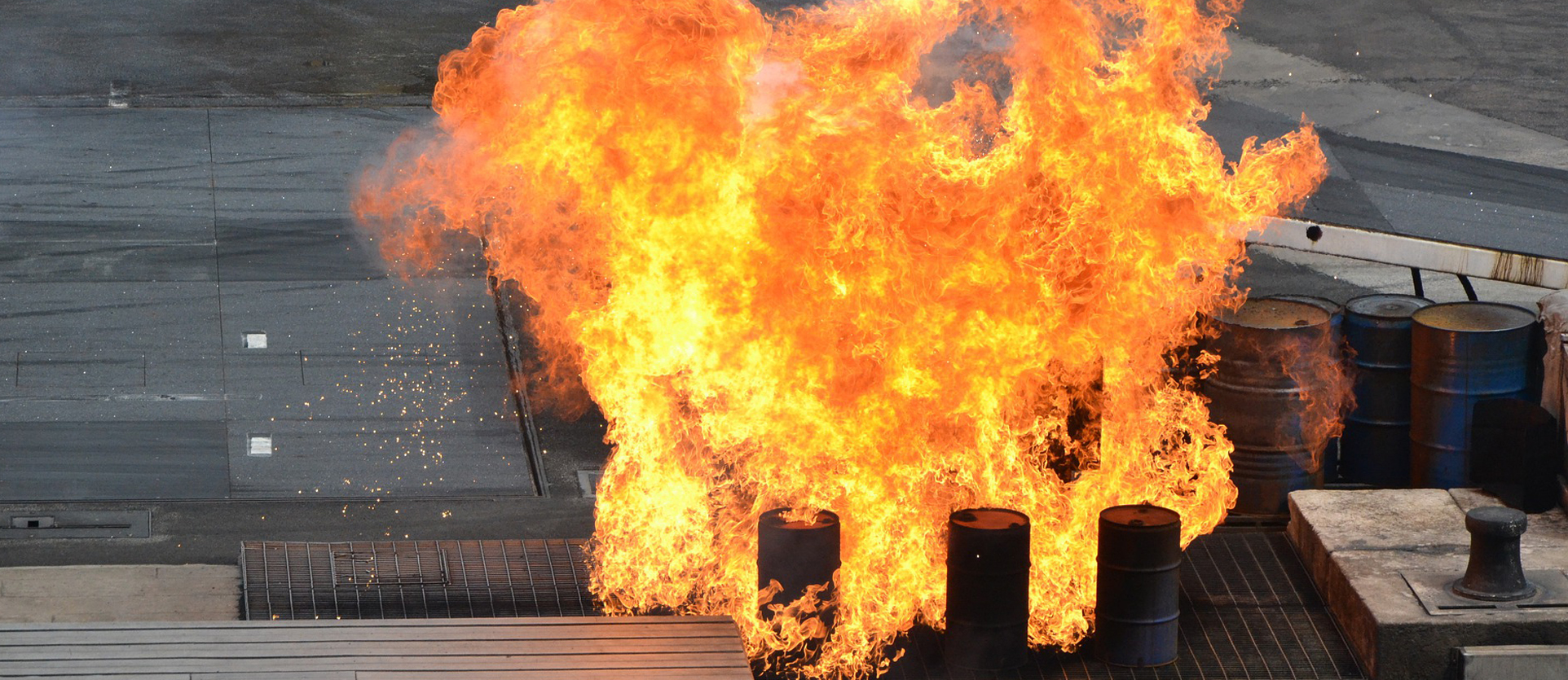
Fig. 3: Successful venting of a hydrogen explosion at REMBE Research+Technology Center GmbH.
REMBE Research+Technology Center GmbH (www.rembe-rtc.de)
REMBE Advanced Services+Solutions GmbH (www.rembe-services.de)
REMBE Kersting GmbH (www.rembe-kersting.de)
REMBE FibreForce GmbH (www.argusline.de)
 
This article can also be found in the issue below.


Hart completes TVH UK Ltd Contract

‘Energy saving features a key’

Hart Industrial Doors has completed a contract to supply and install a Speedor Storm at the new Kidderminster facility for TVH UK LTD, global parts and accessories suppliers.

Brian Woodcock, Hart’s sales manager for the Midlands and South West, says the impressive building has a two storey, 6300 sq m mezzanine with 20,000m of long span shelving containing more than 32,000 product locations. At ground floor level there are over 16,500 pallet places in high-bay racking holding 71,000 stock-keeping units (sku).

“This is an outstanding development where the emphasis is on efficiency of parts delivery and faster delivery times, critical for their clients. Our high-speed Speedors have an important part to play in this,” says Mr Woodcock.

“We installed Hart’s external high-speed Speedor Storm fabric door which is designed for frequent use in high traffic situations and capable of withstanding harsh environments . This rapid roll door is robust, requires low maintenance and delivers exceptional wind resistance in exposed areas.

“While its high-speed opening and closing action improves efficiency, the energy-saving potential of this rapid roll door is also high, controlling the internal temperatures as well as limiting escaping dirt, odours and noise.”

Mr Woodcock adds:  “Given rising energy and the whole of the Climate Change issue, Speedor’s energy-saving features are very important. The automatic action ensures doors are closed for as long as possible thus reducing the loss of heated air and penetration of cold air from outside the building. Given an intensely busy loading bay scenario, heat loss and increasing energy costs have to be controlled, reducing CO2 emissions at the same.

“Hart were selected for cost of product, quality of product and are a UK based manufacturer, this helps to reduce carbon footprint of the purchase and installation.”

Other special features include moisture- controlled electrics and shielding for mechanical components together with a unique guide system offering exceptional wind resistance up to class 5 as defined by DIN EN 12424.

“The Speedor Strom is our bestselling door, ideal for challenging applications where reliability is indispensable as well as speed of the opening/closing cycle which is essential to optimise traffic flow, improve working conditions and of course save energy.”

www.hartdoors.com     + 44 (0)191 214 0404       This email address is being protected from spambots. You need JavaScript enabled to view it.

Ventilation & Dilution of Hydrogen Leaks with Exhaust Fans


Hydrogen is a colourless, odourless, and tasteless gas, therefore small gaseous leaks are difficult to detect by human senses. Small leaks are common due to the small size of hydrogen molecules and usually do not present a problem since the tiny amount of mixture will not be enough to cause a flammable mixture in the air. Small amounts of leaking hydrogen will rise and diffuse quickly in air because of its low density resulting in high buoyancy (it’s 14 times less dense than air).

Hydrogen is less likely to cause a fire or explosion hazard in an open or well-ventilated space, but a problem arises when hydrogen gas is allowed to accumulate in a confined area. If this is allowed to happen, there will be a risk of a flammable mixture building up. When a large amount of accumulated hydrogen rises and mixes readily with air, it creates an ignitable mixture that can result in flames or explosions. Hydrogen is flammable in air at a volume of 4-75% by volume. 

Any structure that contains hydrogen components should be ventilated adequately. Since hydrogen is lighter than air, it collects under roofs and overhangs. Most people are familiar with protecting plants from heavier than air vapours, but are unfamiliar with upward issues. There have been many reports of hydrogen leaks igniting over the decades, and several potential ignition prevention mechanisms and hydrogen leak detection systems have been proposed. 

Methods for hydrogen leak detection include:

listening for high pressure gas leaking such as a loud hissing sound
using portable hydrogen detectors 
using permanently installed hydrogen detectors linked to local facility-wise audible or visible alarms. Set at 1% by volume (25% of LFL)
monitoring piping pressures or flow rate changes
locating detectors where leaking hydrogen can accumulate
ventilation, dilution, and exhaust

Reducing the Volumetric ratio of Hydrogen to Air

Ignition can occur at a volumetric ratio of hydrogen to air as low as 4% due to the oxygen in the air and the simplicity and chemical properties of the reaction. 

The best practice to avoid accumulation is to determine where hydrogen leaks are likely to occur and how they may disperse and ventilate accordingly to manage the airflows sufficiently to keep hydrogen concentrations below the lower flammability level(LFL) during probable release scenarios. Ventilation rates should be sufficient to dilute hydrogen leaks to less than 25% of the LFL which is about 1% volume by air. The minimum ventilation rate should safely dilute hydrogen build-up in the event of leakage and the ventilation should not shut down in emergency or during periods of shut down. 

It is generally safe to exhaust hydrogen into open atmosphere providing it is kept high enough that the heat does not harm anyone. Ventilation systems should not be used for the disposal of hydrogen; this should be managed by a separate system called a vent system. 

IIC Fans for Potentially Explosive Environments

Hydrogen is a gas group IIC gas and belongs to the T1 temperature class making it one of the hottest, most dangerous gases. Mechanical exhaust fans should be ATEX rated to the appropriate IIB+H2 or IIC T1 ATEX certification andconstructed from the suitable permissible material pairings as noted in the current legislation surrounding equipment for explosive environments. Material pairings should specifically relate to the rotating and stationary parts that may come into contact with each other during standard or rare malfunction. This material pairing reduces the risk of ignition created from friction and the build up of static electricity to create a spark. ATEX fans are therefore often referred to as having a spark proof construction. 

Our entire range of ATEX certified fans are suitable for gas group IIC or IIB + Hydrogen applications for effective hydrogen ventilation. Learn more by visiting our website. 

www.axair-fans.co.uk

i.safe MOBILE and R. STAHL: World market and technology leaders in explosion protection enter into strategic partnership

Image


  • Synergy effect in the field of digitalization, IIoT, Industry 4.0 and AI
  • Mutual complementation and exchange of product portfolios
  • Strengthening market leadership through mutual innovative strength and development of further industrial sectors
  • i.safe MOBILE further expands leading global market presence
  • R. STAHL extends competence to mobile applications
Image
Image

Lauda-Koenigshofen/Waldenburg, 19 April 2023. i.safe MOBILE GmbH and R. STAHL signed a strategic partnership agreement a few days ago. The cooperation covers the mutual complementation and exchange of product portfolios in the field of explosion protection. The globally established technology and market leaders from the Main-Tauber and Hohenlohe region in Germany see the cooperation as a strong positive synergy effect for the range of products and services provided by both companies. The innovative strength of the industry specialists offers customers competent all-round support in the field of digitalization, IIoT, Industry 4.0 and AI in hazardous areas. Both companies already supply global customers in the chemical, petroleum processing, pharmaceutical and other demanding process industries.

i.safe MOBILE is the innovation and world market leader for explosion-proof mobile devices and solutions. i.safe MOBILE GmbH, headquartered in Lauda-Koenigshofen (Germany), was founded in 2011 and, as a global market leader with more than 80 employees, is today one of the most innovative developers of mobile communication devices such as mobile phones, smartphones, tablets for safe use in potentially explosive environments. Engineers and specialists develop practical products and customer-specific software solutions at the Lauda-Koenigshofen site based on legal regulations such as ATEX, IECEx und NEC 500. i.safe MOBILE has a branch office in Singapore and is represented by sales partners in 72 countries in Europe, the USA, Latin America, South Africa, the Middle East, Australia and Asia.

Image
Image

R. STAHL, technology leader in electrical explosion protection and number three in the world market with annual sales of around €274 million, offers customers in the process industry, the gas and LNG sector and also in shipbuilding products and solutions ranging from electrical equipment and complex control systems to customer-specific applications. Including mobile devices of i.safe MOBILE, the listed company closes a strategic gap for mobile worker applications and completes its product range as a full-range supplier, especially in the field of automation solutions. Today, R. STAHL offers a broad portfolio for the installation of digital infrastructure in hazardous areas, e.g. WIFI networks. In combination with the products of i.safe MOBILE, the possibilities now also expand to the use of new technologies such as the 5G standard in mobile communications.

„Our combined expertise and the innovative power of both companies enables us to strengthen our international presence and market leadership in hazardous areas in the medium and long term. The partnership with R. STAHL emphasizes our vision to provide our customers with the safest and latest technologies and supply technically and economically optimal products for their digitalization projects“, highlights Martin Haaf, CEO of i.safe MOBILE. 

„The product ranges of both companies complement each other seamlessly due to the high technological and innovative standards of the products and solutions. With the mobile communication devices of i.safe MOBILE, we can offer our customers more comprehensive solutions for their automation tasks as a one-stop supplier, especially as explosion protection is a very complex and safety-relevant discipline“, says Carsten Brenner, Head of Business Unit Automation at R. STAHL. 


www.isafe-mobile.com
i.safe MOBILE on LinkedIn
i.safe MOBILE on YouTube 


Belzona Restores Mammoth Pipeline Through Cold Bonding

 
25AA17AC 163F 45DD B4C1 138E4F64A7AD

Belzona’s polymeric repair and protection materials are suitable for extending the in-service life of assets in a multitude of industries, including equipment in the petrochemical industry which often functions in harsh environments. Belzona’s products are suitable for both small-scale assets and extremely large projects, such as the recent restoration of a mammoth pipeline in a Thai petroleum production facility.

What was the problem?

The facility, based in the north of Thailand, found that a huge pipeline carrying high-pressure water for injection into oil wells was suffering from thin wall defects. The pipeline in question was made out of 12 metre pipe lengths that had been welded together. However, upon inspection it was found that the 2000 psi water contents and the weld filler material used had resulted in internal corrosion defects at everycircumferential weld joint. This caused the deterioration of pipe wall thickness, risking high pressure leaks.

damage better


The pipeline was exposed to corrosion at the joints where sections had previously been welded together

previous repair

Belzona's cold bonding solutions had previously repaired other areas of the pipeline

Why was Belzona chosen?

The Customer had used Belzona previously and had a good relationship with the local Distributor, Pan Mechanic Engineering Co., Ltd. They were very impressed by Belzona’scold bonding capabilities when they were demonstrated by the Distributor on a defective joint, leading to their agreement to undertake the repair of the entire pipeline, requiring an estimated 5000-7000kg of Belzona 1111 (Super Metal).

Due to the massive scale of the project, it was decided to complete the repair in three stages. More than 1000 joints were repairedin 2020 and the remaining defects were addressed in November and December 2022. The joints repaired in stage one were demonstrating excellent performance in service and the Distributor also invited two Technical Services Engineers from the Belzona Asia Pacific Office to observe the second stage of the project.

Why was Belzona 1111 (Super Metal) specified?

The use of welding had been problematic in the past, leading to the Customer’s preference for a cold bonding solution. The Distributor initially proposed the use of Belzona SuperWrap IIto restore pipe wall strength, but testing found that attachingcarbon steel reinforcing plates using Belzona 1111 (Super Metal) as a bonding agent would be more appropriate. The simpler cold bonding repair would be more cost effective and ensure a faster return to service in line with the Customer’s requirements.

How was the solution applied?

The surface was prepared using garnet blasting and Belzona 9111 (Cleaner/Degreaser) to achieve an average minimum ≥75 μm (3mils) profile and SA2.5 surface cleanliness for maximum adhesion. The atmospheric conditions were then tested to ensure that the relative humidity was below themaximum permitted 85% needed for the application to take place.

Welding rods were used to create a shim between the steel plates and the repair area to control the thickness of the application. The welding rods were bonded to the steel reinforcing plates with a small quantity of Belzona 1111 (Super Metal) and the repair area was identified usingmasking tape. Belzona 1111 (Super Metal) was first applied to two of the four plates and the damaged pipeline joint, and held in place using a fixed hoist while the product cured. Once the first two plates had bonded, the final two plates were appliedand allowed to cure, fully encompassing the circumferential joint.

 
Product applied 1
 

Belzona 1111 (Super Metal) was applied as a bonding agent

Curing application 1

The plates were held in place by a fixed hoist to allow the product to cure

What was the result of the application?

The Customer was delighted that the Belzona repair restored the integrity of the joints and protected the pipeline from future thin wall defects. The success of such a large-scale project led the Customer to indicate an interest in applying Belzona solutions to other pipelines at their facility. This could include similar cold bonding applications or the specification of Belzona SuperWrap II for more complex pipe geometries. Polymeric repair and protection materials are ideal for facilities in the oil & gas and petrochemicalindustries due to their easy application and quick return to service with no hot work required.

0C86B05E D2A8 42BA 8289 D51E5007EFB2

 The completed application restored strength to the pipeline wall


What does your hard hat say about you? The benefits of customisation

Providing your workforce with a hard hat they can be proud of isn’t just a nice to have, but essential to operating a safe site.  

But beyond choosing a hard-hat that is high quality, comfortable and with a low profile and modern design, you can improve them further by taking advantage of MSA’s hard hat branding. 

How does branding improve safety on site

We know that the safest helmet is the one that workers are going to wear and unifying your employees with a sense of pride and cohesiveness, by providing a branded hard-hat, dramatically improves the use of PPE and people’swillingness to look after their kit.  

Beyond that, however, there are some important benefits to customising the hard hat your workforce are using. 

Managing a busy project site can be challenging, with dozens or even hundreds of workers and sub-contractors.  It’s important to remember that many of these workers may be relative strangers and unfamiliar with an organisation’s procedures and rules.  Customising your hard hats, using different colours and artwork, provides a reminder of people’sroles and responsibilities while on site. 

Other safety features can be added on, including retro-fitted stickers, that enhance the visibility of the workers, and name badges, to enhance security on site and to ensure it is restricted to those that should have access. You can also use it to promote potentially life-saving safety messages and reminders.  

Furthermore, in an increasingly competitive market, customisation, including the printing of companies’ logos, is an invaluable marketing tool, enabling companies to stand out from the crowd.  It can also unify workforces and foster a greater sense of collective teamwork and pride.  

Experts you can rely on

Having decided that helmet customisation is a valuable tool for your company, here are some things to consider when branding up your hard hats:

1. Check that what you have in mind conforms to your company standards before ordering
2. Think about what safety procedures you adhere to – could some of that messaging be placed on the hard hat for visibility?
3. Think about the colours and sizing of logos and messages, and how they would change when applied to the finished product. 
4. How quickly can the product be turned around? At MSA Safety we can have logoed hard hats manufactured within as little as five working days.

Working with MSA’s Let’s Logo service, we make life simple for customers, offering

• Full colour logo and image printing
• High-quality, long-lasting weather-proof printing
• Low minimum order quantity
• 13 types of hard hat, with 10 stock colours to choose from
• Simple re-ordering, with artwork kept on file, making repeat orders quick and easy

Ordering from MSA you get all this, and our best-in-class helmets.  We know that comfort and fit aren’t nice to haves, but essential to safe site operation.  That’s because we’ve been protecting lives for over 100 years.  

Our team is here to help make purchasing high quality, customised hard hats, quick and hassle-free.  And, if you’re using a safety helmet from another brand, for a limited time we are offering a free front logo if you make the switch to us. 

Visitmsasafety.com/customhardhatsto experience the benefits of hard-hat customisation for yourself.

Enerpac ML40 Mini Lift Gantry: A Compact Way to Move Machinery and Equipment in Hard-to-Access Spaces

Enerpac announces the ML40 Mini Lift Gantry with 40-ton lifting capacity. Designed to be portable, simple to set up, and easy to use, it is the ideal solution for machinery movers, plant relocation services and medical equipment installers who need to move machines and equipment in compact spaces.

Machinery Relocation

When moving machines or parts of machines either within the same building or to another building, space is always limited. The ML40 Mini Lift Gantry has a compact size ideal for moving equipment around old installations. Its short, collapsed height (1.97m) and narrow width (750mm) means the ML40 Mini Lift Gantry can get into spaces that other equipment cannot. The gantry can also rotate the load (up-end or down-turn) to move through the building. 

Machinery Installation or Replacement

When performing a new equipment installation or the removal and installation of equipment for maintenance or repair, industrial movers are often faced with minimal headroom and many obstacles. The ML40 Mini Lift Gantry makes it easy to offload the equipment from the delivery vehicle and re-position it for use in the facility. Additionally, it makes it easy to assemble the equipment in sections and then move it as a complete unit into final position. When replacing old equipment, disassembly in sections may be easiest method of removal. The small size of the ML40 Mini Lift Gantry makes it easier to mobilise and set up. 

Medical Equipment Installation

Installing medical equipment typically involves difficult access within the hospital. Medical equipment is often delicate and needs smooth, even lifting. Standard synchronised lifting on the ML40 prevents damage to equipment. The compact size of the ML40 Mini Lift Gantry is also a critical feature. It is easy to transport and fits into most freight elevators. Single phase voltage 115 or 230 VAC operation eliminates need for long, high voltage power connections or noisy generators.

ML40 Mini Lift Gantry – powerful lifting capability

When it comes to safety, the ML40 Mini Lift Gantry features standard synchronised lifting and control and load readout to ensure safe and level lifting. A wireless pendant keeps the operator away from equipment during operation. The ML40 is also versatile. Its high capacity and simple set up mean even jobs with challenging or uncertain information can be managed without issue. It is also easy to use. A simple set up means even relatively new rigging operators can operate the equipment.

ML40 Mini Lift Gantry has 40 ton capacity (4 legs) in all three lifting stages. It is 750 mm wide, 1.97 m collapsed height and 5.5 m extended height. Each leg weighs 1350 kg with oil. The ML40 uses an industry standard 610mm (24-inch) track gauge, and can be operated without support track with considerations for load and ground conditions. It uses the same accessories as the Enerpac SL100 gantry such as track, header beam and side shifts. For ease of deployment, the ML40 Mini Gantry features freewheel operation for transportation and set up, and a roll cage for overhead lifting and/or towing and pushing for installation.

To learn more about the latest Enerpac tools, visit the Enerpac Innovations page on www.enerpac.com. 

Trousers that work as hard as you do – only from Snickers Workwear.

With as many as 40,000 stitches, and up to 64 pieces of fabric in a single pair of Snickers Workwear trousers, it’s little wonder they’re built to last and the preferred choice of discerning tradesmen and women.

Ergonomically designed for maximum comfort, freedom of movement and functionality, there’s over 80 different styles and 71 different sizes in the Snickers Workwear Trouser system. So you will always find a pair to suit you. The men’s and women’s Trousers range includes full stretch slim fit styles plus street-smart regular and looser fits throughout the full LiteWork, FlexiWork, RUFFwork and AllroundWork trouser families.

With at least 16 pocket compartments integral to every pair complimented by a choice of 8 different Kneepads, Snickers Workwear knows that your work trousers have to do a lot of things. Keep you comfortable, carry your essentials, and protect your knees and legs from debris and hazards in the workplace.

So, whatever your trade, wherever you’re working and whatever your sustainability preferences are, you can be sure there is a pair of Snickers Workwear Trousers to suit you.

 Getting more information on the Snickers Workwear clothing range is easy. You can call the Helpline on 01484 854788; check out www.snickersworkwear.co.uk and download a digital catalogue or email This email address is being protected from spambots. You need JavaScript enabled to view it.

This article can alos be found in the issue below.


i.safe MOBILE invests a seven-digit figure in the start-up company Senseven

Image


Continued expansion:

i.safe MOBILE invests a seven-digit figure in the start-up company Senseven
as part of a strategic alliance

Image

Image

Lauda-Koenigshofen/Vienna, 30 March 2023. i.safe MOBILE, innovation and global market leader for explosion-proof mobile devices and solutions continues to drive the area of technology and innovation and participates as a strategic partner and investor with a seven-digit amount in the Austrian startup Senseven. Senseven is the developer of a software and AI-based mobile inspection system for industrial assets and was founded in Vienna in 2021 by the two engineers Michael Hettegger and Christoph Altmann. In 2022, Anna Maria Grausgruber joined the management team for business management. With the technology partnership, i.safe MOBILE is intensifying its expansion course and, with the topic of artificial intelligence, is focusing on a promising trend that supports companies in transforming their business models in order to save time and costs, focus on sustainability and remain globally competitive. Both companies are targeting customers in the chemical, pharmaceutical, oil and gas processing and other demanding industries in the ex-sector.

Software and artificial intelligence as innovation drivers
With its investment in Senseven, i.safe MOBILE, as a globally established manufacturer in the field of explosion protection, is focusing on the integration of new, promising software solutions with AI technology. The partnership offers i.safe MOBILE access to the latest and most forward-looking innovations and, by expanding its range of products and services, also opens up great potential for innovation and growth outside i.safe MOBILE's existing field of business.  The topic of artificial intelligence, especially in the automation and maintenance area, will continue to play an important role in the industrial sector to make processes more efficient and environmentally friendly, save costs and strengthen the resilience of companies in the long term.

"Senseven convinced us immediately with their innovative approach. The partnership creates extensive opportunities for us and our customers. Together with Senseven, we are addressing inspection software and AI to develop solutions and implement them with our products. Our common goal is to enable our customers to increase productivity and reduce inspection costs. We are excited about this first step into a long-term cooperation," comments Martin Haaf, CEO of i.safe MOBILE. 

"We are pleased that we were able to win i.safe MOBILE as a strategic investor. After the first successful product launch in 2022, the partnership is an important milestone for us. It opens the possibility of expanding the application into other industries and allows our customers to use the inspection software safely in potentially hazardous areas," says Michael Hettegger, CEO and Co-Founder of Senseven.


www.isafe-mobile.com
i.safe MOBILE on LinkedIn
i.safe MOBILE on YouTube