News

How to handle chemical hazards?

Chemical hazards in industries can cause serious harm to workers and the environment. To prevent these hazards, it is essential to have visual warnings and inspection recording in place. Visual warnings, such as labels, signs, and placards, can alert workers to the presence of hazardous chemicals and inform them of the proper precautions to take.

The purpose of the Chemtag is in case there is an accident or incident where the chemicals are stored or with a person coming into contact. It pulls the pertinent information off the COSHH safety data sheets and makes it immediately available for first aid or medical purposes.

1 = what fire extinguisher is required

2 = what's the immediate first aid action

3 = what's the immediate spill response

So the fire brigades know what they're dealing with, and the ambulance can take the card, take the person and away they go.

Find out more about Visual Tagging Systems for chemical hazards >>


Scafftag – A Brady Business

This email address is being protected from spambots. You need JavaScript enabled to view it.

Tel 0845 089 4060

www.scafftag.co.uk

How to handle chemical hazards?

Chemical hazards in industries can cause serious harm to workers and the environment. To prevent these hazards, it is essential to have visual warnings and inspection recording in place. Visual warnings, such as labels, signs, and placards, can alert workers to the presence of hazardous chemicals and inform them of the proper precautions to take.

The purpose of the Chemtag is in case there is an accident or incident where the chemicals are stored or with a person coming into contact. It pulls the pertinent information off the COSHH safety data sheets and makes it immediately available for first aid or medical purposes.

1 = what fire extinguisher is required

2 = what's the immediate first aid action

3 = what's the immediate spill response

So the fire brigade know what they're dealing with and the ambulance can take the card, take the person and away they go.

Hazardous substances:

  • Substances used directly in work activities such as adhesives, paints and cleaning agents
  • Substances generated during work activities such as fumes from soldering and welding
  • Naturally occurring substances such as grain dust
  • Biological agents such as bacteria and other micro-organisms

The control of substances hazardous to health (COSHH) regulations 2002 specifically requires employers to:

  • Assess the risks to health from hazardous substances used in or created by your workplace activities. Decide what precautions are needed. If you have five or more employees you must make and keep a record of the main findings of the assessment, either in writing or on computer
  • Prevent or adequately control exposure
  • Ensure that control systems used are maintained properly and that safety procedures are followed
  • Monitor the exposure of employees to hazardous substances
  • Carry out appropriate health surveillance where your assessment has shown this is necessary or where COSHH sets specific requirements
  • Prepare plans and procedures to deal with accidents, incidents and emergencies involving hazardous substances
  • Ensure employees have suitable and sufficient information, instruction, training and supervision

Which Scafftag systems can help you?


  • Permit Wallets: Provides ultimate protection and ease of viewing of permits / documents at the point of use.
  • Chemical hazard inspection tagging systems: the pertinent information off the COSHH safety data sheets and makes it immediately available for first aid or medical purposes
  • SafeTrak Inspection Software: Recording details of inspections and testing results


Find out more about Visual Tagging Systems >>


Scafftag – A Brady Business

This email address is being protected from spambots. You need JavaScript enabled to view it.

Tel 0845 089 4060

www.scafftag.co.uk

Designer and Project Engineer Ex Training and Competence

Many of you will be aware that the Ex-Standards aimed at end users(such as IEC60079-14) have very specific requirements for competence. These can include both ‘knowledge’ and ‘skills’ assessments and the need to retain and be reassessed regularly. ‘Installers’ have historically had to have some form of special certificationto be allowed to work in Hazardous Areas (for Example, CompEx 01-06) but it is now also the case that people involved in design and equipment selection will also be asked for their qualifications and evidence of competence. 

In addition to the current requirements of the users’standards, a new standard (initially a technicalspecification) is being developed specifically covering Ex Competence (IEC TS 60079-44 Personal Competence) so now is a good time to refresh our memory on the role of the designers and project engineers

Ex Design Competence

The requirements for personnel involved in the process of designing plant or equipment for use in potentially explosive atmospheres (including equipment that may be in the safe area but have functionality involved in the safe explosion prevention or mitigation) should be given serious consideration. 

Reviewing case studies of many recent explosions will demonstrate that it was the fundamental design that was unsafe, even when correctly built and installed (such as an incorrectly specified level switch or an impractical maintenance procedure post installation).

The requirements will obviously be applicable to companies who design plant but are equally applicable to project engineering companies or manufacturers who may provide rigs, skids or assemblies (now covered by IEC TS 60079-46that may or may not utilise certified hazardous area equipment. (ExVeritas offer specific course for ‘Assembles’ that cover these specific risks and challenges for ‘manufacturers’ as well as end users)

According to the Installation Standard, Designers must possess, to the extent necessary to perform their tasks, the following skills:

• Detailed knowledge of the general principles of explosion protection; this would include knowledge of terms such as LEL, MESG, Flashpoint and factors that affect dust and gas explosion properties (pressure, temperature, oxygen etc).
• Detailed knowledge of the general principles of types of protection and marking; this would include all of the electrical concepts such as i.c.m.a. op is, Non-electricalhetc., group markings such as IIB+H2 (Gas) or IIIC (dust) and EPL’s such as Ga/Gb.
 
• Detailed knowledge of those aspects of equipment design which affect the protection concept; this may include SIL if safety systems or protective systems are used and in-depth design knowledge if concepts such as constructional safety (c) or IEC special safety (s) are used.
 
Detailed knowledge of content of certificates, such as use of the ‘X’ or ‘U’ and the many different certificate types and issuing bodies. It is also important to make sure these corticates are to ‘current’ Standards and not certified to ‘withdrawn’ standards! 
 
An understanding of practical skills for the preparation and installation of relevant concepts of protection (full knowledge of the installation requirements).
 
Detailed knowledge of the additional importance of ‘Permit to Work systems’, safe isolation and ‘risk assessment’ in relation to Explosion Protection; Process and procedure documentation – most explosions occur during startup/shut down or maintenance!
 
Detailed knowledge of the techniques to be employed in the selection and installation of equipment referred to in IEC/EN 60079-14 and a general understanding of Inspection and Maintenance requirements of IEC/EN60079-17.
 

Designers must be able to demonstrate their competency and provide evidence of attaining the knowledge and skill requirements specified above, relevant to the types of protection and/or types of equipment involved. They must also be able to demonstrate their competency with documentary evidence such as ‘Designers training Certificates’ to the user and suitable documented safe operating procedures and list of required checks and maintenance (including intervals). 

One of the most used and widely accepted levels of certification for Designers is CompEx EX12, it is also worth noting that CompEx has also added an introductory Functional safety course to their portfolio which is useful alongside EX12.

Full details of the new CompEx Courses can be found here: CompEx Training and Competence Certification or email This email address is being protected from spambots. You need JavaScript enabled to view it. for a prospectus. 

This Article can also be found in the issue below.


Valve Sense: Smart inspection system for maintenance in hazardous areas

Image

Pioneering innovation from i.safe MOBILE and Senseven for simple leak detection in valves without interrupting the production process

Image
Image

 i.safe MOBILE, innovation and world market leader for explosion-proof mobile devices and solutions, presents together with its strategy partner Senseven the mobile inspection system Valve Sense. Industrial customers can now use the software and AI-based system in conjunction with i.safe MOBILE’s IS540.1 smartphone to monitor critical valves in international explosive hazardous areas. This solution uses advanced sensor technology based on the proven acoustic emission method which can be easily applied by maintenance personnel via software guidance – without special training and expert knowledge. Companies can use the mobile inspection set consisting of a smartphone, measuring electronics, waveguide, sensors and a software package to regularly check their plants themselves during ongoing production, thus saving time and money. Intact valves ensure smooth operation, guarantee product quality and also provide safety for employees. Valve Sense helps to detect valve leakage of water, gas, steam or air at an early stage and to react promptly. With the combine expertise of both companies, Valve Sense meets the high demands of customers in the chemical, pharmaceutical, oil and gas sector and other demanding industries in explosive areas.  

Valve Sense – The new generation of valve inspection for Ex-zones 
With the launch of Valve Sense for Ex-zones, i.safe MOBILE and Senseven are pioneers in the market applying today’s digital capabilities to an inspection system for leak detection in valves. The user-friendly kit easily connects acoustic emission sensors to i.safe MOBILE’s innovative 5-G smartphone IS540.1 and transforms it into a smart valve inspection system through Senseven software. The software guides the user through the inspection process in a self-explanatory way and algorithms and artificial intelligence help with data analysis and provide immediate results on site.  All data is automatically stored in a back office – a cloud-based platform for the structured management of all inspection data  - to use it for further analysis and reporting. 

Image
Image

Efficient maintenance process
In manufacturing plants, valve inspection is an important part of the maintenance program. Depending on the production process, there are often harsh operating environments with high temperatures, corrosive chemicals and abrasive particles. This can lead to damage on the valve and associated unplanned machine downtime. An estimated five to ten percent of all industrial valves leak. Undetected leaks caused by non-regular or improper maintenance can result in serious consequences such as injuries, raw material losses and thus produce costs or contamination/environmental pollution. By performing regular in-house valve maintenance with Valve Sense, companies have the option of only having to replace valves when they really have a defect. Functioning valves can continue to be used. And this can be done during the production process without having to test the valve functionality on an external test bench. This avoids a production standstill and at the same times ensures considerable cost and time savings. 

"Thanks to the cooperation with Senseven and the new, joint Valve Sense technology solution, we can now also offer our customers the most innovative mobile solution currently available on the market for valve monitoring in hazardous areas - with our usual reliable safety standards. The combination of Senseven's technology with our 5G smartphone IS540.1 offers our customers an enormous increase in efficiency in the area of maintenance“, comments Martin Haaf, CEO of i.safe MOBILE.

„Valve Sense is a revolutionary technology that will change the way industrial valves are monitored and maintained in hazardous environments. Our team of experts has worked tirelessly to develop a system that is safe, reliable and easy to operate”, says Michael Hettegger, CEO of Senseven. 

The Valve Sense set consists of a case containing the IS540.1 smartphone equipped with the Senseven software, the IS-VS1A.1 measurement electronics, a waveguide and acoustic emission sensors and will be available from Q3/2023. 

Further information can be found here and in the data sheet.


www.isafe-mobile.com
i.safe MOBILE on LinkedIn
i.safe MOBILE on YouTube 

This artilce can also be found in the issue below.


Strengthening the Bond with Reliable Structural Adhesives

 Abstract

When identifying solutions that can offer assurance and longevity, the maintenance and reliability of assets repairs can be challenging, this white paper will look into the use of structural adhesives as the first-choice solution.

Structural adhesives can be used for affixing metal substratesor components as they provide high modulus and high strength. However, they are not currently internationally recognised like the traditional methodseven though adhesives are already used in a wide range of industries, such as aerospace, rail, and construction.

Traditional practice such as welding, riveting, nuts and bolts and mechanical fixing are perceived as the go to method.However, they all have their inherent inadequacies. Welding can be hazardous to health, riveting,nuts and bolts concentratethe stress locally while mechanical fasteners can concentrate stress.

This paper introduces a novel, two-component, solvent-free toughened epoxy adhesive material that provides high adhesion to metallic substrates while also being able to withstand high movement or cyclic fatigue in comparison to general epoxy materials.

As well as potential application areas, the article also discussesa number of benefits, including ease of use, load bearing andimpact resistanceproperties.

Introduction

Most industrial maintenance or repair procedures can eitherinvolve welding or use of mechanical fasteners as these can be perceived as easy andquicker, however, these procedures might initially seem to correct the issue but may cause more harm than good.Depending on the repair situation for instance welding or drilling to connect mechanical fasteners on a storage tank containing flammable liquid is not recommended for obvious reasons this is where a structural adhesive can really offer a solution for that maintenance repair.

There are many structural fixings used across a whole range of industries that may be part of any maintenance or repairthese include support brackets such as cable trays, antennas, heating coils filter pans or any other internal fixtures in vessels that’s suffer from corrosion, impact orvibration damage. Within construction there are fire water deluge systems, nozzles connections, facades panels and signs which can require maintenance overtime or adverse weather conditions.

Processequipment or piping can suffer from thinning or the steel or even through wall defects which will need either monitoring or repairing depending on whether the integrity of the equipment has been lost.

Structural fittings are generally for fixing of static members but maybe subjected to forces unbeknown at time of installation this could include thermal cycling of the joints, cyclic loading or vibration due to fatigue of a component.

If there are repairs due to the above, the contractor maybe in asituation where a choice of solution can be made, then the strengths and weaknesses need identifying.

Welding is regularly used for repairs as it is widely available while being well regulated with high customer confidence and high strength of the repair it does come with its inherent risks both the use, the material by heat stressingand the user as welding can cause both acute and chronic health risks.Application of welding repairs onto live piping sections, storage tanks or process systems and equipment should not be undertakendue to the high temperatures involved and not forgetting the combustible nature of the process fluid or gasrunning through or being stored in these components.

Bolted joints are seen as simple and low cost due to the ease ofdisassembly and reassembly and these can be dissimilar metals,but the use of dissimilar metals will contribute to galvanic corrosion, add weight to the jointrequiring routine inspection and tensioning while the drilled holes in the support material, stress distribution is not uniform and concentrated at the holes.

Structural adhesives have high bond strength whilst being lightweightadhesive applied to cover the entire joint, resulting in uniform stress distribution, reducing metal distortion under strain.

Importance of a Strong Bond

Adhesive bonding is the joining of similar or dissimilar members together while creatingpermanent high strength bonds which can transfer structural stress without loss of structural integrity.

Regardless of the joint type used, it is important to understand the different stresses that are imparted onto a bonded assembly. Adhesives perform the best when the stress is two-dimensional to the adhesive, allowing the force to be applied over the entire bond area.

Joints that are well designed for adhesives place most of the stress into compression or shear modes, adhesives perform the worst when stress is one-dimensional to the adhesive, concentrating the load onto the leading edge of the bond line. Joints placing stress into cleavage or peel concentrate the stress onto the leading edge, which may lead to premature bond failures, especially if subjected to vibration, impact or fatigue

Bonds of high strength are obtained after cleaning of the substrate by removal of any contaminants followed by the roughening of the substrate generally in the form of grit blasting to international recognised standards, this is why surface preparation is critical to success regardless of what type of adhesive is used.

There are three types of bonding that are important to achieve to ensure good adhesion. These are:adhesive, chemical, and mechanical. 

Adhesive relies on surface energy to generate adhesion to the substrate. While chemical relies on chemical bond formation and electronic bonding to produce adhesion. Mechanical adhesion is due to the creation of an irregular profile that allows a deeper profile to be produced.

Thetypes of structural adhesivesavailable have been summarised in Table 1

Table 1 - Types of Structural Adhesives
E29D2566 0C0E 4106 B435 1F8D30D5E794


There are two types of failure mechanisms associated with structural adhesives:

1. Cohesive failure occurs in the bulk layer of the adhesive material. This failure mode is limited by the strength of the adhesive material and can be caused by insufficient curing of the adhesive and applications at a greater thickness than that recommended among others.

2. Adhesive failure occurs when the mechanical adhesion between the adhesive and the parts being joined is overcome by the loading. This failure mode is associated with inadequate surface preparation, presence of contaminants, or insufficient curing of the adhesive among others. 

Background 

Design considerations for Belzona 7311 were based on both technical target requirements and a practicality approach, as summarised in Table 2.

0C1410C5 802B 40F6 B9CE 1E7C3FF3B828


 Table 2 - Design Considerations

Belzona 7311 was subjected to at least the following tests and evaluation protocols in to ensure that it met the design criteria previously discussed. Where possible, internationally recognised standards were used.

1. Cleavage Adhesion – ASTM D1062
2. Tensile Shear Adhesion – ASTM – D1002
3. Tensile Fatigue Resistance – ISO 9664
4. Impact Resistance ASTM D256


Experimental Procedure

1. Cleavage Adhesion – ASTM D1062

Cleavage adhesion is used to assess the strength of an adhesive bond between two substrates when exposed to cleavage stress.

Belzona 7311 wasapplied between two identical grit blasted metallic cleavage test pieces to create a fixed bond area of 125mm² of minimal bondline thickness.

The specimen was allowed to cure then attached to a 25kN tensometer using suitable grips. The tensometer then applies a load at a fixed rate of 1.3mm/min exerting a cleavage force on the specimen until bond failure. This test is repeated five times so an average force can be calculated.

6159F134 4696 428E 8D04 812BCAA7ACA4


Figure 1 - Cleavage adhesion test

2. Tensile Shear Adhesion – ASTM – D1002

Tensile Shear Adhesion or lap shear adhesion is used to determinethe adhesive strength of a material when bonded between two ridged metallic substrates.

Samples are 100 x 25.4 x 2mm and are overlapped lengthwise by approximately 12.7mm and bonded tominimalbondlinethickness with Belzona 7311.

The specimen was allowed to cure then attached to a 25kN tensometer using suitable grips. The tensometer then applies a load at a fixed rate of 1.3mm/min exerting a cleavage force on the specimen until bond failure.

28B74809 B0B7 48A5 B67A A642494444F7


Figure 2- Tensile force

3. Fatigue Resistance – ISO 9664

Fatigue resistance is the highest stress that a material can withstand for a given number of cycles without breaking.

A standard static Tensile shear adhesion test was conducted to determine the mean breaking stress – 24.17 MPa following this 35% of the mean breaking stress value is used as the mean stress in fatigue testing - 35% mean shear stress = 8.461 MPa (24.17 MPa x 35%)

47F09F90 E6DD 4FAE 9B1E 462AF68D64FB


Figure 3- Tensile shear adhesion test

At four different alternating stresses, fatigue testing was conducted at 30Hz until failure:

1. 80% = 6.8 MPa (8. 461 MPa x 80%) Stress amplitude cycles between 
2. 60% = 5.1 MPa (8. 461 MPa x 60%) Stress amplitude cycles between 
3. 57.5% = 4.9 MPa (8. 461 MPa x 57.5%) Stress amplitude cycles between 
4. 55% = 4.7 MPa (8.461 MPa x 55%) Stress amplitude cycles between 

Figure 4 - ISO 9664 Fatigue stress cycle

4. Impact Resistance – ASTM D256

Impact tests can be used to assess the toughness of a material, a material’s toughness is a factor of its ability to absorb energy during plastic deformation. Brittle adhesives have low toughness as a result of the small amount of plastic deformation that they can endure. Tougher materials on the other hand can absorb greater energy during fracture and thus, have improved impact resistance.

The Izodimpact test allows for samples to be tested in two forms: either ‘notched’ or ‘un-notched’ in our case the testing will be notched which has a V-shaped notch of approx. 2.5mm in depth with a total defect angle of 45°ithe centre of a specimen sample with dimensions of 12.7 x12.7 x 65mm. The notch concentrates stress and allows measurement of crack propagation.

Non-standard testing:

5. 3-Point Load Test

This comparative technique is used to assess the relative flexibility of adhesives when applied to a metallic substrate. In this test a mild steel panel of dissimilar dimensions

Plate 1 550 x 50 x 10 mm thick

Plate 2 225 x 50 x 10 mm thick

are stressed to the point the adhesive fails. The panel is held in position at two points, one at either end of the sample and is gradually stressed at a single point in the centre of the specimen via a hydraulic press as seen in figure 3. The greater the displacement i.e., the further the press travels until failure the more flexible the adhesive. The thickness of the adhesive will influence the degree of flexibility so analysis should be duplicated for repeatability purposes. In the case of this testing at the manufacturing stage the specimens were compressed by hand pressure only, to try and replicate in field applications of achieving below the maximum bondlinethickness of 2mm.

5577D346 E81F 4524 A8AA C74DE9E1D1BE


Figure 5 3-Point Load Testing

Testing Results and Discussion

1. Cleavage Adhesion – ASTM D1062

Table 3 - Cleavage Adhesion Results - ASTM D1062

632D7457 E46D 42EC 9E9A 31D5036FDDA9


2. Tensile Shear Adhesion – ASTM – D1002

Table 4 - Tensile Shear Adhesion Results– ASTM D1002

C5710175 B5FF 41D2 8D92 E55B10E0F1C1


3Tensile Fatigue Resistance – ISO 9664

Table 5 - Cyclic Fatigue Testing Results

A8B55105 61FA 4FBC AB7A 0167A27487DA


Figure 6 - Belzona 7311 SN Curve

8B51F21B A0BE 4FE7 AD97 F730AC69E449


From a mean breaking stress of 35% (8.461 Mpa), Belzona 7311 will survive 106 cycles at 56.6%, with an alternating stress amplitude of ± 4.791 Mpa = 13mpa to 3.67 Mpa

4. Impact Resistance – ASTM D256

Table 6 - Impact Resistance Results – ASTM D256

E6670767 C914 422B 805D DBC732EC62BC


5. 3-Point Load Test

Table 7 3-Point Load Test Results

CADDA886 9899 4391 9198 1793AFCEF443


DBFE2BBD DB0E 4D4B A867 4CC3FCBDD8A3


Figure 73-point load Specimen Testing

Conclusions

Several conclusions can be drawn from the use of Belzona 7311 as a solution for the repair or maintenance of assets:

1. Belzona 7311 offers high resistance to structures that are subjected to forces such as peel, cleavage, vibration, or cyclic loading.These include, but are not limited to,support bracketsfor fire deluge systems, internal and external fixtures on process equipment, wear pads and wind girders on storage tanks.
2. As Belzona 7311 offers an array of additional practical features including ease of application, ability to hold its own structure when placed in vertical applications and superior adhesion to metallic substrates, the toughenedepoxy can be used on structural support reinforcements, load transfer supports and metallic staircases and ladders.
3. Plate bonding to repair thinning or through wall defectson areas such as pipe/piping, process equipment,storage tank floating roofs and platform decks can utilise Belzona 7311 as it offers high impact resistance and flexural properties.
4. Belzona 7311 has been optimised for metal-to-metaladhesion and exhibits an extensive data listwithover 20 testssolelybased on adhesion. The performance data can be used for Finite Element Analysis (FEA) or simulationstoaid in bond designing or qualification of the adhesive in areas that would normally be seen as high risk for standard epoxies such as handrails and walkways.

02639AD5 E061 4923 B170 955AA1280F5F


Figure 8 - Structural adhesive, Belzona 7311, used to bond bracket

Please click here for more information about Belzona 7311


CHEMUK records 41% increase in visitors for 2023 Expo!

CHEMUK 2023 – Official Attendance Figures

 
2023
Visitors (Excluding Exhibitor Staff)
3956
Exhibitor Staff
1603
Total 2 Day Attendance
5559

CHEMUK 2023 opened its doors on Wed 10th & Thur 11th May at the NEC inBirmingham to a record attendance of 3956 visitors (excluding exhibitor staff) over the two days, representing an increase of 41% from the 2022 edition. The total two-day attendance (visitors plus exhibitors) was 5559.

CHEMUK show founder, Ian Stone, sums up this years’ event: "The industry is now responding to the single ‘destination experience’ of CHEMUK providing deliberately segmented zones of specialist industry capability and solutions, supported with unmissable intelligence, whilst at the same time uniting the entire UK chemical industries ‘value chain’ under one giant roof annually".

Minister George Freeman leads UK Government briefing

A dedicated video address from the Minister of State at the Department for Science, Innovation and Technology, George Freeman, underpinned a comprehensive UK Government presence and input across the two days, with show floor presence and vital conference input from the Department for Business and Trade, the Department for Environment, Food and Rural Affairs, and Health and Safety Executive. You can watch the full address at www.chemicalukexpo.com.

CHEMLAB Laboratory & Innovation Zone launches at CHEMUK 2023

Commenting on the introduction of the ‘CHEMLAB’ Laboratory & Innovation Zonethis year, Stone states, "This addressed, head-on, the need of R&D teams, analytical chemists, and teams in the crucial areas of early-stage growth and scale-up, showcasing a wide range of progressive lab-based solutions from the latest lab automation, chemical analytical tools, speciality services, flow chemistry innovations, innovation ecosystems, and much more, supporting the quality and acceleration of R&D cycles in the chemical, biochemical, and formulated product sectors."

IChemE adds to the line-up of supporting bodies.

The 2023 show saw the Institution of Chemical Engineers (IChemE) join an already impressive line-up of supporting industry and trade bodies both on the show floor and hosting crucial intelligence and keynotes across the integrated CHEMUK conference. This included the likes of CBA, BCA, BASA, BioVale, BCMPA, CPI, CCUK, IBioIC, GAMBICA, NEPIC, SIA, and InnovateUK KTN, to name a few.

RSC as CHEMUK 2023

The Royal Society of Chemistry (RSC) was again at the centre of CHEMUK, with a packed two-day programme including an RSC stand, careers clinic, feature RSC conference sessions, a keynote from current RSC President, Professor Gill Reid, and a dedicated members reception.

‘Sustainability’ ever-present at CHEMUK

Sustainability’ was the common thread across the event this year, withprogressive energy and emissions reduction solutions, process optimisation and greater operational efficiency of petro-chemical-based plants, through to a wealth of coverage on developing ‘green chemistry’ innovation supporting the transition towards bio-based chemicals and downstream products. Industrial Biotechnology and Bio-process innovations were reflected across all three zones and extensively through the conference programmes.

Where the magic happens!

CHEMUK has become the only destination in the UK where all the key bodies, major companies, and industry stakeholder groups embracing organic and inorganic synthetics, formulation chemistry, analytical and materials chemistry, industrial biotechnology, and chemical and process engineering are ‘predictably’ in the same ‘time’ and ‘space’, under one giant roof, alongside a wealth of downstream chemical-dependent industries.

Stone reflects on this crucial sector-wide annual convergence under the CHEMUK canopy: "This is where the magic can happen, where conversations can take place with wider networks, outside often restricted ‘silos of interest’ in pursuance of wider common industry goals, fostering exciting dialogue and new project momentum".

Dates for Diary: CHEMUK 2024 (NEC, Birmingham) Wed 15 & Thu 16 May 2024

www.chemicalukexpo.com


CHEMUK 2023 Exhibitor Testimonials:


·         “From its quality, to the footfall, our location, everything – top notch from start to finish.  The BVAA stand was never empty and we were delighted to be in amongst all our valve brethren.” CEO, British Valve and Actuator Association


·         “The ChemUK Event is going from strength to strength, with increasing footfall every year, Exloc enjoyed another successful show in 2023 and have already secured our stand for 2024.” Managing Director, Exloc Instruments


·         2023 was our first time exhibiting and what a successful show it was, having previously only been a visitor at the previous CHEM UK’s held, the mix of people and industries covered has resulted in some really good opportunities with existing and prospect customers. We have already booked for 2024 and look forward to another successful event. Regional Business Manager, MegaChem


·         “ChemUK2023 was a vibrant and well attended event with cleverly designed zones and stages. Its strong and sustained growth over the past few years is a testament the previously unmet need for a UK chemicals ‘meeting place’ and to the professionalism of the organisers. Great job and looking forward to ChemUK2024.” Founder & Group CEO, Chemical Search


·         ChemUK has been a great way to connect businesses and build relationships for the benefit of the industry. We have exhibited since the beginning and have found that it has always been a well-executed and positive experience for everyone and has become an integral part of our business’s marketing strategy. Business Manager, 2M Holdings Ltd


·         “As a first-time exhibitor here, we felt that Chem UK attracted the ideal mix of quality and quantity of customers and prospects for the product range we offer. My colleagues and I are looking forward to returning in future”. Jaimie Vaughan, Marketing Co-ordinator, Epco Plastics


·         “We were very pleasantly surprised at the number of visitors who came to see us, and the interest it’s generated for more information on our products and services.”Operations Manager, Autichem

·         “The show was a great success for SAFI Valves – this was our 3rd year in a row exhibiting and the show gets better and better each year for us.” General Manager, SAFI UK & US

·         “This is the third time Asynt has attended CHEMUK 23, and again it was absolutely fantastic.  The event provided an exceptional platform to showcase our latest technologies and innovations to a diverse audience of industry professionals and academics. We were thrilled with the quality of interactions we had with attendees and the opportunities it created for new partnerships and collaborations, as well as catching up with our “old” customers, colleagues, and friends. Director of Business Development, Asynt Ltd

·         “We exhibited at this exhibition for the first time, and I can only say, ‘Well done! The event was very well organised, and people were on hand to help at all times. The mix of visitors was fantastic which is helped by the versatile spread of exhibitors. We took 115 leads from this event, so needless to say, we have rebooked for next year”. Product Group Leader, Caldic UK


·         The show was buzzing from the first morning and we hardly stopped for breath! People looking for pump system builders and for solutions to the more difficult pumping applications visited us in their droves. It already feels like another successful CHEMUK show for us, which is why we did not hesitate to sign up again for next year! Sales Engineer, Marshall Pumps


·         “CHEMUK never fails to get better every year, we had a busy show and some fantastic leads, we have already booked again for next year” Marketing Director, Flowquip & Flowhire


·         My colleague and I walked the show in 2022 and came away with a goal to exhibit the following year. I can say without doubt that the show fulfilled every expectation. The quality of visitors to our stand fitted exactly our Ex-Solutions offering and provided us with a very good number of leads that we are now following up. Materials Handling Sales Manager, Pyroban Ltd


·         ‘RSE is a specialist water treatment and clean energy solutions provider, delivering a wide range of standard and engineered water treatment and chemical dosing solutions. Exhibiting at CHEMUK 2023 allowed our teams to highlight RSE’s range of capabilities and network with existing and potential clients across a variety of industries. The team had a busy two-day event displaying our innovative water treatment solutions and showcasing our chemical dosing products to the wider industry, with the exhibition’s success resulting in lead generation for our business streams’ Marketing, Ross-Shire Engineering


·         A very well organised and well-attended conference. It was a pleasure to attend ChemUK for the first time, and we can’t wait to return next year to see our customers and make further connections. Our teams from sales, development & logistics found the event valuable for both networking & exchange within the industry. Senior Chemist, Life Science - Safic Alcan UK       


·         “CHEMUK23 was a great success for Holiferm. As well as hosting our own stand, representatives from the company gave presentations and took part in panel discussions across the two days. This allowed us to increase our presence at the event thereby attracting a greater footfall to our stand and an increased amount of interest in our processes and products. We were able to cultivate a number of very promising new leads, as well as renewing and deepening relationships with existing and previous customers, partners and collaborators. We are looking forward to CHEMUK24 and the opportunities it will offer us to grow further as a business.” Managing Director, Holiferm


·         We found ChemUK opened access to a great network of businesses both nationally and internationally. We even had the opportunity to meet people from the region who will benefit from the R&D capabilities Bridge has to offer but hadn't crossed paths with us previously. The buzz of the event and the smooth process of exhibiting made the event run easily and allowed us to focus on showcasing our capabilities. Project Coordinator, The Bridge – University of Lincoln


·         IS-Instruments were pleased to meet new and current contacts during our second time exhibiting at CHEMUK.  Our team had worthwhile discussions with several interesting delegates, focussing on our gas Raman spectrometer and fluorescence-free Raman spectrometer.  After CHEMUK, we hope to move forward with these contacts and continue growing our network. Business Development Manager, IS-Instruments  

CHEMUK 2023 Visitor Testimonials


·         “There is nothing like this in the UK and is a must for anyone working in the chemical industry. It is an opportunity to find out what is happening in your area and others, discuss opportunities with exhibitors showing their novel ideas and also meeting up with old and new connections.”  Operations Director, Eternis Fine Chemicals UK Ltd


·         “CHEMUK 2023 was Disney for Chemists!” Section Head, Concept Life Sciences


·         “I really enjoyed attending CHEMUK 2023, this was a great event to meet new customers and contacts. I look forward to attending CHEMUK 2024 next year.”Commercial Director, Sulfo Surfactants Ltd

This article can also be found in the issue below.


·         


·

Does your cable gland installation really meet the requirements of EN60079-14 10.3?

Most hazardous area cable gland manufacturers A2F & E1WF type glands have a special condition for safe use requiring cables to be clamped to prevent twisting or pulling. EN60079-14 states that “a clamp should be placed as close as practical to the gland” - preferably within 300mm from the end of the gland. EN60079-14 also states that cables shall be routed straight to prevent the cable seal being compromised by lateral tension.

A poorly supported cable compromises the integrity of the equipment, invalidates the Hazardous Area certification and most importantly poses a serious safety risk to both plant and personnel.

Compatible with most major gland designs, the Omni® Accessory from Blayds Group ensures that cables are routed straight from the cable gland - preventing twisting or pulling of the cable whilst in operation. This securing of the cable also stops unnecessary pressure on the gland IP seal – a common place for water ingress. Manufactured from nickel plated brass, the Omni® Accessory also provides an earth connection, bonding point, integrated high-temperature silicone Ingress Protection washer and a cable identification location all in one easy-to-install accessory. The design also allows for disassembly and inspection of the gland without the need to move the cable marker as is often the case in many standard installations. 

So, to make sure your installation is fully compliant, fit the Omni® Accessory. One part – multiple benefits. To receive a free sample simply email This email address is being protected from spambots. You need JavaScript enabled to view it. or visit www.blayds.com for more information

This artilce can also be found in the issue below.


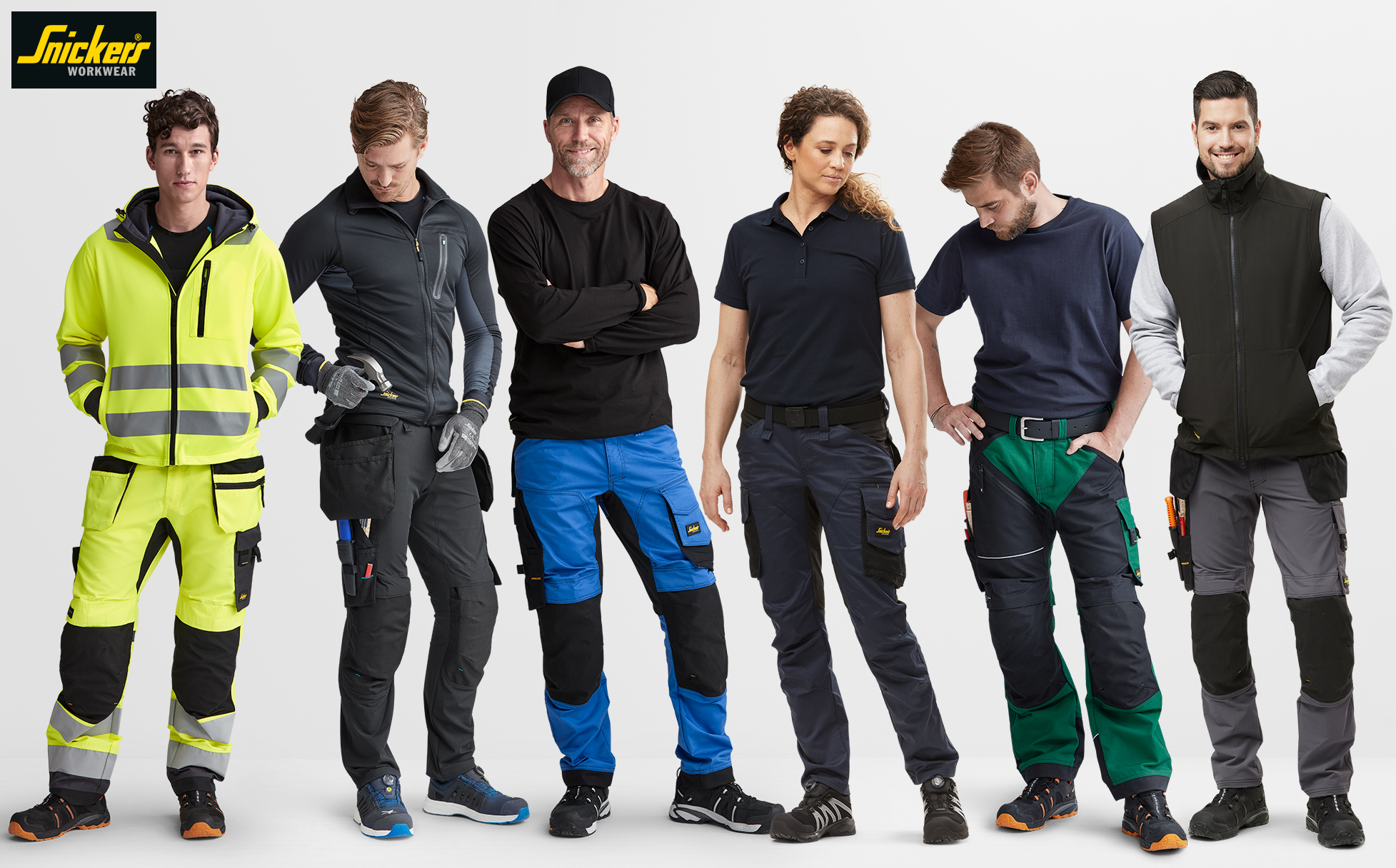
Snickers Workwear Hoodies – built for comfort.

Along with the Work Trousers range, these Hoodies and Sweatshirts are probably the most popular products among Snickers Workwear users. Designed specifically for professional craftsmen and women, they’re built for durability and comfort.

The ‘full zip’ or ‘overhead’ styles are ideal as mid-Layer working clothes. They’ll fit well with a jacket on chilly days and can be worn as an outer layer in the spring and summer months. You can choose from a selection of fabric options that include Polartec® micro fleece and cosypolycotton.

Street-smart and great for on-site work or leisure activities there’s over 40 styles and a host of colours to choose from including the new khaki green option as well as Class 1 and Class 2 High-Vis. They’re also available with the unmistakable Snickers logo and are ideal for company profiling.


Getting more information on the Snickers Workwear clothing range is easy. You can call the Helpline on 01484 854788; check out www.snickersworkwear.co.ukand or email This email address is being protected from spambots. You need JavaScript enabled to view it.

This artilce can also be found in the issue below.


Lightweight, Portable, Zone 0 Area Light


B4147C37 B022 4449 8711 9B3F6C2CD2ED


The XPR-5592GX area light has revolutionized how oil and gas industry workers interact within hazardous Zone 0 environments. With its powerful LED array and durable construction, this one-of-a-kind area light is a must-have tool for any worker operating in both tight confined spaces and large open spaces regardless of the environmental conditions.

The Nightstick XPR-5592GX is the only portable LED area light with integrated carry handle and rare-earth built-in magnet rated for ATEX and IECEx Zone 0 hazardous environments. It provides bright, reliable, and consistent lighting up-close or at a distance.

In addition to its lighting capabilities, the XPR-5592GX is engineered to withstand the most demanding tasks. This light is purpose built with rugged, industrial-grade rare-earth magnets in the base, allowing it to firmly adhere to any ferrous metal surface. The XPR-5592GX is certified waterproof and shock-resistant, ensuring it will remain functional in the harshestlocations. The full-kit model XPR-5592GCX includes an extendable six-foot tripod and blow-molded carrying case for quick deployment.

With up to 12 hours of continuous use on a single charge, the extended li-ion battery life makes this life-saving tool reliableand long-lasting light throughout each and every shift.

Designed for easy, convenient use, the 360-degree rotation and tilting design, rapid emergency deployment and brightness adjustments meet every need. Even while wearing gloves, the telescoping handle adjusts for comfort and makes it easy to hang on a door, ladder, or other equipment in a moment’s time.

The Nightstick XPR-5592GX area light is a must-have tool for any oil and gas industry worker. Its powerful Zone 0 lighting, rugged construction, long battery life, and convenient features provide a range of benefits that help teams work more efficiently and safely. When Life Depends on Light®, trust Nightstick. Visit us at nightstick.com or call 1-469-326-9400.

www.nightstick.com

This artilce can also be found in the issue below.


Measurement accuracy depends on more than just the gas analyser

Levels of uncertainty in gas measurements can be increased, for example, by calibration gases that offer poor levels of accuracy. For this reason, Signal Group manufactures gas handling and calibration equipment as well as gas analysers. “The linearity check is particularly important,” explains Managing Director James Clements. “Our Model 821S Gas Divider, for example, has been tested independently against our main competitor globally, and found to be dramatically superior.”

Conducted in North Carolina, USA, the trial found the slope accuracy for the Signal 821S to be just 0.25% for a NO/N2 gas mixture, whereas the competitor gas divider offered 1.6% slope accuracy. Similarly, for a SO2/N2 mixture Signal’s slope accuracy was 0.74% and the competitor’s was a disappointing 2.5%.

“Sources of uncertainty are incremental,” Jamesexplains, “so it makes no sense to introduce extra error unnecessarily, which is why the 821S Gas Divider is popular with both our customers and with other gas analyser manufacturers.”

The European standard EN14181 describes the quality assurance procedures for Automated Measurement Systems (AMS) installed to measure emissions to air. Under this standard, an analyser’slinearity must be checked using five different reference concentrations, including zero. The reference concentrations should be approximately 20%, 40%, 60% and 80% of the range of two times the emission limit, and the test concentrations should be applied in a randomised sequence.

It is common practice to employ a gas divider to create the different reference concentrations, however, it is of course also necessary to be able to validate the gas divider. To protect accuracy and reliability, the Signal Group Model 821S Gas Divider does not use mass flow controllersA manifold block with ten identical capillaries and a precision pressure balance regulatorensure the high levels of accuracy demonstrated in the USA trial.

The procedurefor checking the accuracy of the 821S Gas Divider is simple. Users connect the zero and calibration gas to the opposite connections and repeat the test, and if the gas divider is operating correctly, the gas analyser will show exactly the same readings.

Summarising, James Clements says: “Bottles of calibration gas have a fixed ‘use-by’ date and can be expensive to purchase and store, so it makes sense to employ a gas divider to conduct multi-point calibrations. However, purchased calibration gas itself incurs a level of uncertainty, so we designed the 821S Gas Divider to minimise increases in uncertainty, and I am grateful to the researchers in North Carolina for highlighting this technical superiority.”