Find ATEX, IECEx, Explosion Protection & Hazardous Area Content...

News

Hoist & Winch designs bespoke electric winch system for ‘wet room’

Among many notable recent successes, Hoist & Winch Ltd has come to the assistance of a large UK plant rental company with a very specific request. The company wanted a bespoke electric-powered winch lifting system to raise and lower large vinyl-type sheets in a purpose-built ‘wet area’. With no challenge too demanding, Hoist & Winch stepped up to the task.

At the heart of the Hoist & Winch system are four floor-mounted Yale RPE 400V three-phase winches offering 150kg swl (safe working load) and 20 Pfaff roof-mounted diverter pulleys coupled to four 12m long tubular spreader beams. Each winch raises and lowers one of the 12 m long spreader beams which attach to the vinyl sheet via load-bearing karabiner clips. Each vinyl sheet weighs approximately 60kg.

The customer can operate all four winches individually via their own wall-mounted, low-voltage pendant controls, allowing the lifting of a single vinyl sheet as required at any time. The innovative winch system raises the vinyl sheets safely and in a level position. This capability permits easy drying of the vinyl sheets after pressure washing, a process that removes any unwanted residual substances from the most recent hire job.

Each winch sits in purpose-manufactured mounting frames secured to the floor using four Hilti expansion anchors. The frame design allows orientation of the winch rope pay out at 90° to the first diverter pulley.


The room in which the washing, lifting, drying and lowering of vinyl sheets takes place is a purpose-built and enclosed ‘wet area’ with a cambered floor and drainage around the perimeter to support the removal of excess water during cleaning. Hoist & Winch Ltd provided PVC weather covers for the winch control panels to ensure safety at all times.

Ultimately, the system designed by Hoist & Winch Ltd significantly improves the whole operation to facilitate a quicker and far less labour-intensive turnaround of the vinyl sheets during busy periods of hire.

The scope of supply for Hoist & Winch Ltd included all pre-installation survey work to ensure correct the alignment and positioning of each winch, diverter pulley and all associated equipment, including top and bottom hook geared limit switches. The company also provided installation (using electric scissor lifts for working at height) over a seven-day period and subsequent commissioning. Further responsibilities included all wiring and load testing of the whole system. Once complete, Hoist & Winch Ltd issued a LOLER (Lifting Operations and Lifting Equipment Regulations) ‘Thorough Examination’ report.

To ensure smooth handover, Hoist & Winch Ltd undertook comprehensive operator training covering: overview of the winch units and main components; operating controls and features; periodic checks and lubrication; annual inspection, service and certification requirements; and practical operation by each operator.

Hoist & Winch Ltd Director Andy Allen says: “This project set out a number of important stipulations to which we had to respond comprehensively and efficiently. A successful outcome that meets with the project’s ambitions, delivered on-time and on-budget, is our primary aim. Once again our professional and experienced team of engineers here at Hoist & Winch Ltd came up with a safe, reliable, high-performance solution to the satisfaction of our valued customer.”


Visit www.hoistandwinch.co.uk for further information and to view recent case studies.

Is your ‘Ex Competence’ Verifiable and correct for your Industry? New CompEx Qualifications for 2024.

 exc.jpeg

CompEx Certification is an internationally recognised ‘qualification’ for people working in or needing awareness of explosive atmospheres and is a UKAS accredited certication scheme. It is by far the most highly recognised industry qualification and mandatory for many sites. CompEx certification is referred to as an example of a suitable competence qualification by the UK HSE for DSEAR in their DSEAR Guide*.


As CompEx are monitoring the work environment for areas where new or additional ‘site specific’ training or linked training may be required, new courses have been developed for specifc industry sectors or engineering groups.

Ex09-10 CompEx Inspection & Installation for Water Utilities

The new CompEx Ex09-Ex10 ‘Water Utilities Qualification’ has been recently re developed by CompEx with an industry wide working group. Uniquely this course covers ‘gas and dust’ in a compact 1-week course (with supplied e-learning prior to attendance). Exercises and examples in this course cover the unique nature of water utilities.

MTEx01-MTEx04 Installation & Inspection for Maritime Vessels

This qualification (MTEx01 – MTEx04) has been developed for technicians and engineers working on vessels that use gas or low-flashpoint fuels such as LNG. Based on requirements set out in the standards IEC 60079:14, IEC 60079:17, IEC 60092-502 and the IGF Code, this course is ideal for experienced technicians and engineers with relevant qualifications of any merchant or commercial vessels including cruise lines, bulk carriers, general cargo, container, and tankers that are powered with gas or low-flashpoint fuels such as LNG.

Functional Safety Foundation (FSF) Course


The Functional Safety Foundation (FSF) course introduces the concept of Functional Safety (FS) and its relationship to the safe operation of equipment. Functional Safety is an integral part of achieving safe operation in the use of control systems. This theory only course is suitable for both technical and non-technical personnel who require a basic understanding of Functional Safety. Based on IEC 61511, this course provides grounding knowledge of Functional Safety terminology, concepts, and standards to facilitate understanding.

*A brief guide to the Dangerous Substances and Explosive Atmospheres Regulations leaflet INDG370(rev1), published 01/13

ExVeritas continue to offer the full Range of CompEx Courses at our multiple centers globally, in addition we have developed new and updated specialist courses covering diverse subjects from advanced intrinsically safe design to non-electrical risk assessment.

Links to the new CompEx Courses:

Explosion Safety Specialist - Ex Veritas | Ex 09-10 CompEx Inspection & Installation for Water Utilities

Explosion Safety Specialist - Ex Veritas | MTEx01-MTEx04 Installation & Inspection for Maritime Vessels

Explosion Safety Specialist - Ex Veritas | Functional safety Foundation Course

Please see our full 2024 training schedule for all course dates or more on ExVeritas Training here

Lumens vs. Candela, what is the difference?

 When it comes to lighting, lumens and candela are the two metrics that are often confused. In this article, we’ll explain the differences and how this will help you select the perfect light for the job.

Lumens: Total Light Output

Lumens are the most common unit for measuring all the visible light from a given light source. Imagine the bare bulb or LED from a light inside the center of a large sphere. When all the light is measured inside the sphere it gives you the total lumen value of that light source. If the goal is to light a large area, lumens is the crucial metric for selecting the correct light.

Candela: Peak Beam Intensity

Candela is the standard unit for measuring peak beam intensity. Let’s imagine the large sphere from the previous example. Now, instead of the light being projected evenly over the entire surface inside the sphere, focus all that available light onto a specific section. This gives you the candela rating. If you need to project light in one direction or over a long distance, then candela is the crucial metric for selecting the correct light.

For example, sporting arenas use very high-lumen lights to bathe the playing field with a complete blanket of even lighting with no focused “hot spots.” The opposite end of the spectrum would be a police cruiser spotlight with a very high candela rating to pinpoint a suspect or a distant dark corner.

Choosing the Right Light for You

If you need even light distribution in an area, you should primarily consider lumens. On the other hand, if you require a focused, directional light source, then candela becomes a more critical factor. The ideal situation would be to combine both lighting styles into a single product. These types of lights are referred to as dual-light products. A spotlight features a tight, focused beam for distant illumination (candela) and a soft flood light to illuminate the area directly around you (lumens).

The Original Dual Light

Nightstick, a provider of professional LED products for industrial environments, firefighting, and law enforcement worldwide, created the original dual-light product in 2007. Often imitated but never equaled, Nightstick dual light products are the gold standard by which all others are measured. Visit Nightstick.com to find the perfect dual light for your job site.

nst.jpeg


ATEX – should you be worried?     

If you are even asking yourself the question “should I be worried about explosive atmospheres (ATEX)” then the answer is most probably “yes”. The Dangerous Substances and Explosive Atmospheres Regulations (DSEAR) require employers to control the risks to safety from fire, explosions and substances corrosive to metals. This entails compliance with BS EN 1127 (Explosive atmospheres - explosion prevention and protection), which in turn requires that any electrical equipment used is intrinsically safe and complies with BS EN IEC 60079.

It is generally understood that equipment for use in more obvious hazardous locations such as flour mills, coal mines, petrochemical plants and fuel transfer facilities, needs to be certified “intrinsically safe”. In other words, incapable of igniting an explosive atmosphere. However, hazardous locations also include water treatment plants, tunnels and underground passageways or any location where a build-up of naturally occurring flammable material (such as methane or dust) could occur.

Most people are familiar with the definitions of ATEX ‘Zones’ and if not, a quick web search will bring them up. Put simply, Zone 0 means an explosive atmosphere is very likely and Zone 2 means it is unlikely, with Zone 1 being the “grey area” in between. It is easy enough to identify from its markings whether a particular piece of equipment is suitable for a particular Zone, e.g. Ex ia for Zone 0, Ex ib for Zone 1 and Ex ic for Zone 2. However, the onus is very much on the plant operator to ensure which parts of their plant are in which Zones.

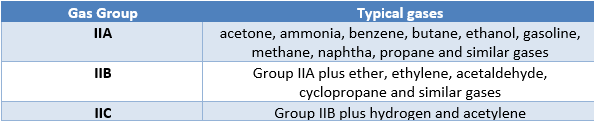
As if the issue of Zones wasn’t difficult enough, there is also the consideration of which gases are likely to be encountered. For example, equipment marked as Group IIB must not be used in Zones with hydrogen or acetylene likely to be present. Those gases would require at least Group IIC certification.

gs.jpeg

Then there is also consideration of the equipment’s temperature classification, which specifies the maximum surface temperature that could arise due to a fault when operating within the specified ambient temperature range. For example, equipment coded T2 (>300C) could potentially get hot enough to ignite gasoline! However, a coding of T4 (>135C) is generally considered acceptable, being safe for all gases apart from Carbon Disulfide, which requires T6 (>85C).

Test Products International (TPI) believes it has greatly simplified things however, with the triple certification of the TPI 9080Ex Smart Vibration Analyser. The TPI 9080Ex is IECEx/ATEX certified for Zone 1 and North American approved for Class 1, Zone 1 and is hence certified for use in hazardous locations, with ANY gas types, ANYWHERE in the world.

The TPI 9080Ex offers on-meter analysis for detection of machine faults such as unbalance, misalignment, looseness and bearing wear. With full colour OLED display and Bluetooth communications, the TPI 9080Ex features colour coded alarms and zoomable on-screen vibration frequency plots with cursor readout. It can store lists (routes) of up to 1000 machines, each with up to 10 measurement points, with full waveform and frequency spectrum (FFT) capture.

The included free-to-use VibTrend PC-based trending and reporting software features high-end benefits such as automatic email notification of alarms and report generation to implement a full CBM strategy.  Routes and readings can easily be transferred to/from the TPI 9080Ex via Bluetooth using a smart phone or tablet running the free TPI Cloud Bridge App. This allows service personnel to be sent routes and return readings, no matter where they are in the world. 

In-line with TPI’s philosophy of being the value leader, the TPI 9080Ex has a list price of only £3,500.

For more information please contact TPI Europe’s head office on +44 1293 530196 or take a look on the website at www.tpieurope.com or email This email address is being protected from spambots. You need JavaScript enabled to view it.

New Peli™ Microcases – the ultimate solution for safeguarding valuables

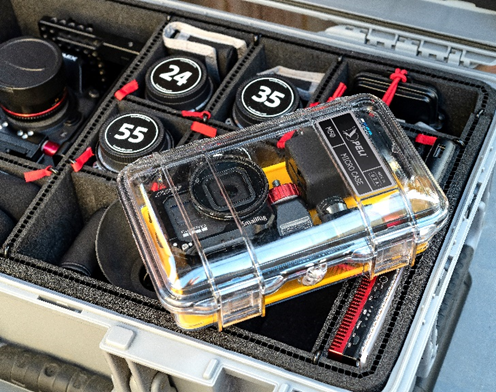
Peli Products (UK) launch three new personal utility cases as part of the Micro Case Series™. The redesigned models (M40, M50, and M60) are waterproof and dustproof and produced to protect small valuable items.

The new Peli Microcases boast an IP67 rating, giving protection against heavy rain, temporary water immersion, dust, sand or dirt. They offer excellent protection for all types of valuables and small devices when working in wet or hostile environments and for water sports and outdoor activities.

peli1.jpeg

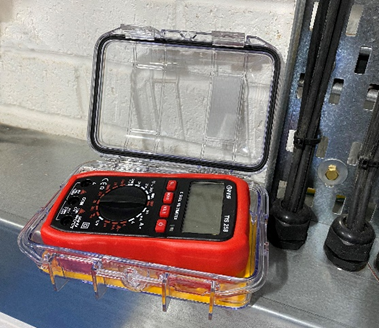
Manufactured using the legendary Peli guaranteed crushproof polymer, the new Micro Cases have been designed with several improvements. They feature a dedicated watertight O-ring gasket seal and redesigned dual latches.  The addition of a lock hasp allows a padlock to be fitted for greater security. The inner non-slip liner helps keep items in place and is removable for easy cleaning.

peli2.jpeg

These new cases also offer more internal volume and like the previous range, they feature an automatic pressure equalization valve to balance interior air pressure.

The M40, M50, and M60 cases are available in clear with a yellow or black inner bottom liner and black.  They can be found here:  https://peliproducts.co.uk/collections/micro.


Belzona Provides Thermal Insulation Solution for Fortune 500 Oil & Gas Company

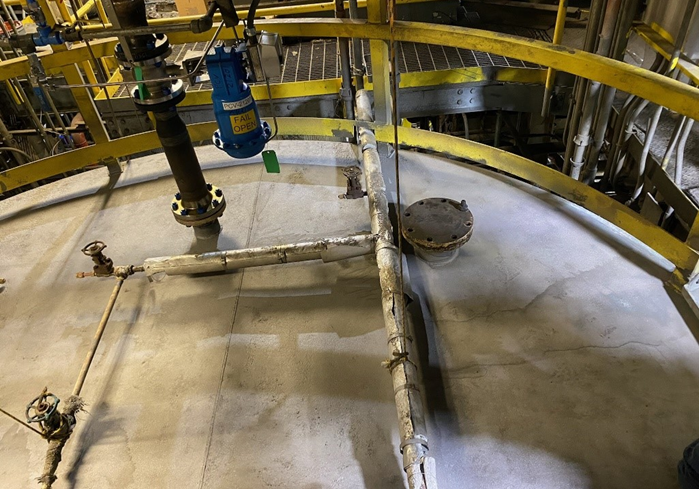
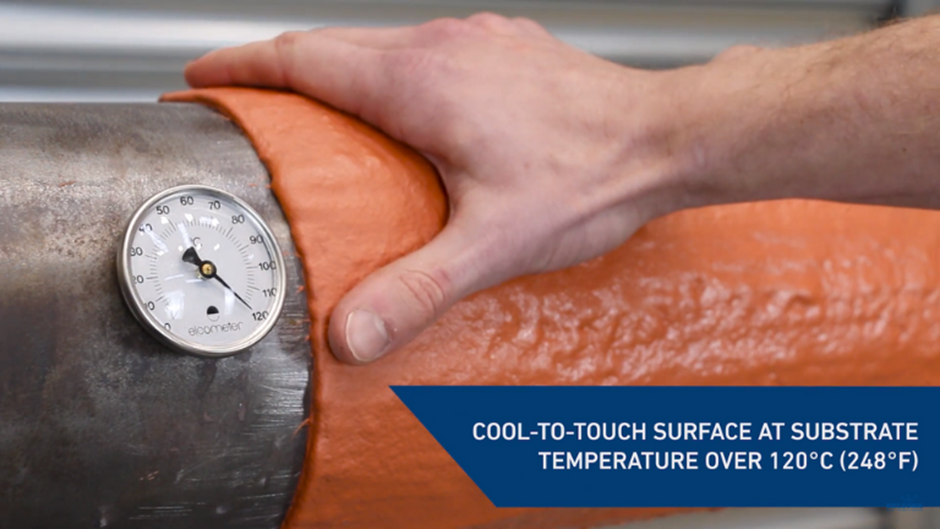
A leading oil and gas Company needed thermal insulation for a tank at one of its lubricant plants. The upper surface of the tank, which reaches a temperature of 110 °C (230 °F), serves as a walkway for operators. This creates a high risk of employees receiving contact burns from the hot substrate. Additionally, some pitting corrosion had occurred. Finding a solution that would lower the surface temperature to prevent burns and halt further corrosion was crucial. 

bel1.jpeg

Unprotected tank’s upper surface, operating at high temperatures. 

What was the Issue? 

The high temperature of the tank causes a hazard for the employees walking upon it. According to the guidance set forth by the Occupational Safety and Health Administration (OSHA), the maximum temperature for exposed surfaces that an employee could come into contact with is 60 °C (140 °F), in line with ASTM C1055. Workers must be protected from exposed heated surfaces, so it was crucial to lower the surface temperature of this tank to eliminate this hazard. 

In addition to its high temperature, the metal tank surface had been experiencing pitting corrosion, necessitating pit filling and a protective coating that would prevent it from corroding further. 

Why was Belzona Chosen? 

Having previously used various Belzona products, this Customer had confidence in their Distributors’ recommendation that Belzona 5871 was the optimal solution.  

As well as offering thermal insulation to protect employees from contact-burn injuries, this product only needs two coats, enabling quick turnaround times. It also has excellent corrosion resistance which was essential as the tank top had been experiencing pitting corrosion. 

bel2.jpeg

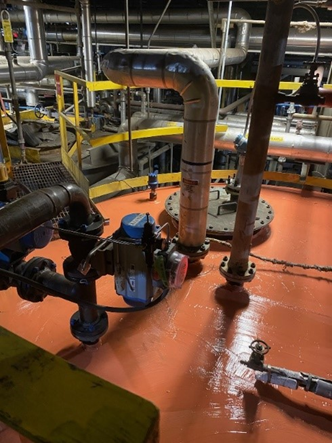
Protected from high temperatures with Belzona 5871. 

How was the Solution Applied? 

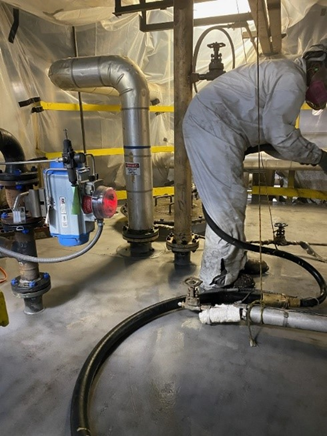
The surface was prepared by vapour blasting the substrate to meet SSPC-SP10 (Near-White Metal) standards and was then degreased. Additionally, some corrosion on the top of the tank required pit filling with Belzona 1121 (Super XL-Metal) ahead of the coating being applied. 

With the surface prepared, the first coat of Belzona 5871 was then applied using a short-bristled brush. This product expands, reducing the number of layers which are needed, the first coat was applied at the target thickness of 1000 µm (39 mil) wet film thickness, which results in 3000 µm (118 mil) dry film thickness. The second coat was then applied using the same method six hours later. The tank was back to full service just 12 hours after the final coat was applied.

bd.jpeg

Surface preparation before application 

bg.jpeg

   Tank top after one coat of Belzona 5871 

What was the Result of the Application? 

This application successfully offered thermal insulation protection for a Fortune 500 oil and gas Company. Following the application of two coats of Belzona 5871, the previously dangerous temperature of 110 °C (230 °F) has been successfully lowered to a safe level—below 60 °C (140 °F).

This case study shows how Belzona 5871 offers thermal insulation and creates long-lasting safety and durability. The solution not only mitigated the risk of contact burns but also introduced a valuable layer of protection against corrosion. 

Want to Learn More About Thermal Insulation with Belzona?

Please Click Here

i.safe MOBILE announces 5G Android and Windows tablet for Zone 1/21 with charging option for hazardous areas

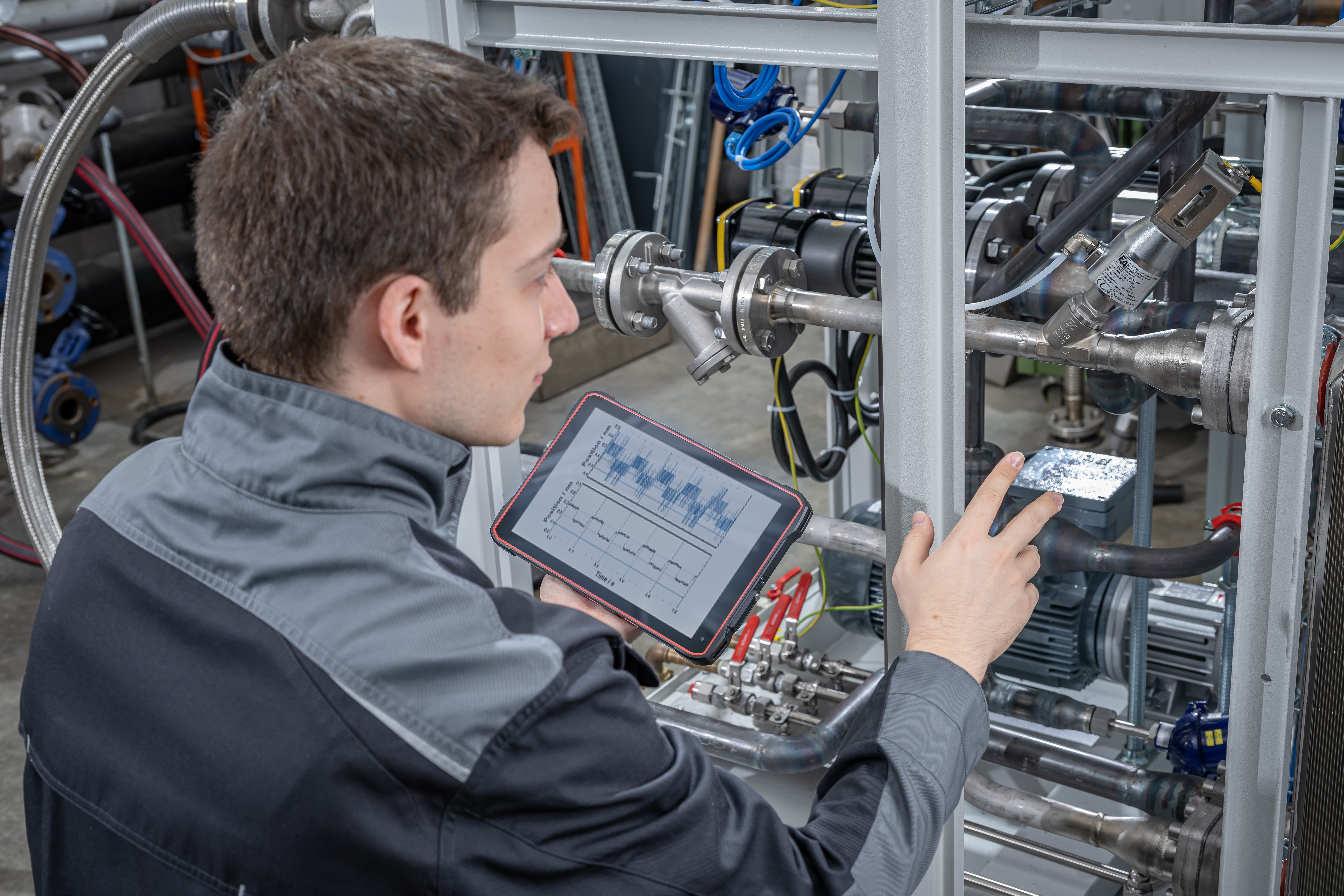
. i.safe MOBILE, innovation and world market leader for explosion-proof mobile devices and solutions, will be presenting its latest tablet developments to the trade public at the SPS trade fair in Nuremberg from 14 to 16 November 2023: In addition to the Android-based IS940.1, the company has also developed a Windows tablet IS945.1 as a debut. The first 5G tablet for Zone 1/21, together with the 5G smartphone IS540.1, is the ideal addition to the equipment programme for knowledge workers in the field of predictive maintenance management in the process industry.

With two alternative operating systems (Android and Windows), the user has a tablet for data communication in the Zone 1/21 hazardous area that can be ideally integrated into the existing system landscape and infrastructure with 4G/5G campus networks or WIFI 6. The two energy-efficient tablet versions are equipped with the powerful QCM6490 chipset from Qualcomm® Technologies, Inc. optimised for IIoT, a clear 10.1-inch full HD display and a 16-pin ISM interface for secure connection of approved accessories. The world's first charging option for devices within the hazardous area offers the user a wide range of deployment options. Despite its robust design, the tablet is very light and easy to handle, supports Wi-Fi 6, Bluetooth 5.2, NFC and has customisable buttons. The feature package is rounded off by a powerful, replaceable battery, a main and front camera.

Innovation potential of 5G technology The 5G standard offers great potential in hazardous industrial sectors such as the chemical, pharmaceutical, petroleum processing and process industries: it enables the secure integration and consolidation of complex workflows and the networking of employees, machines and processes. Maintenance tasks, remote monitoring and the evaluation of process data in industrial environments i.safe MOBILE announces IS940.1 and IS945.1 p. 2/3 require fast data transmission and processing. In the 5G network, these can be transmitted many times faster than was previously possible in 4G networks. The i.safe MOBILE 5G product portfolio fits perfectly into the digital processes of the production structure within the 5G campus networks and has been developed for remote assistance, augmented reality, remote training and mobile machine data visualisation in explosion hazardous Zone 1/21. The high available bandwidth in the 5G network enables data transmission with the lowest latency, which is particularly helpful for remote maintenance tasks or audits.

A world first, which i.safe MOBILE is presenting for the first time at the SPS trade fair, is the charging option for tablets in hazardous areas. For example, a connection to the Ethernet network can be realised via a special interface. In the automation sector, the tablet is charged in the Ex-safe docking station directly within Zone 1/21 but can also be used as an operating station for process control systems or for MES (Manufacturing Execution Systems). This provides the user with almost unlimited application options for potentially explosive environments. The IS940.1/IS945.1 will be available from mid-2024.

www.isafe-mobile.com


The importance of door maintenance

The fact that Hart Door Systems has built a reputation for quality and longevity of its wide range of industrial doors, the importance of door maintenance should not be understated says Keith Fisher, Hart’s National Operations Manager.

Servicing industrial doors not only improves their reliability and operational functionality but servicing is also a requirement under Health, Safety and Welfare Regulations  which protect people who come into contact with the doors. Indeed failure to maintain industrial doors could put the user in breach of Government legislation incurring liability in the case of an incident involving an industrial door which is non-compliant.

As essential support for our clients Hart has comprehensive Service & Maintenance assistance as a specialist department which delivers a range of repair and scheduled maintenance options for its customers to further extend the life of their doors.

Given the very wide variety of industrial classifications we supply doors and shutters to, the emphasis has to be on designing servicing and maintenance packages which are tailored to match the specific needs of our clients’ businesses and the arising usage patterns of the various doors/shutters.

A preventative Servicing and Maintenance Agreement ensures Hart’s servicing is carried out correctly and at the precise frequency thus complying with Regulations. Typically during a Hart servicing visit all mechanical and electrical elements are checked for missing parts, general wear and tear and Compliance issues.

Mechanical checks include inspecting parts such as drive chain tension, alignment and lubrication, bearing wear and tear, motor oil levels and fabric tension and electrical checks include limit settings, cable connections and safety devices.

Hart also has a legal responsibility to ensure doors are left in safe working order after servicing. Again the issues are wide ranging such as measuring the closing forces of automatic doors where safe contact is the main strategy to prevent hazards.

The closing force of a door ensures correct force limitation under EN 12978 which prevents injury and crushing. Testing should always be carried out with an annually calibrated instrument according to DIN 18650, EN 12453 or EN 12445.

On completion of a Hart service visit, a paperless electronic copy of the engineer’s report will be issued which may include additional recommendations necessary to ensure the doors are safe and compliant to relevant legislation due to changing ‘shop floor’ circumstances.

The sophistication of door systems such as Hart’s Speedor range or its Typhoon shutter range has changed significantly over the years to cater for changing needs by its customers across the globe and indeed by changing climate. To ensure hard working doors in busy industrial environments continue to make a significant daily contribution to efficiency and safety, planned maintenance is essential.

www.hartdoors.com

ENDS 452 words

Clean-up Without Trip Hazards

A clean work space is essential for health and safety, and the best tool for general cleaning up dust and loose product in the workplace is an Industrial Vacuum Cleaner. However, the vast majority of machines need to be plugged in to a power outlet, which necessitates appropriately positioned power outlets, and a trailing cable which itself presents a hazard.

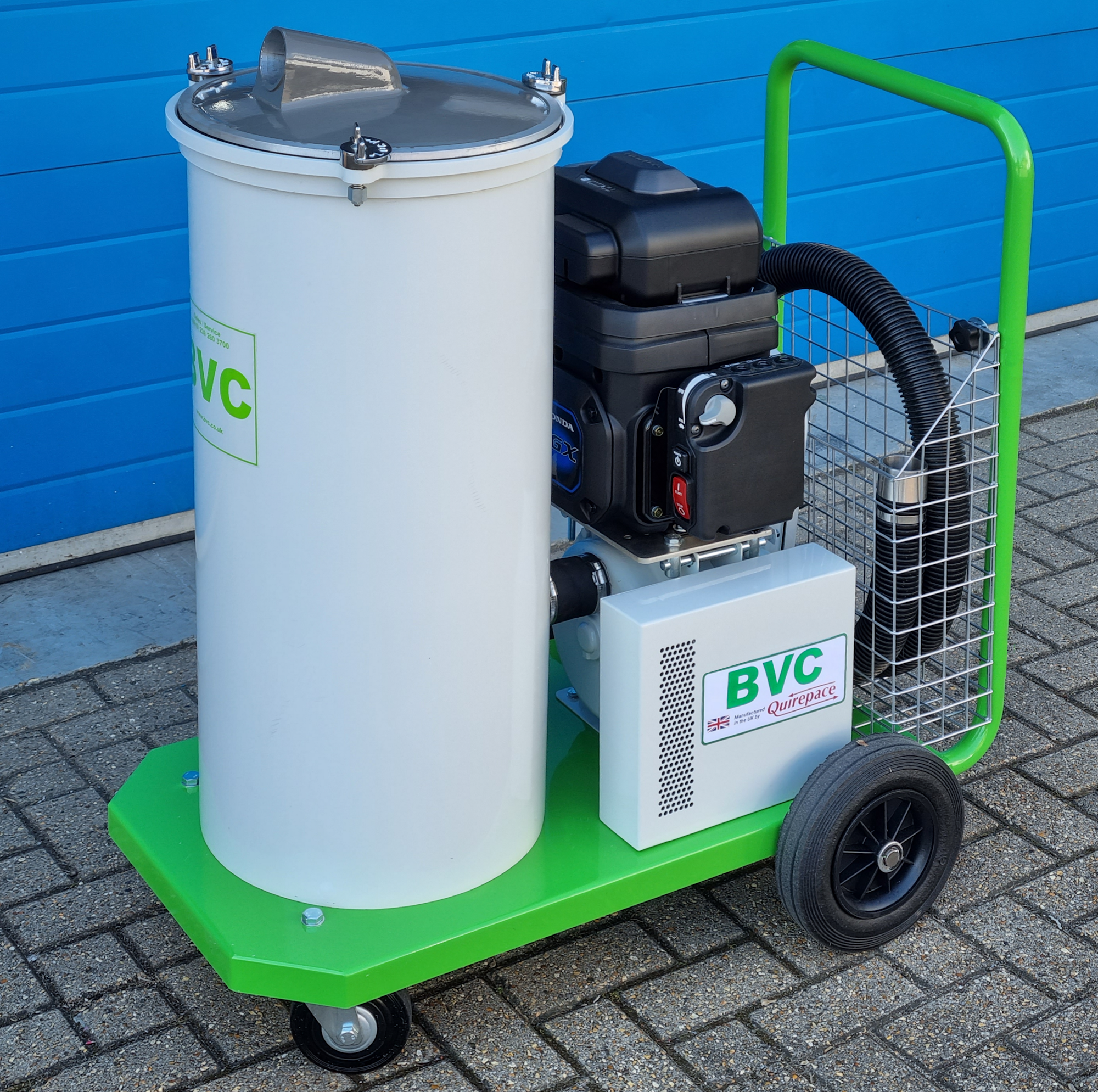
Quirepace have introduced the IV62 eGX into the range of BVC Industrial Vacuum Cleaners to eliminate this risk. This is a powerful battery powered unit which, as standard, is provided with a 3-stage filtration dry product tank consisting of a paper sack collection, microfibre main filter and 3rd stage HEPA filter. This configuration is suitable for most dry-product collection applications. The unit may be configured as both M-Class and H-Class rated units.

The unique Honda eGX electric engine is designed to replace petrol engines in the 2.5hp class and provides more than adequate power to run the BVC YP3 exhauster unit at full design speed. This new machine is designated BVC IV62 eGX.

The Honda eGX variable speed drive allows the operator to set the run-speed for the optimum performance for the job in hand. At full power the IV62 eGX has a runtime of 30 minutes, and at slower speed this can be extended to over 2 hours. The eGX fast charger provides 80% charge in 1 hour and 100% charge in 1.5 hours, making continuous running possible with spare batteries.

The BVC IV62 eGX makes it possible to clean up the industrial workplace without the hassle and hazard of trailing cables and availability of appropriate power outlets. Instantly available power combined with a large collection volume means that it has never been easier to maintain the cleanliness of the workplace

Quirepace Ltd

www.quirepace.co.uk
www.bvc.co.uk