Find ATEX, IECEx, Explosion Protection & Hazardous Area Content...

News

British Safety Council calls on UK Government to ban silica-containing materials – as new survey shows high levels of concern among workers

British Safety Council is today (Thursday) calling on the UK Government to go further in protecting workers from the risks associated with high-concentration silica containing materials and, within five years, introduce a ban on high-silica products from entering or leaving the UK. 

This call comes as new research British Safety Council has conducted with more than 2000 workers reveals that nearly two-thirds are concerned about the risks which cutting stone containing silica poses to health. 

Ahead of the launch of its new Hidden Hazards campaign, British Safety Council asked 2104 workers across a range of sectors how concerned they were about a number of risks. 62% were concerned or very concerned about the risks posed by silica dust. At the same time, 16% reported having little to no knowledge about silica-related harms. 

Exposure to respirable crystalline silica (RCS) dust, released when workers cut materials like stone, concrete, brick, and engineered stone, leads to severe, irreversible respiratory diseases, including silicosis and Chronic Obstructive Pulmonary Disease (COPD), as well as an increased risk of lung cancer. International evidence shows that, while exposure can be reduced through regulation, control and mitigation measures, these do not eliminate the risk. 

British Safety Council is, therefore, calling on the UK Government to follow in the footsteps of Australia and ban high-silica containing stone products, with a phased transition to an outright ban within five years to allow UK industry and consumers to adapt. 

During this time, the health and safety charity wants the Government to strengthen the current regulations by banning dry cutting, introducing mandatory competent-person sign-off for high-risk work, and tightening controls until high-silica engineered stone is no longer used within or exported from the UK.  

British Safety Council is also seeking to increase public awareness through its Hidden Hazards campaign, focusing on silica dust and other invisible risks that affect millions of workers, and push Government and others to prevent harm before it occurs. 

Mike Robinson, Chief Executive of British Safety Council, said: “That beautiful quartz worktop in your kitchen may be costing more than you think. We want people to stop and think; is it worth killing the person who made it? Every cut, every drill, every grind releases dust so small you cannot see it. But once it reaches the lungs, the damage is permanent. These are not accidents, these are preventable deaths, so how many lives is a new kitchen worktop worth? 

“Each year in the UK, around 500 workers die because of exposure to respirable crystalline silica. Workplace exposures are also linked to around 4,000 COPD deaths annually[1], with construction workers among the groups at risk. That is why we want to see high-silica containing products banned from coming into or leaving the UK within five years, with ever tighter regulations over that period. Stopping silicosis should be simple, provided the political and public will to save lives is there.” 

British Safety Council says it does not believe that current HSE guidance goes far enough to keep the workers of today and tomorrow safe from a known risk. It would like to see the Government working with unions, consumers, retailers and industry to encourage behaviour change and phase out the use of products with high silica content, while establishing reliable alternatives and supply chains.

For more information on British Safety Council’s policy calls on silica dust as well as more on the new Hidden Hazards campaign, and how to support it, visit:  https://www.britsafe.org/impact-and-influence/hidden-hazards-campaign/silicosis

Hart Doors reacts to strong demand

Newcastle-based Hart Doors reports strong demand for its high-performance industrial doors ranging from its of high-speed Speedor doors to its Typhoon range of high-performance shutters. “Demand is across the board and as a result we have had to increase working shifts. All our brands are attracting significant interest which has prompted us to take positive action,” says Hart’s managing director Nick Hart.

“We are a global business with a strong base of clients spread across the UK. By increasing shifts we have been able to continue to accommodate demand-driven growth. Further As Britain’s original manufacturer of the automatic high speed door “Speedor” , we have always led the way with developments in commercial door technology.

“We offer a comprehensive range of high speed roller shutter doors to suit a wide range of commercial applications, whether light internal use or heavy industrial use.

The Speedor high speed door is robustly engineered for frequent use in high-traffic situations. Our tried and tested vertical high speed doors can be used internally or externally to optimise traffic flow, improve working conditions and save energy.

Mr Hart adds: “Despite the recent holiday period demand for Speedor high speed doors, Typhoon and high level security doors was high. Such is the level of demand we have now started a two working shift pattern to keep up with client orders.

“Current examples of work include the production of six roller shutters to act as machine guards for a client to protect openings of between 3 and 7 meters in width. In addition, we are at the final stages of handing over a High security roller “SR4 security door” being installed in a bank in Kuwait.”

Only recently Hart introduced a demonstration vehicle to accommodate the growing need for installations across the UK. “All in all we are seeing growth on all fronts and have a great team at our Newcastle headquarters,” says Mr Hart.

“We continue to emphasize that we are a specialist engineering company that specialises in the design and manufacture of a wide variety of door systems relevant to the challenges of everyday business. We resolve many issues within the built environmental and safety and security issues arising in many global sectors.

“Hart’s products are in daily use across over 30 countries world-wide in sectors such as aviation, energy from waste, infrastructure, food and beverage production as well as a host of manufacturing processes.

Of Hart’s many brands, it’s the internationally recognised Speedor range of high-speed doors that has become so successful in establishing Hart’s outstanding reputation. After all, a typical Speedor has on average a life expectancy with existing doors at 30 years plus and 1000,000 operational cycles in normal conditions. This attests to the quality of Hart’s engineering.

www. hartdoors.com

Pressure Measurement for a Changing Energy Landscape

Pressure Measurement for a Changing Energy Landscape

image_1.jpeg

Hydrogen is changing the way we think about energy. Pressure measurement is changing with it.

As hydrogen technologies continue to develop, engineers are working across an increasingly diverse range of applications, from production and storage to refuelling, transportation and high-pressure testing.

Each application brings its own pressure measurement challenges.

image_2_esi.jpeg

That is where ESI Technology comes in.

Built for the demands of hydrogen

Hydrogen presents particular challenges for pressure measurement. Material compatibility, long-term stability and reliable performance all need to be considered when selecting the right sensor.

sensor.jpeg

ESI’s hydrogen-compatible pressure range has been developed with these demands in mind.

Our transmitters use specialist titanium alloy sensing elements and Silicon-on-Sapphire technology, combining hydrogen compatibility with excellent long-term stability, accuracy and resistance to demanding operating conditions. The range has undergone hydrogen compatibility testing in accordance with ISO 11114-2:2017 and offers pressure measurement from vacuum through to 5,000 bar, depending on the model.

One range. A world of hydrogen applications.

There is no single pressure measurement solution for the hydrogen industry.

That is why the ESI range includes solutions for different pressure levels, environments and measurement requirements.

GS4200H

gs4.jpeg

A versatile general-purpose transmitter for applications including hydrogen production, storage and marine propulsion, with optional ATEX/IECEx and DNV GL approval.

HI2000H

oh.jpeg

A high-precision solution offering accuracy of up to ±0.1% of span, ideal for demanding hydrogen, laboratory and test applications.

HI6200H

1234.jpeg

A compact hydrogen-compatible transmitter designed where space is limited without compromising pressure measurement performance.

HP1000H

highy.jpeg

A high-pressure solution capable of measuring pressures up to 5,000 bar, with options including ATEX/IECEx and DNV GL approval.

GD4200HUSB

uh.jpeg

A digital hydrogen pressure transmitter that brings measurement, recording and analysis together, with the ability to monitor up to 16 pressure inputs using ESI-USB© software.

Ready for what comes next

Hydrogen technology will continue to evolve, and pressure measurement needs to evolve alongside it.

At ESI, we combine decades of pressure measurement experience with specialist sensor technology to develop solutions for today's hydrogen applications and the challenges still to come.

And when an off-the-shelf transmitter isn't quite right for the job, our engineering team can work with you to develop a custom pressure measurement solution around your application.

EXPLORE ESI'S HYDROGEN RANGE

Contact the sales team for a quote This email address is being protected from spambots. You need JavaScript enabled to view it. or +44(0)1978 262255

Find your local distributor here

Large Ex ec motor for refinery in two weeks

Menzel Elektromotoren delivered an explosion-proof pump motor rated 1,686 kW for Gas Ex Zone 2 to an English refinery in just two weeks. Thanks to extensive stock and in-house manufacturing, the family-run company prevented a production shutdown that could have lasted months. 

Menzel Elektromotoren has supplied an English refinery with an urgently needed replacement for a failed main pump motor in a Gas Explosion Zone 2 hazardous area. The motor manufacturer routinely handles emergency orders. Customers who would otherwise face months of production downtime avoid major financial losses as a result. In the present case, just one day separated initial inquiry, quote and order. Two calendar weeks later, Menzel shipped the finished motor.

The Berlin-based manufacturer is certified for producing large three-phase motors to ignition protection type Ex ec (“increased safety”). It maintains a large inventory of motors and accessories and can implement many designs, equipment options and cooling types quickly in-house.

The squirrel-cage motor built for the refinery is rated for an output of 1,686 kW at 3,300 V, delivering a speed of 2,964 rpm and a torque of 5,432 Nm at the rated operating point. Menzel’s explosion protection specialists labeled the motor II 3G Ex ec IIB T3 Gc. The Ex ec protection type ensures that the motor generates no ignitable sparks during normal operation and surface temperatures remain within safe limits.

The MEBKSL-type motor has a shaft height of 500 mm and weighs 6.6 t. It features protection class IP55 and an air-to-air heat exchanger (cooling type IC 611). Because the oil industry application required reverse rotation, the manufacturer reversed the fan blades – the most time-consuming step in the entire project. Beyond that, Menzel adapted the motor in every mechanical and electrical detail so the customer could install and commission it as a direct drop-in replacement, with no modifications required either to the motor or to the existing installation. The proven MEBKSL motor series design ensures reliable, long-lasting and efficient operation.

More about explosion protection and ATEX certification for electric motors in gas and dust hazardous areas: https://www.menzel-motors.com/ex-na/

Free suicide prevention training for construction workers launched

MiiM_Generic_logo_colour_RGB - 196pixels blue


New digital training aiming to increase awareness and reduce suicide amongst sole traders and self-employed construction workers launches ahead of World Suicide Prevention Day (10 September).

This prevention focused digital training has been designed to address the challenges of this hard-to-reach group of construction workers who are often most at risk of mental ill-health and who might otherwise be unable to engage with mental health interventions.

Nearly two thirds of construction workers regularly experience stress and half experience anxiety. Most concerningly, nearly a third of construction workers have experienced thoughts of suicide at some point (Chartered Institute of Building[1]). This underpins the harsh reality that workers in construction are at some of the highest risk of suicide in the country, at 3.7 times higher than the national average (ONS[2]).

While working in construction provides many with great opportunities, the shocking statistics regarding the mental health of those working in this critical sector are the reason Mates in Mind, in partnership with the Baton of Hope, developed this suicide prevention training. Mates in Mind is a partner of The Royal Foundation’s National Suicide Prevention Network, a four nations initiative launched last year to strengthen access, collaboration and innovation across suicide prevention. The project is funded by The Royal Foundation of The Prince and Princess of Wales.

Karen Hodgson, Associate Director at The Royal Foundation, said: “This initiative is an excellent example of how collaboration can drive meaningful change. We are proud to support two of the National Suicide Prevention Network partners as they work together to create and deliver this innovative training. Improving awareness and education around mental health and suicide prevention are important aims of the Network. This work will make a real difference to those working in such a critical sector.” 

Mates in Mind research[3] found that the mental health of self-employed construction workers and those working in small firms show that intense workloads, financial problems, poor work-life balance and pressures on the supply of materials, are combining to significantly raise stress and anxiety to severe levels.

But the Department for Work and Pensions[4] found that, ‘Only 21 per cent of SMEs provide training for line managers on ways to improve employees’ health and wellbeing, compared to 76 per cent of large employers. While smaller businesses often have less capacity to offer this kind of training, with tighter budgets and fewer dedicated HR resources, the evidence is encouraging: among SMEs that have been able to provide such training, 79 per cent report it is effective in preventing employee ill health.’

The SME Wellbeing Index[5] found that cost was a primary hurdle impacting 33 per cent of small and medium sized firms, whilst for 18 per cent a lack of internal resources and time was a more challenging barrier.

Therefore, this new digital first training aims to solve the challenges these workers face. Being free to access, it is not restricted to those that can afford it, and being digital means the modules can be accessed by any member of the team, anywhere, at any time, via a mobile phone or laptop.

Mates in Mind has been advocating for a prevention approach to mental health since 2017 and this new intervention is part of that ongoing work. The training, consisting of two modules (suicide awareness and suicide prevention), is part of a comprehensive package to increase mental health literacy, improve help seeking and end the stigma of mental ill-health. These three interventions are important elements in reducing the mental health risks identified in the ‘Support Factors Hazard’ of the Construction Leadership Council’s new Mental Health in Construction Joint Code of Practice[6] (JCoP), meaning this new training intervention is aligned to the Code. Mates in Mind was part of the JCoP Project Steering Group.

“By training workers to recognise the signs of mental ill-health, as well as when someone might be experiencing thoughts of suicide, in both themselves and those working around them, it will empower workers with the skills and confidence to start conversations and signpost support before someone reaches crisis point. And this is at the heart of our charitable mission: supporting organisations, whatever their size, in higher risk sectors to create environments and cultures that promote positive mental health because everyone matters.” Samantha Downie, Managing Director, Mates in Mind.

The free training can be accessed via the Mates in Mind website: https://bit.ly/MinM-WSPD26.

Co-founder of the Baton of Hope Mike McCarthy said: “The focus on physical safety over many years has brought about significant improvements and undoubtedly saved lives. This initiative aims to do the same for mental wellbeing and psychological safety. Workers will learn how to maintain their own mental fitness and to recognise how to identify workmates who may be feeling suicidal. Many people are uncertain or afraid when it comes to helping others who may be going through emotional trauma. There should be no mystery about this. Learning about how to deal with it might well save someone else’s life or even your own.”

British Safety Council launches new flagship campaign to shine a light on hidden hazards in the workplace

British Safety Council has today launched Hidden Hazards, a new UK-wide campaign to raise awareness of the invisible risks that affect millions of workers, and encourage more concerted action by employers, the Government and others to prevent harm before it occurs.

While visible workplace hazards are widely recognised, many of the biggest workplace killers remain out of sight and out of mind. Exposure to hazardous substances, excessive noise, poor air quality, work-related stress, fatigue, and other less visible hazards can have devastating, life-changing consequences for workers, their families, the businesses that employ them, as well as the wider economy.

Through the Hidden Hazards campaign, British Safety Council is seeking to raise awareness and provide employees with the knowledge and resources they need to stay safe; while also calling for meaningful and lasting policy change.

Mike Robinson, Chief Executive of British Safety Council, said: “A workplace risk doesn't have to be visible to be serious. Indeed, we know many thousands of lives are lost each year due to dangers that remain unseen. Every day, workers are exposed to hidden hazards that can have profound consequences for their health and wellbeing, often with effects that only become apparent years later.

“Our Hidden Hazards campaign is about bringing these risks into the open, raising awareness, and making lasting policy change to prevent harm before it happens."

At the heart of the campaign is a commitment to prevention through awareness. By promoting early intervention, effective risk management and practical solutions, Hidden Hazards aims to help organisations and individuals to identify and control risks before they lead to illness, injury or long-term health conditions. It will be looking at a different hazard every six months, starting with silicosis in the autumn. Next year it will move on to look at stress, then asbestos, and finally air quality.

Hidden hazards are the biggest cause of work-related deaths each year and impact more workers than any other risks in the workplace. Diseases linked to silica and asbestos contribute to the deaths of around 9000 workers each year in the UK[1],[2]. Figures from the HSE show that 964,000 workers suffered work-related stress, depression or anxiety in 2024/25[3]. Meanwhile, poor workplace air quality affects hundreds of thousands of workers across the UK[4].

Recognising that lasting change requires collective action, the Hidden Hazards campaign will bring together employers, workers, policymakers, regulators, professional bodies and industry partners to improve workplace health outcomes across the UK. By building a broad coalition around a shared commitment to prevention, the campaign aims to accelerate progress in tackling occupational health risks that have too often gone unnoticed.

Through its Hidden Hazards campaign, British Safety Council will undertake new research into under-explored issues, including silicosis and the lived experiences of workers affected, and use this to make policy recommendations and create new guidance. The campaign will seek to improve how hidden hazards are managed in the UK, working with employers, workers and policymakers to achieve meaningful change in workplace safety.

For more information about British Safety Council's Hidden Hazards campaign: https://www.britsafe.org/impact-and-influence/hidden-hazards-campaign

DNV APPOINTS COUNTRY MANAGER FOR AMERICAS INDUSTRIAL SERVICES EXPANSION

DNV, the independent assurance and risk management provider, has appointed Joshua Clover as Country Manager, Americas – Industrial Services to drive continued expansion across North America as demand rises for quality assurance and inspection services.

Joshua, who will oversee the activities of Industrial Services at DNV in the United States and support the development of the company’s growth ambitions across the wider Americas region, has more than 13 years’ experience with DNV having joined its Energy Systems business unit in 2013. 

Most recently, Joshua served as Business Development and Market Segment Growth Leader at DNV, where he focused on driving business growth, strengthening executive client relationships, supporting operational excellence and delivering sustainable financial performance. This experience makes him well positioned to lead the business unit’s growth across the Americas.

In this new role, Joshua, who will be based in Houston, Texas, will focus on supporting further growth in priority sectors for DNV in the region, including LNG and renewables, aligning with the company's strategic expansion across low-carbon inspection and industrial infrastructure.

Commenting on his appointment, Joshua Clover said: "Having spent many years with DNV, it is an honor to transition into this new role within its Industrial Services business unit. Industrial assets are becoming larger and more complex, and demand is rising in the United States for quality assurance and inspection services across energy, infrastructure and complex industrial supply chains.

"As Country Manager, my focus will be on expanding Industrial Services' presence across North America and ensuring our customers are supported with technical assurance across the energy and industrial sectors. DNV has long held a commitment to operational excellence, safety, compliance and delivery quality, and I now look forward to supporting our clients, partners and stakeholders across the region to work through challenges and achieve their business goals."

Joshua's appointment also forms part of DNV's ongoing investment in its Industrial Services business unit, which launched earlier this year. The unit was introduced to reflect growing demand from customers managing increasingly complex energy transition projects, expanding infrastructure investment and more stringent quality and compliance requirements around the world.

As Industrial Services, DNV’s inspection business has evolved into a dedicated global provider of quality assurance and inspection services for energy, infrastructure and complex industrial supply chains. The unit’s experts now support customers in a broader industrial focus, spanning traditional energy, renewables, transitional fuels including LNG, new power transmission, hydrogen, carbon capture, rail and industrial manufacturing.

Mohamed Houari, CEO of Industrial Services at DNV, said: “North America is a strategically important market for Industrial Services at DNV and Joshua is set to play a leading role in our continued growth initiatives as we build on our long-term investment in the region, supporting customers 

"I am confident that his leadership, energy and commitment to our values will help us strengthen our presence across the region and enhance operational performance. Our customers need trusted industrial partners that combine technical expertise with global reach and local presence, and Joshua’s experience across the wider DNV business will be indispensable in ensuring continuity for our key customers as we grow.”

Parker at SMM 2026: Move Fleets. Advance Missions

Exhibiting its marine & defence portfolio in Hall A3, Booth 412

Parker Hannifin, the global leader in motion and control technologies, will present innovative solutions for the marine industry that provide more sea time and less downtime at SMM 2026 in Hamburg, Germany. Held between 1st and 4th September, the trade fair and conference brings together members of the maritime industry, and visitors will be able to find Parker at its Booth 412 in Hall A3.

Across commercial and defence shipping, Parker helps customers address key operational challenges: reducing energy losses, lowering maintenance requirements, improving equipment reliability, and supporting compliance planning as maritime fuel and regulatory pathways continue to evolve. Parker will showcase technologies and solutions that help improve reliability and support more efficient maritime operations. Some filtration technologies that will be on display include the NFM-100 membrane, used in the production of blanketing nitrogen in explosive environments, the Online Ferrous Wear Meter, for condition monitoring of oil and a range of core marine products including well-known brands like Racor Filters.

Visitors to Parker’s booth can meet with the company’s experts to discuss reducing vessel downtime, improving operational availability, and lowering energy and maintenance costs across critical onboard systems. They can also explore support for shipyard or integrator milestones, reliability improvements in demanding commercial and defence marine environments, compliance readiness, future fuel flexibility, and practical solutions for newbuild, retrofit, modernization, or service requirements.

For more information, please visit the event landing page or navigate directly to the dedicated marine page: Innovative Marine Solutions for Design Engineers | Parker

Kalfresh partners with global bioenergy technology leader WELTEC BIOPOWER to deliver flagship Queensland project

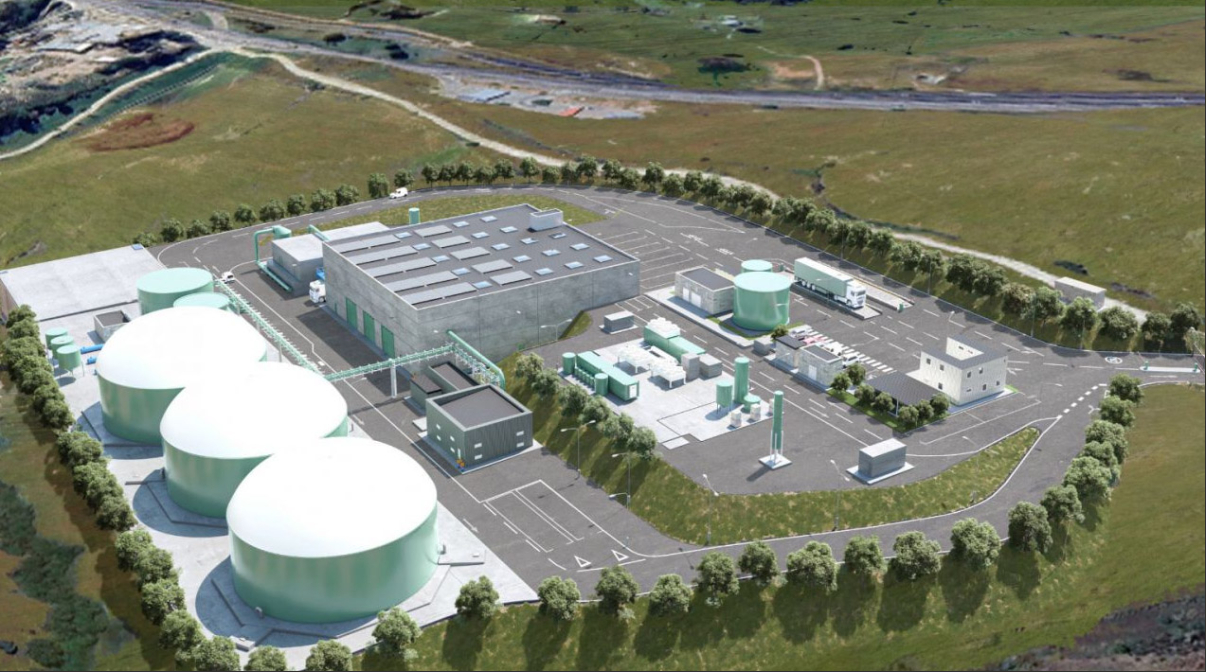
KALFRESH has secured leading international technology partner, WELTEC BIOPOWER, to deliver its landmark bioenergy facility at Kalbar, in South-East Queensland, aligning with one of the world’s most experienced and proven providers of anaerobic digestion technology.

The Queensland-based vegetable business has signed an agreement with the German company to design and build the first stage of the bioenergy facility, which will anchor the new Scenic Rim Agricultural Industrial Precinct. The WELTEC equipment is due to arrive on site in late August, when construction of the first anaerobic digestion (AD) tank will begin.

The partnership marks a significant milestone and will unlock the paddock-to-power potential of Kalfresh’s vertically integrated business, which will turn crop residues, processing offcuts and agricultural waste into several renewable by-products. A by-product, a nutrient-rich digestate, will be returned to farms as a biofertiliser, advancing Kalfresh’s long-term vision of circular agriculture.

Kalfresh CEO, Richard Gorman, said WELTEC BIOPOWER will use its proven stainless-steel tank technology, ensuring durability, corrosion resistance and long operational life. “For us, it was critical to work with a partner that has a track record of delivering reliable, long-term infrastructure,” Mr Gorman said.

“This is proven technology, and we’re building it to last. We have visited many operational bioenergy sites overseas, including those designed and built by WELTEC. They have a reputation for designing efficient, high- quality systems that deliver consistently. “Kalfresh sent a group of Queensland farmers to Germany in April to visit Weltec sites and see the AD technology first-hand.”

WELTEC BIOPOWER was established in 2001 and has planned, delivered and constructed more than 450 specialised stainless steel biogas plants in the US, Japan, Cyprus, the UK and Europe. Dirk Krumdieck, CEO and Head of Sales from WELTEC BIOPOWER, says the agreement reflects the extensive preparatory work and technical planning undertaken by WELTEC and Kalfresh over recent years. „We are excited to be delivering a flagship bioenergy project in Australia that combines Kalfresh’s agricultural innovation with our proven European biogas engineering experience,” Mr Krumdieck said.

The project will be delivered in three stages. The first stage involves the construction of a large digester with a diameter of 31.48 metres and a height of 8.8 metres, along with a digestate storage tank, supported by the newly implemented WELTEC Control system.

It represents a new model for Australian agriculture where farming, food production and energy generation operate side by side in a closed-loop system. At full capacity, the facility could feature 14 digesters which would be capable of producing enough energy to power up to 31,000 homes, or fuel up to 98 million kilometres of truck and bus travel annually. “Recent international events have made it clear there’s a real and immediate need for national fuel and fertiliser security,” said Mr Gorman.

“The introduction of a home-grown, dispatchable source of renewable natural gas to the energy mix comes at an important time. We can help transition Australia’s emitters towards emissions-free operation.“This is a practical, farmer-led solution that works today, and can be repeated in the future in agricultural communities across the country, value-adding what is already produced on-farms.”

The Scenic Rim Agricultural Industrial Precinct will co-locate advanced food manufacturing on a 40-hectare site fronting the Cunningham Highway and approximately one hour from Brisbane. The Precinct will feature 16 serviced lots, including three occupied by Kalfresh, with access to on-site renewable power and circular waste services.

For more information on the project visit the Kalfresh Bioenergy website

https://www.kalfreshbioenergy.com.au/

Assessment Update: UKEX vs ATEX – Understanding the Key Differences

Following the UK's departure from the European Union, manufacturers supplying explosion-protected equipment to both Great Britain and the European Union must ensure they understand the differences between the UKEX and ATEX regulatory frameworks. While the technical standards remain closely aligned, the conformity assessment and product marking requirements differ depending on the destination market.

What is UKEX?

UKEX is the conformity marking required for products placed on the market in Great Britain (England, Scotland and Wales). It applies to equipment and protective systems intended for use in potentially explosive atmospheres under the Equipment and Protective Systems Intended for Use in Potentially Explosive Atmospheres Regulations 2016, as amended following Brexit.

Although UKEX is based on the same essential health and safety requirements as the ATEX Directive, products destined for Great Britain must follow the UK conformity assessment process where applicable.

ATEX Remains in Force in the European Union

Manufacturers supplying equipment to EU member states must continue to comply with the ATEX Directive 2014/34/EU and apply the CE and Ex markings where required.

The technical standards supporting both UKEX and ATEX are largely harmonised with the IEC 60079 series, meaning the engineering requirements remain familiar to manufacturers. However, the administrative route to market differs.

Key Differences

Manufacturers should be aware of several important distinctions:

  • UKEX applies in Great Britain, while ATEX applies across the European Union.
  • Products requiring third-party conformity assessment must use an approved UK body for UKEX certification and an EU Notified Body for ATEX certification.
  • Technical documentation and declarations of conformity must reference the appropriate legislation for the intended market.
  • Separate certificates may be required when placing products on both the GB and EU markets.

Planning for Dual Market Access

Many manufacturers continue to serve customers in both Great Britain and the European Union. Planning certification early can help minimise duplication, reduce costs and avoid delays when launching new explosion-protected equipment.

By understanding the differences between UKEX and ATEX, manufacturers can ensure their products remain compliant while maintaining access to key industrial markets.