
News
New Encapsulation Rules: What Changes for Your Ex Design?
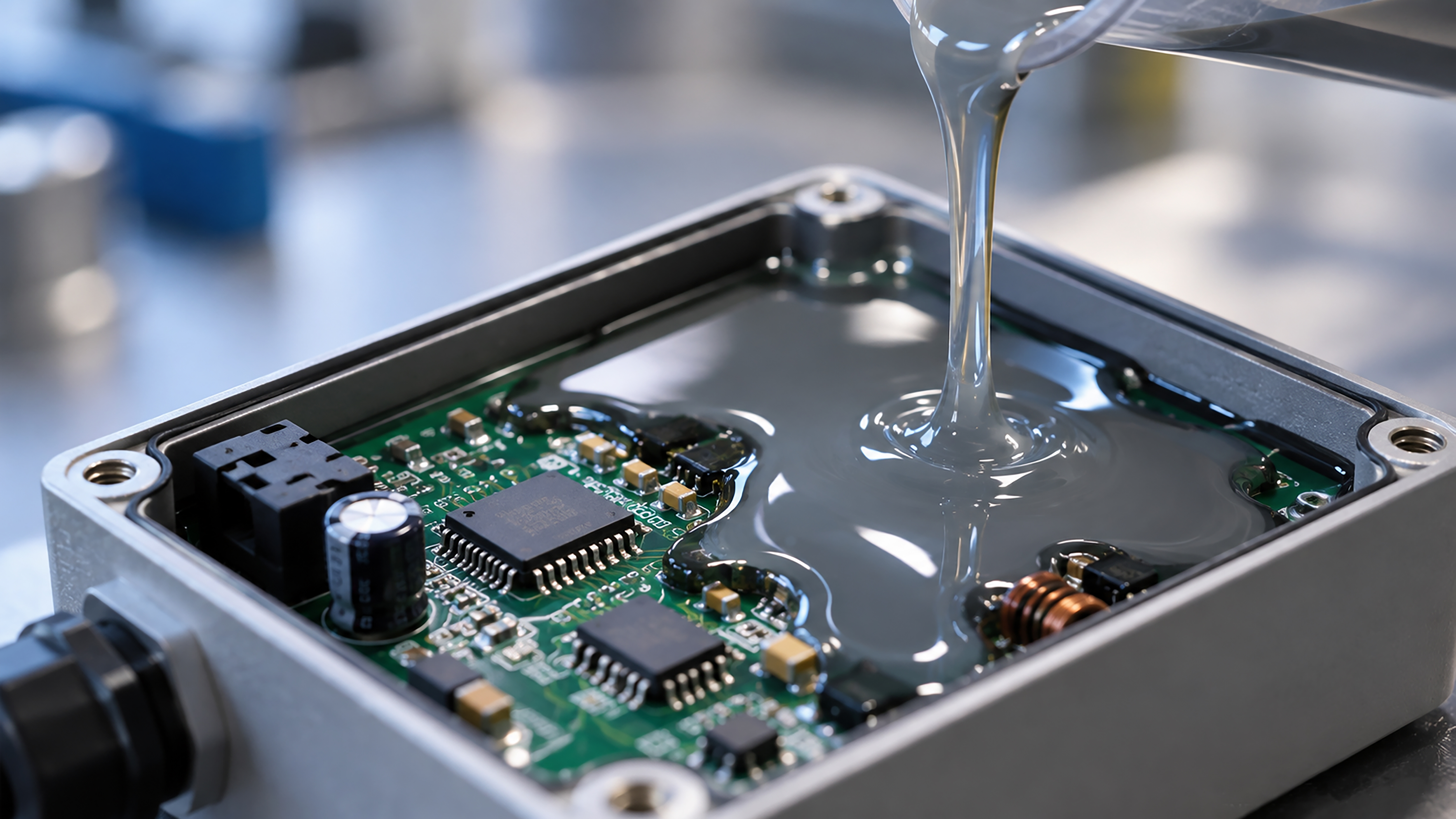
Encapsulation protection, or “m”, is a protection technique used to prevent ignition in equipment for explosive atmospheres across oil and gas, mining and other industrial applications.
For over 10 years, manufacturers of encapsulated equipment for explosive atmospheres have worked to IEC 60079-18:2014 and its subsequent amendment. IEC 60079-18:2025, Edition 5.0, is the first full technical revision of the encapsulation “m” standard since then.
While the fundamental protection concept remains unchanged, Edition 5 introduces four Major Technical Changes. For manufacturers, the important question is not simply what has changed, but which changes could affect existing products, new designs and future certification.
Where are the significant changes?
The following areas deserve attention first because they include the Major Technical Changes and other changes with significant practical impact on the design and certification of encapsulated equipment.
Compound specification and curing
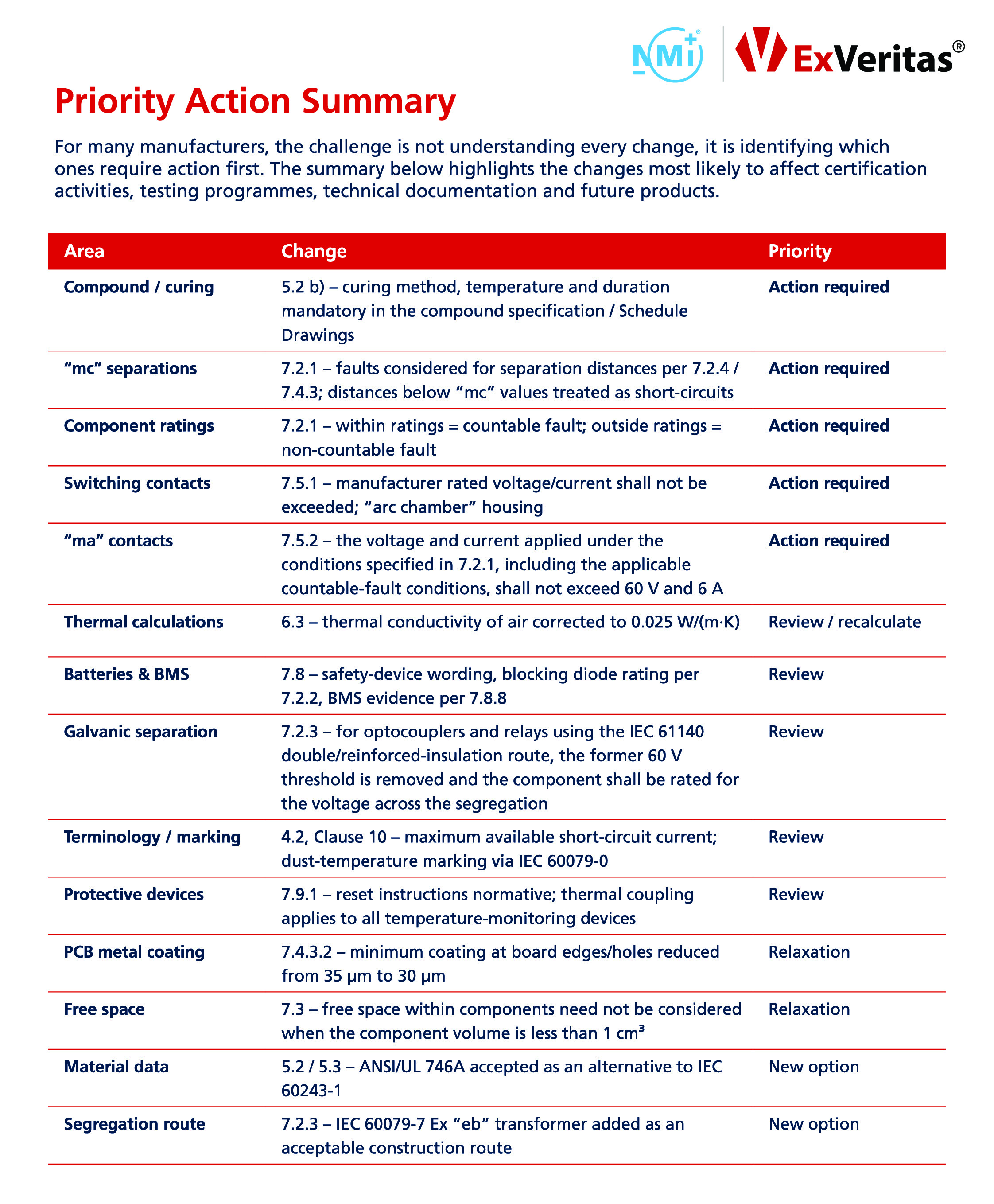
Edition 5 requires the curing method, temperature and duration to be included within the controlled compound specification.
This makes curing conditions an explicitly controlled part of the design and manufacturing process. Manufacturers should consider whether this information is already adequately captured within their controlled documentation. Where curing conditions are recorded elsewhere, documentation updates may be required.
Fault examination for “mc”
Edition 5 expressly applies the relevant separation-distance requirements to “mc”. Compact designs therefore cannot disregard these requirements simply because faults are generally not considered for “mc”.
Component fault treatment is also clarified. A component operating within its manufacturer ratings is treated as a countable fault, while operation outside those ratings is treated as a non-countable fault.
For compact “mc” equipment or designs relying on highly-stressed components, these provisions warrant particular attention.
Encapsulated switching contacts
The rated voltage and current specified by the switching-contact manufacturer must not be exceeded, while the housing around the arcing area is now termed the “arc chamber”.
For Level of Protection “ma”, the 60 V and 6 A limits must also be met under the applicable fault conditions specified by the standard. Manufacturers of “ma” equipment incorporating switching contacts should therefore verify the voltage and current under these conditions, rather than considering normal operating values alone.
Thermal calculations and battery systems
The previous edition included a note giving the thermal conductivity of air as 0.25 W/(m·K). This has been corrected to 0.025 W/(m·K).
Where the previous value was used to determine the hottest component or compound temperature, the calculation should be reviewed and, where necessary, recalculated.
Battery-powered equipment also receives additional attention.
The term “control device” is generally replaced by “safety device”, while Edition 5 introduces more explicit responsibilities where a Battery Management System provides a protection required by IEC 60079-18.
Evidence is required that the BMS remains functional under the expected relevant malfunctions. The equipment manufacturer should retain the appropriate supporting declaration from the BMS manufacturer and include information necessary to maintain the integrity of the protection within the product instructions.
Blocking diodes used to prevent reverse current are also subject to specified rating requirements.
What should manufacturers do now?
A structured gap assessment remains the clearest way to separate substantive technical gaps from changes with little practical impact, particularly for "mc" designs, "ma" switching contacts, and battery systems affected by the BMS provisions.
NMi ExVeritas carries out these assessments for encapsulated equipment manufacturers, mapping Edition 5 requirements against existing designs and documentation ahead of transition and certification deadlines.
