
News

Documentation: The Hidden Backbone of ATEX and IECEx Certification

exveritas_jan_21.jpeg

For manufacturers of equipment intended for explosive atmospheres, technical documentation is not a formality it is foundational to ATEX and IECEx certification. Certification bodies primarily assess conformity through the documented evidence provided. If that evidence is unclear, incomplete, or inconsistent, even well-designed equipment may face delays, redesign, or rejection.

iecex_a.jpeg

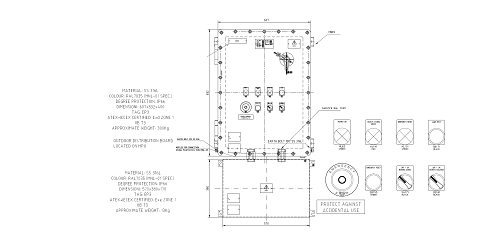
Drawings and Schematics Define Safety General arrangement and assembly drawings define how the equipment is built. These include details such as enclosure construction, joint types, fasteners, sealing methods, and clearances—all vital to verifying the chosen protection concept (e.g. Ex d, Ex e, Ex i, Ex p, or Ex t). Certification assessors use these drawings to confirm that the protection concept has been applied correctly and consistently. Gaps in documentation inevitably trigger technical queries.

Electrical schematics are equally important. They provide visibility into circuit topology, protection devices, segregation of circuits, and interfaces between hazardous and safe areas. In methods like intrinsic safety or increased safety, the schematic is central to assessing energy limitation, fault tolerance, and standard compliance. Poorly structured schematics are a common source of late-stage non-compliances.

BOMs and Datasheets Build Confidence A clear, version-controlled Bill of Materials (BOM) links the assessed design to what is manufactured. It is essential for demonstrating configuration control, ensuring that each production unit matches the certified design. A generic or uncontrolled BOM undermines the credibility of the entire assessment.

Equally, datasheets for critical components—such as relays, batteries, transformers, and cable glands—are indispensable. These documents provide the rated electrical, thermal, and mechanical limits that underpin compliance. Often, the validity of a protection concept hinges on specific component performance. Missing or ambiguous datasheets can halt the certification process entirely.

Component-level ATEX or IECEx certificates (e.g. for glands, enclosures, barriers) are also vital. They allow the assessor to rely on third-party evaluations rather than re-assessing internal construction. Their absence can force deeper, more time-consuming evaluations at the equipment level.

Better Documentation, Faster Certification High-quality documentation reduces lead times, avoids unnecessary technical queries, and supports ongoing quality assurance, change control, and audit readiness. For manufacturers, investing in documentation early in the development process leads to smoother, more predictable certification outcomes—and ultimately safer, more reliable products in the field.

 Artilcle by Anoop Chandrahasan, ExVeritas Operations Manager

Windows 11 IoT Enterprise LTSC for Arm64: The suitable Microsoft® platform for the IS945.1 tablet in the oil and gas industry

The oil and gas industry places the highest demands on its IT infrastructure. Absolute reliability, long life cycles, minimal energy consumption and strict safety standards are essential. The IS945.1 tablet from i.safe MOBILE has been equipped with Windows 11 IoT Enterprise LTSC for Arm64 to meet precisely these demanding conditions.

Windows 11 IoT Enterprise LTSC for Arm64 is far more than a conventional operating system. This industrial long-term version has been specifically designed for devices that need to operate reliably, securely and continuously for years. The LTSC model (Long-Term Servicing Channel) guarantees up to ten years of support through to October 2034, exclusively with security and quality updates, without disruptive feature updates or forced interface changes. For the IS945.1 tablet, this means stable and predictable system behaviour throughout its entire service life - invaluable in an industry where systems often run around the clock at hard-to-reach or remote locations.

Choosing Windows over alternative platforms means bridging mobility with desktop-grade performance and enterprise integration. The IS945.1 provides a familiar environment for operators and IT departments, accelerating deployment whilst maintaining robust features such as BitLocker, Hyper-V and Remote Desktop. Maximum application compatibility ensures seamless integration into existing Windows-based IT and security infrastructures, protecting established investments.

Arm-based processors are characterised by extremely low energy consumption, high efficiency, and minimal heat generation, eliminating the need for large battery packs or extensive cooling systems.

This results in a lightweight and compact device with optimal battery runtimes, well suited for shift-based field work.

This design, made possible by high integration of modem, GPU and AI engines in a single system-on-chip, ensures operator friendliness without compromising ruggedness.

Refineries, drilling platforms, and pipeline facilities are classified as hazardous or potentially explosive environments. In these settings, the ATEX and IECEx certifications of the IS945.1 tablet confirm its suitability for safe operation in accordance with stringent regulatory requirements.

Modern oil and gas facilities generate enormous amounts of data. The IS945.1 enables powerful edge computing - local data processing directly at the point of use. This is particularly valuable for real-time monitoring, rapid response to anomalies, predictive maintenance and SCADA control systems. Local processing reduces dependence on cloud connectivity and enables faster, autonomous decisions in the field. The platform supports local AI inference and secure 5G/4G connectivity directly on-device.

As critical infrastructure, the oil and gas industry is a prime target for cyber attacks. Windows IoT Enterprise LTSC offers comprehensive security features such as Secure Boot, TPM support, BitLocker encryption and long-term security patches throughout the entire lifecycle.

The IS945.1 tablet from i.safe MOBILE with Windows 11 IoT Enterprise LTSC for Arm64 combines all features that modern oil and gas operations require: long-term stability, explosion protection, superior energy efficiency, edge computing capabilities and the highest security standards. It represents optimal IT/OT convergence, empowering secure field operations whilst protecting software investments - the ideal solution for digitising critical processes in a future-proof manner.

www.isafe-mobile.com


Why Vacuum Selection Matters in Hazardous Engineering Environments

qp21.jpeg


Dust is present in almost every industrial environment. It may be created by production processes, released during material handling, or left behind during maintenance activities. In many cases it is removed using an industrial vacuum cleaner chosen for availability rather than suitability.

In hazardous engineering environments, that choice is critical. Many industrial dusts are harmful when inhaled and a significant number are combustible. Inadequately specified vacuum equipment can allow fine dust to become airborne again, fail to contain hazardous material, or introduce ignition risks in areas where explosive atmospheres may be present. Instead of controlling risk, the wrong equipment can increase it.

Effective dust control begins with understanding the hazard. What material is being collected, how fine it is, whether it presents a health risk, and whether it has explosive potential all influence the correct vacuum specification. The operating environment is equally important, particularly where ATEX zoned areas exist. Once these factors are understood, the vacuum system, filtration, materials of construction and accessories can be specified to match the real risk rather than assumptions.

Engineering a machine for the hazard

BVC – British Vacuum Cleaners – is built by Quirepace in Fareham and supplied as industrial vacuum systems engineered to order. Rather than relying on a fixed catalogue, machines are sized and configured around the application they will operate in and the hazards they must control.

Where dust is hazardous to health, M-Class or H-Class machines are required. Where an explosive atmosphere may occur, ATEX-rated equipment is essential. In many industrial environments both conditions apply, meaning a single vacuum system may need certification for hazardous dust collection while also being suitable for use in ATEX Dust Zone 21 or 22. Some applications may also require suitability for ATEX gas zones.

Filtration plays a central role in risk control. Anti-static filter media and multi-stage filtration ensure hazardous material remains contained and exhaust air is kept clean, protecting operators and preventing secondary contamination.

Quirepace also engineers application-specific solutions, including systems with low-pressure blown air to dislodge compacted deposits, high-level cleaning tools for structural steelwork and services, and integration with process controls so equipment operates automatically with production.

Systems, tools and long-term value

Correct hose sizing and tool selection improve conveying efficiency, reduce blockages and make cleaning more effective. Portable ATEX vacuums offer flexibility, while larger or higher-risk sites may benefit from Central Vacuum Cleaning systems that remove equipment from hazardous areas and centralise maintenance.

Industrial vacuum systems operate in demanding conditions and are relied upon daily. For this reason, whole-life value, reliability and support are often more important than initial purchase price. Treating vacuum cleaning as part of the engineered hazard control strategy leads to safer operations and more robust long-term performance. 

BVC Quirepace offers free on site demonstrations of BVC equipment at food factories in the UK. For more information or to discuss your site, contact Quirepace:
T: 023 9260 3700
E: This email address is being protected from spambots. You need JavaScript enabled to view it.
W: www.quirepace.co.uk | www.bvc.co.uk

Mention Hazardous Engineering Solutions when you contact us and we will apply a 5% discount to your first order for BVC industrial vacuum equipment.

Oleon Invests in Health and Safety at its Goole Site with support from Tadweld

Oleon, global experts in natural chemistry and sustainable oleochemical production, have invested in class-leading safe tanker access solutions at its Goole facility.


With hundreds of tankers visiting the facility each year, upgrades have delivered improvements to operational efficiency and helped to minimise risk of accidents.

To implement the solution, Oleon appointed Yorkshire based steel fabricators Tadweld Limited, who offer a range of specialist tanker access solutions under their AJAX safe access brand.

Oleon Safety Access

At the James Street site in Goole, Tadweld have installed a full gantry system combined with a Pneumatic Ajax Step Unit, providing safe, permanent access to tankers with enhanced usability and safety. 

Oleon Mobile Step Unit

At Oleon’s New Potter Grange Road site, Tadweld have delivered a set of the company’s mobile tanker access steps, offering a compact, flexible access system that can be easily manoeuvred.

Andrew Akins, Health and Safety Manager said:

“Tadweld understood our access challenges and delivered tailored solutions for each site. Both solutions have improved safety and efficiency. The whole process was seamless and professional. From the initial project meeting, design and solution development, Tadweld understood our desire to achieve best practice for our team and delivered a solution that works for us. We wouldn't hesitate to recommend them.”

Chris Houston, Managing Director at Tadweld, said:

“Ajax tanker access systems have set the industry benchmark for over 40 years. With over 1,000 units installed around the UK, we’re proud that Oleon chose Tadweld to achieve their health and safety objectives”

“Working with Oleon has been a great example of how collaboration across departments - from safety to logistics - can produce outstanding results,” added Mike Godbert, Business Development Manager at Tadweld. 

All-Energy marks 25 years with new Strategic Summit committee

Leading voices from across the energy sector appointed to shape programme


All-Energy, the UK’s leading low-carbon energy and renewables event, has established a dedicated Strategic Summit committee for the first time to drive its streamlined 2026 programme at the SEC Glasgow from 13-14 May 2026.


A cohort of 29 leading experts from across the energy sector will shape the direction, focus and relevance of this year’s conference which will spotlight the most important challenges, opportunities, and innovations driving the transition. Key themes will cover investment and finance, transmission reform, skills and workforce, supply chain and circular economy with open plenaries scheduled for both days of the event.


The committee brings together high-profile leaders such as Iain Sinclair, Executive Director at GES Holding; Morag Watson, Director of Onshore at Scottish Renewables; Philippa Parmiter, CEO at NECCUS; and Clare Foster, Head of Clean Energy from Shepherd and Wedderburn, alongside representatives from Siemens Energy, EDF, BEAMA, Hitachi Energy, Crown Estate, and SSEN-Transmission. The full Strategic Summit list can be viewed here: Strategic Summit Committee.


Anam Khan, All-Energy Event Manager at RX Global said: ‘We are excited to be introducing a formal Executive Committee for the first time, marking a significant step forward in how the conference is shaped. By working closely with industry leaders, we are building an agenda that not only reflects where the sector is today, but where it needs to go next. Their insight is helping us introduce new topics and themes, including a key focus on finance and skills, streamline the conference structure, and create more engaging, thought-provoking discussions that will support the industry through the next phase of the energy transition.”

Driving the event, Ashley Privitera has been appointed Conference Manager for All-Energy. She joined RX Global in 2025 and brings several years of conference production and management experience, including holding the role of Conference Manager for SPE Offshore Europe. Ashley will oversee the delivery of the 2026 programme, working closely with the Strategic Summit committee and show floor theatre programme to ensure a highly targeted programme.

She commented: “All-Energy is set to be a milestone year for the event as we celebrate our 25th anniversary and it will set the stage for meaningful discussions with industry peers, policy makers, academics and C-suite professionals. It’s a pivotal time for the energy sector with challenges around grid capacity, policy uncertainty and skills shortages. Addressing these barriers collaboratively is essential to drive the energy transition forward and I look forward to working closely with the committee to support this important discussion.”


Registration for All-Energy 2026 will open on Tuesday 20 January – tickets can be booked here: Get your ticket for All-Energy 2026

Connecting The Global Ocean Technology Community

ocean.jpeg

Oceanology International is rapidly becoming a vital fixture in the calendar for engineers responsible for keeping hazardous operations safe, compliant and productive in some of the toughest marine and coastal environments on the planet. For readers of Hazardous Engineering Solutions, it offers a concentrated, three‑day opportunity to see how advances in ocean technology are directly reducing risk, improving situational awareness and supporting safer decision‑making in offshore, coastal, process and defence applications.

 Why Ocean tech matters to hazardous sites 

Hazardous area engineers are increasingly dealing with assets that sit at, or just beyond, the waterline: coastal terminals, jetties, subsea tie‑backs, offshore platforms, export pipelines, interconnectors and nearshore renewables. At Oceanology International 2026 (Oi26), ExCeL London, 10–12 March, the focus is firmly on technologies that improve reliability and reduce exposure for people working around these critical assets.

From remote and autonomous inspection of subsea infrastructure, to long‑range condition monitoring, leak detection and geohazard assessment, the show floor brings together solutions that allow operators to pull people back from hazardous, confined and explosive atmospheres while still maintaining tight control of safety and environmental performance.[3][2]

Data, autonomy and safer operations 

A strong theme for Oi26 is the rise of robotics, AI and autonomous systems as practical tools for safer operations in harsh or hazardous environments. Uncrewed surface vessels, AUVs and ROVs capable of deploying sensors under, on and above the water are showcased alongside integrated GIS, cloud analytics and digital platforms that turn raw data into actionable intelligence for integrity and safety teams.

For hazardous engineering specialists, this translates into better situational awareness around coastal and offshore assets, improved early warning of structural or geotechnical issues, and the ability to validate barrier health without exposing personnel to unnecessary risk. The maritime domain awareness and emergency response sessions, for example, focus on the latest ways to obtain the real‑time picture needed when incidents unfold in complex marine environments.

 New coastal focus: COAST 

New for 2026, the COAST exhibition zone and conference track push coastal resilience, infrastructure and engineering to the foreground. Engineers working on flood defences, terminals, refineries and chemical plants in exposed coastal locations will find technologies addressing erosion control, shoreline stabilisation, sediment transport analysis and climate adaptation in dynamic, high‑energy littoral zones.

High‑resolution monitoring, real‑time data streams and predictive modelling for storm, surge and flooding scenarios are central to this new feature, directly aligning with the risk‑based approaches familiar to HES readers managing hazardous sites in vulnerable coastal corridors.

Scale, community and knowledge transfer 

The 2024 edition of Oceanology International attracted 7,536 unique attendees from 91 countries and 443 exhibiting companies, with 110 product and service launches – the strongest performance in over a decade. That momentum carries into 2026, with thousands of engineers, surveyors, OEMs, regulators and solution providers expected to converge in London to discuss ocean exploration, environmental monitoring, sustainable marine engineering and the wider ocean enterprise.

For hazardous engineering professionals, it is an opportunity to test technologies hands‑on, benchmark approaches with peers from offshore, marine, defence and process sectors, and bring back ideas that enhance safety, resilience and compliance in their own high‑risk environments. With registration now open, Oceanology International 2026 offers a timely, practical forum for anyone responsible for hazardous assets where sea, shore and complex engineering intersect.

Register here for your free badge

Director and company fined after failing to comply with enforcement notices

  • A North London construction director and his company were fined for failing to comply with multiple HSE enforcement notices
  • Inspectors identified repeated safety failings at a residential conversion site, including work at height risks and inadequate site management
  • HSE guidance on managing health and safety in construction is available

A construction company director and his firm have been fined after failing to comply with multiple enforcement notices and for failing to suitably plan, manage and monitor construction work.

Vasilis Paraskeva and his London-based company, VNP Constructions Limited, were the appointed contractor for the conversion of a former public house and adjoining building into residential flats on White Lion Street, London.

During a proactive visit to the site on 1 September 2022, Health and Safety Executive (HSE) inspectors identified several issues including work at height risks and concerns about the competence of site management. Prohibition and Improvement notices were served.

Further visits over the following 12 months identified additional breaches, demonstrating a continued failure to suitably plan, manage and monitor the work. Additional Prohibition and Improvement notices were served.

An HSE investigation found that Vasilis Paraskeva and VNP Constructions Limited failed to comply with the requirements of multiple enforcement notices and failed to ensure work was carried out safely.

Picture1

Images from site show poor work at height practices and failures to suitably plan, manage and monitor the construction work.

Contractors have a responsibility to plan, manage and monitor construction work to ensure that it is carried out without risks to health or safety. Further guidance on Managing health and safety in construction – HSE can be found on HSE’s website.

The company, VNP Constructions Limited, of Kings Avenue, Winchmore Hill, London, pleaded guilty to breaching Regulation 15(2) of the Construction (Design and Management) Regulations 2015 and to two counts of failing to comply with a Prohibition Notice contrary to Section 33(1)(g) of the Health and Safety at Work etc Act 1971.

The company was fined £7200 and ordered to pay £900 in costs at the same hearing.

The Director, Vasilis Paraskeva, of Kings Avenue, Winchmore Hill, London, pleaded guilty to three offences on the basis that the company had committed the above three offences and those offences were committed with his consent or connivance or was attributable to his neglect by virtue of S37(1) of the Health and Safety at Work Act 1974

He was fined £10,800 and ordered to pay £900 in costs at Snaresbrook Crown Court on 7 January 2026.

Speaking after the hearing, HSE inspector Andrew Pipe said: "These fines should send a clear message to the construction industry that HSE and the courts take failure to comply with enforcement notices extremely seriously.

"HSE will not hesitate to take action against companies and individuals who fail to keep people safe."

This HSE prosecution was brought by HSE Enforcement Lawyer Matthew Reynolds and Paralegal Officer Melissa Wardle. 

  1. The Health and Safety Executive (HSE) is Britain’s national regulator for workplace health and safety. We are dedicated to protecting people and places, and helping everyone lead safer and healthier lives.
  2. More information about the legislation referred to in this case is available.
  3. Further details on the latest HSE news releases is available.
  4. Relevant guidance can be found here Managing health and safety in construction – HSE 
  5. HSE does not pass sentences, set guidelines or collect any fines imposed. Relevant sentencing guidelines must be followed unless the court is satisfied that it would be contrary to the interests of justice to do so.  The sentencing guidelines for health and safety offences can be found here.

“Dental Assistant Training and the Importance of First Aid (CPR)”

DENTIST_1.jpeg

Dental Assistant Course is a valuable training program for individuals who wish to enter the dental healthcare profession. This course prepares students with the practical and theoretical knowledge required to support dentists in clinics, hospitals, and dental care centers. Through a Dental Assistant Course, learners gain skills in chairside assisting, patient preparation, instrument sterilization, infection control, and basic dental procedures. The course also emphasizes communication skills and professionalism, helping dental assistants create a comfortable and safe environment for patients.

An important component that complements dental training is First Aid (CPR). First Aid (CPR) equips dental assistants with essential life-saving skills needed to respond to medical emergencies that may occur in a dental setting. Situations such as fainting, allergic reactions, breathing difficulties, or cardiac emergencies require quick and confident action. Training in First Aid (CPR) enables dental assistants to provide immediate care, maintain patient stability, and assist until professional medical support arrives. These skills are critical in ensuring patient safety and reducing risks during dental procedures.

When combined, a Dental Assistant Course and First Aid (CPR) training create a well-rounded healthcare professional. Dental assistants who are trained in First Aid (CPR) are better prepared to handle emergencies, follow safety protocols, and support the dental team effectively. Employers highly value this combination of skills, as it enhances clinic preparedness and patient trust.

Overall, enrolling in a Dental Assistant Course along with First Aid (CPR) training offers strong career advantages. It improves employability, builds confidence, and ensures that dental assistants can deliver safe, efficient, and compassionate care while contributing positively to overall patient health and well-being.

“Compex UAE and Hazard Recognition: A Complete Safety Framework”

compex.jpeg

Compex training UAE is a highly regarded safety and competency program for professionals working in hazardous and explosive environments. This training is designed to ensure that technicians, engineers, and supervisors have the required knowledge and practical skills to work safely with electrical and mechanical systems in potentially explosive atmospheres. Compex training UAE is widely adopted in industries such as oil and gas, petrochemicals, power generation, and industrial facilities, where strict compliance with international safety standards is essential. The program focuses on safe installation practices, inspection procedures, maintenance techniques, and risk control measures, helping reduce accidents and improve overall operational safety.

Equally important in high-risk workplaces is hazard recognition training, which teaches workers how to identify, assess, and control potential dangers before incidents occur. Hazard recognition training covers a wide range of workplace risks, including electrical hazards, chemical exposure, fire risks, confined spaces, and working at heights. By learning to recognize unsafe conditions and behaviors, workers become more proactive in preventing accidents and maintaining a safe working environment. This training encourages situational awareness, effective communication, and adherence to safety protocols.

When combined, compex training UAE and hazard recognition training provide a strong foundation for workplace safety and risk management. Professionals who complete both are better equipped to understand complex hazards and take appropriate preventive actions. Employers value this combination because it supports regulatory compliance, reduces downtime, and promotes a strong safety culture. Overall, compex training UAE supported by hazard recognition training enhances worker confidence, improves safety performance, and contributes to safer and more efficient industrial operations.

Hart’s high speed doors should join North East England’s Hall of Fame writes Chris Dobson

The immediate question in readers’ minds is what ‘Hall of Fame’. Even to those who have spent most of their lives in the North East very few can point to any  of the inventions that have made this glorious region of Great Britain a renowned centre for invention defined as something that has never been made before.

What can these be? The development of the lifeboat, the steam locomotive, the electric safety lamp for coal mines, the hydraulic crane, the power grid and hydroelectricity. Looking at the last invention, a day out at Rothbury’s Cragside estate will reinforce how hydroelectricity was used by William Armstrong in 1880 to power incandescent bulbs.

Combined, these inventions place the North East as a leader in innovation, not stopping at the initial concept stage but complete product development.

This leads me to the high speed door. This is another example of fresh thinking. Clearly industry needs buildings and ways into and out of them. “I had just that industrial building where the principal activity of manufacture of roller shutters was carried out,” explains Douglas Hart, chairman of Hart Door Systems. “I noticed on several occasions the doors into the factory were left open, even on a chilly winter’s day. Clearly energy costs must have been increased as heated air was effectively blown away. There was just one solution -  a door which opened/closed automatically.

“The trusty roller shutter worked extremely well but it was slow, better left open in some people’s minds. I had to come up with a solution which I did after consideration and initial product development,” says Mr Hart.  Welcome to the world of the high-speed door, in the case of Hart, Speedor, now a recognised global brand made by Hart Door Systems in Newcastle upon Tyne.

 Hart’s Speedor is designed to open and close rapidly to control temperature, airflow, hygiene, and traffic flow in commercial and industrial buildings.

 Speedors are widely used in warehouses, factories, cleanrooms, and logistics sites for example. However this Newcastle gem is in use across the globe in 36 countries, a remarkable success story of an industrial door now promoted as several sub-brands such as Mini, Storm, Smart and Cleanroom.

As an extremely busy company Hart Door Systems has several other brands such as its Firebrand range of fire shutters, Terror Screen security and roller shutters and Typhoon, tropical storm shutters. It’s success can be measured by the fact that Hart has thousands of doors and shutters in action in 36 countries.

WWW. HART DOORS.COM

www.hartdoors.com