Find ATEX, IECEx, Explosion Protection & Hazardous Area Content...

News

Major Occupational Safety and Health organisations form historic alliance to promote better safety, health and wellbeing for all

Nine of the UK’s most prominent Safety & Health organisations have united to form the Occupational Safety and Health Stakeholder Alliance. It will create a platform to offer a unified 360-degree perspective on critical Safety & Health issues for the first time.

The British Occupational Hygiene Society (BOHS), British Safety Council, British Safety Industry Federation (BSIF), Chartered Institute of Environmental Health (CIEH), International Institute of Risk and Safety Management (IIRSM), Institution of Occupational Safety and Health (IOSH), and the Royal Society for the Prevention of Accidents (RoSPA) signed a Memorandum of Understanding on May 12th 2023 to create the Occupational Safety and Health Stakeholder Alliance. The National Examination Board for Occupational Safety and Health (NEBOSH) and the Chartered Institute of Ergonomics & Human Factors (CIEHF) have since added their signatures to the Memorandum.  

Collectively the Alliance members’ competencies span the full spectrum of OSH considerations, from education and regulation to policy creation, professional standards and thought leadership. It will provide a unified voice for the OSH industry, drawing on members’ collective expertise to inform and support OSH decision-making across government policy - maker, corporate and professional levels.

The Alliance members are delighted to be announcing the formation of the Occupational Safety & Health Stakeholder Alliance, a truly historic initiative with the potential to have a far-reaching positive impact on occupational safety and health management in the UK. 

It is a non-exclusive group that welcomes wider involvement in the delivery of its aims. 

It is committed to supporting the good practice that already prevails in the occupational safety and health space and to developing and implementing programmes, initiatives and activities that enhance it. The group will leverage members’ influence to deliver joint messaging and facilitate continuous progress on crucial OSH issues. They will also work to increase the visibility and value of the Safety & Health profession and its wider set of disciplines and practices as well as highlighting its role in delivering OSH goals.

While the UK has an enviable record in safety there remains much to be done. Beyond safety, the subject of health and specifically mental health will be an immediate area of focus for the Alliance. Mental health issues associated with the workplace account for more than 50% of all workplace “incidents” according to the latest statistics from the Health and Safety Executive (HSE).

The UK is less well advanced regarding the mitigation of mental health issues than many of its EU counterparts. The consequences of this go far beyond the direct impact on individuals and their employers, including an already-stretched NHS.  An early priority for the Alliance will be to prioritise, identify, develop and implement measures to equip the OSH profession to more effectively mitigate the risk factors giving rise to mental health issues in the workplace.

For more information about the OSH Stakeholder Alliance, contact: This email address is being protected from spambots. You need JavaScript enabled to view it.
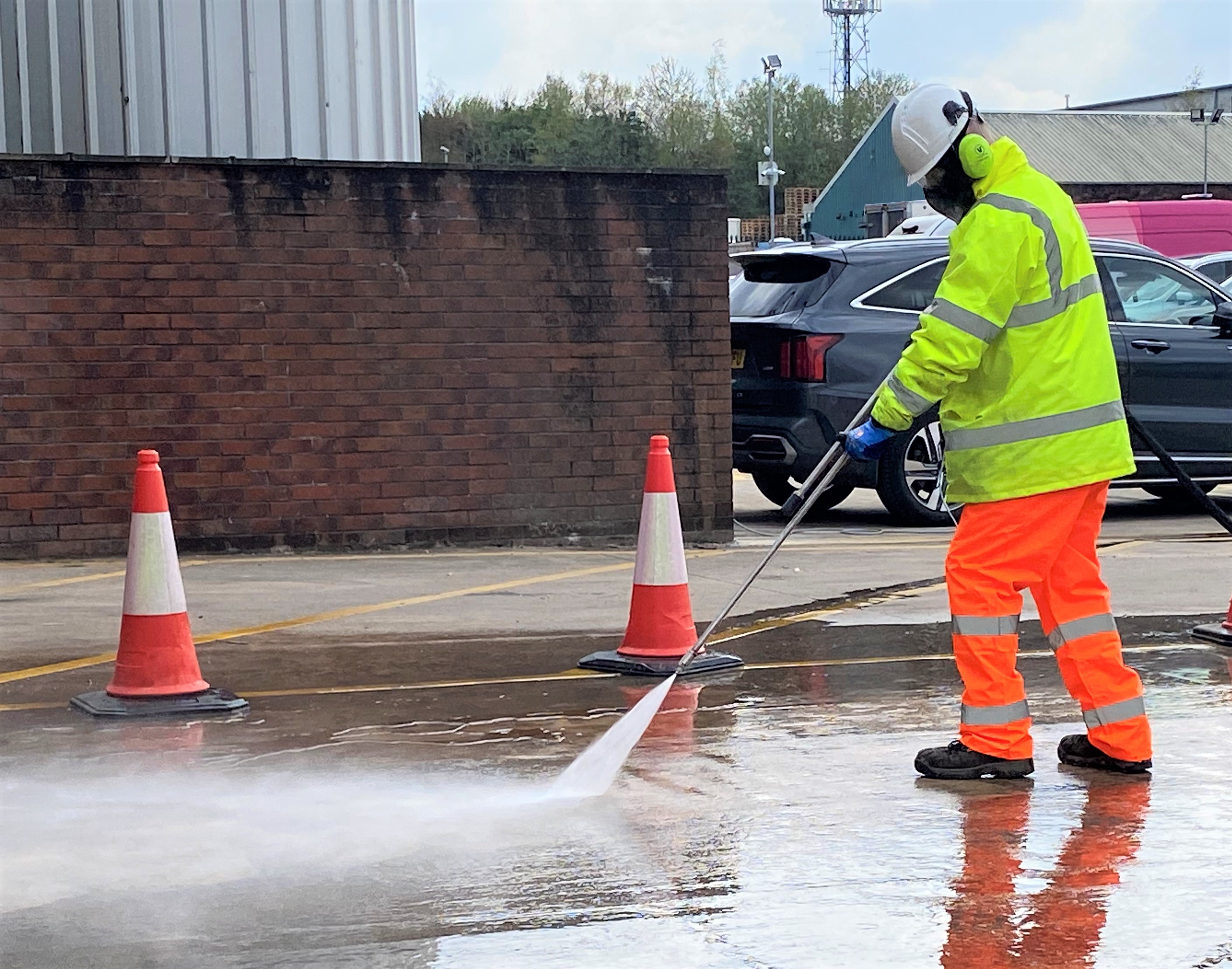
New WJA course give drainage operatives dual skills

Water jetting operatives working in the drainage industry are beginning to benefit from a new training course that helps develop essential knowledge and skills for when using water jetting for surface cleaning.

The Drain, Sewer and Surface Preparation practical module, or DSP for short, developed by the Water Jetting Association (WJA), includes new instruction on surface preparation using water jetting guns.

It develops skills that discourage the use of washdown nozzles attached to jetting hoses, which have no mechanism for instantly shutting off the water supply in an emergency.

The WJA is the UK member organisation for the water jetting industry. It sets standards for high and ultra high pressure water jetting and drain and sewer jetting, in the UK and internationally, through two codes of practice.

WJA Training and Safety Committee Chairman Steve Williams said: “We have developed this course in consultation with our drainage contractor members so their operatives have the skills needed to deliver the best service for customers safely and effectively.

“Drainage operatives often use water jetting to clean contaminated surfaces, for example to deal with sewage spills, or clean access chambers and open channels.

“We want to eradicate the use of washdown nozzles for these tasks. Water jets from guns can be instantly stopped by releasing the trigger. This provides a built-in safety mechanism to control water delivery.

“By adopting the DSP course, drainage contractors can align their operational procedures with the WJA’s red code of practice for the safe use of water jetting equipment in drains and sewers, which has just been updated, and which incorporates this new thinking on surface preparation.”

During the DSP module, which has been accredited by City & Guilds, operatives undergo two practical assessments: water jetting in drains and sewer pipes; and jetting for surface preparation with a jetting gun up to 275 bar (4,000 psi) that an operative can comfortably control.

The pressure limit has been set because drainage operatives commonly use lower pressures for washdown activities. Operatives who need to carry out surface preparation tasks at higher pressures must pass the standard WJA surface preparation module.

Topics include safe use of jetting equipment, water jetting techniques, jetting gun and nozzle types, risk assessment, use of protective clothing and equipment, site set-up, and emergency first aid.

Drainage operatives can still take the standard Drain and Sewer (DS) course, which does not have the surface preparation component.

Drainage operatives must pass the class-based WJA Safety Awareness course, which is also City & Guilds accredited, and either the DSP or the DS practical module to receive their WJA training card, which must be renewed every three years by attending the Safety Awareness Refresher course.

www.waterjetting.org.uk

This article can also be found in the issue below.


Applus UK joins EEMUA as Associate

Applus UK Ltd is the newest member of EEMUA’s Associate Scheme. The company’s Tank Inspection Team falls within scope of the Associate status.

The Applus Team has wide experience in the field of storage tank testing and inspection and assisting tank owners to optimise their inspection intervals based on detailed inspection data and the application of remaining-life and RBI principles. The Team’s tank inspectors are supported by tank engineers who provide specialist advice relating to storage tank inspection, repair, modification, and maintenance.

One key area of EEMUA’s activity is helping its Members, and the wider industry, in all aspects of the design, inspection, maintenance and repair of storage tanks, to keep them operating safely and efficiently. The sharing of good practice provided by involvement in EEMUA will help support the Applus UK Tank Inspection Team, and therefore their clients, in the continued safe operation of these important assets.


Large 002Applus Logo RGB White


This article can also be found in the issue below.


Working at height with wind energy

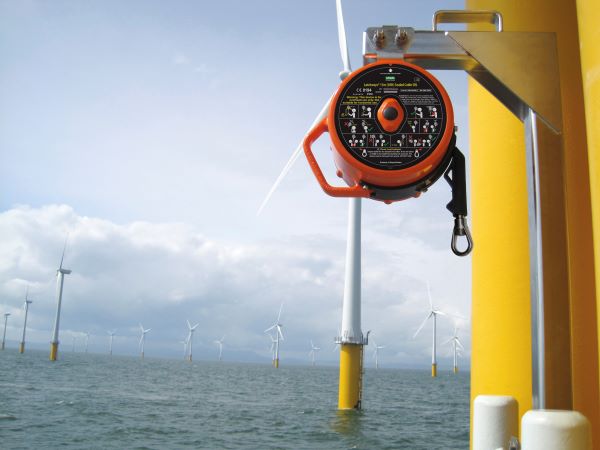
Working at height is a risky business, and the wind energy sector is no exception. In 2021/22 there were 29 work-related fatalities due to falls from a height in the UK – representing almost 24% of all worker deaths.[i] While total industry deaths are falling year-on-year, the people behind these statistics remind us that there is still a long way to go.

For those responsible for the safety of their workers, choosing appropriate systems is a huge responsibility when there is so much to consider. Here, Tim Bissett, Technical Manager at MSA Safety, explores the importance of adhering to the latest safety standards and explains some important considerations users and installers should be looking out for when it comes to choosing an appropriate vertical fall protection system for wind turbines.


Being proactive about safety

In 2020, over 500 safety incidents were reported at the UK’s onshore wind farms.[ii] Maintaining turbines can see workers having to climb as heigh as 30m at a time, which along with the often-limited access and frequent requirement to work in a confined space can contribute to workers’ risks. Therefore, being proactive about safety includes getting all relevant teams fully trained, competent, and comfortable working in these conditions, as well as knowledgeable about the chosen fall protection system and how it operates. Doing this will help to minimise the risk to workers.


Complying with safety standards


Safety standards vary across different locations and legislations, so it’s important to be aware of which standards you should be paying attention to. For example, for fall protection equipment certifications in Europe it’s EN standards. The EN standard used to apply in the UK as well but, following Brexit, the UKCA mark is now required as of 1 January 2023.

Even after initial selection consider regular checks of your fall protection systems for elements that could include:

  • The compliance certificates of your equipment and systems for expiry dates and that the life of your system is still in date.
  • You have regular inspections scheduled, including to check wear and tear.

Having simple checks like these in place will help you to increase your control over the systems used by your workforce.

And if you’re in the UK and Europe, to enhance the health and safety of your wind turbine workers, consider whether your safety equipment adheres to EN 353-1:2018 (EN 353-1:2014+A1:2017) - the newest update to fall protection system requirements.

  • Some key features of EN 353-1:2018 that companies can check, depending on their circumstances, are:
  • Dynamic performance testing – to check the maximum arrest force
  • Cold condition testing – checking locking function in cold conditions
  • Minimum distance testing – to replicate the user falling close to the anchor line
  • Fall back testing – which replicates the user falling back and down
  • Guide bracket testing – looking at the strength of the bracket and anchor line and the locking function of a fall arrester in the event of a fall
  • Sideway fall testing – to replicate the user falling in a sideways direction
  • Leaning angle testing – considering the locking function of the fall arrester with the anchor line leaning forward and sideways
  • Static strength requirements - testing to check the overall strength of the system.

As this list shows, the EU type-examination process for EN 353-1:2018 is rigorous and it incorporates several dynamic tests that covered many scenarios. Updating to this standard can help give your workers added confidence that their safety at height is a top priority.

Ease of use

Another element to consider when choosing fall protection systems for wind turbines, is how simple it is for workers to use. After all, there are advantages to systems that workers understand fully and will use. These fall protections systems should balance the users’ accessibility with their needs for relevant applications, such as considering whether a restriction or complex process reduces users’ risk.

At MSA Safety, We Know What’s At Stake

Keeping workers safe is a top priority and as safety professionals, it’s our mission to help make sure that workers go home to their family at the end of the working day. That’s why compliance and product testing are at the core of what we do.

For more information and resources on fall protection systems, please visit MSA Safety.

This article can also be found in the issue below.


SELECT announces new Associate Members as Schneider Electric, Robus and CompEx join Scotland’s largest construction trade association

compex.jpeg

SELECT, Scotland’s largest construction trade association, has welcomed three major new enterprises to its growing Associate Membership Scheme as it continues to attract an impressive line-up of market-leading manufacturers and organisations.

Schneider Electric, Robus LED Group and CompEx have all joined the 25 existing Associates who have built mutually beneficial relationships with SELECT’s member businesses over the past 18 months.

The three new Associate Members will now be able to engage with SELECT’s experts and members, enjoy access to a wealth of services and benefits and work with the organisation to share the latest ideas and in-depth knowledge to the advantage of the wider industry.

Iain Mason, Director of Membership and Communications at SELECT, said: “Everyone at SELECT is delighted that enterprises of the size and stature of Schneider Electric, Robus and CompEx have joined our Associate Membership scheme.

“Becoming an Associate is an opportunity for partner organisations to build stronger relationships with key players in the electrical contracting industry, and also to ally themselves with an established and successful trade body.”

SELECT, which represents around 1,250 electrical firms and 15,000 contractors across the country, launched the scheme early in 2022 to help develop a mutually complementary network of industry-specific partners.

Mr Mason added: “Since its launch, the scheme has proved extremely popular and has allowed Associates to speak to our members both through our print and digital channels and also face-to-face at the many events we run across Scotland throughout the year.

“It has also strengthened our own relationship with some of the industry’s most renowned names and allowed us to develop and grow events such as our Toolbox Talks, President’s Cup and President’s Lunch.”

Schneider Electric, which traces its history back to 1838, drives digital transformation by integrating world-leading process and energy technologies to help businesses make efficiency and sustainability gains across their organisations.

David Pownall, Vice President of Services at Schneider Electric UK & Ireland, said: “We have had a long and fruitful association with SELECT over the years, including sponsoring organisation awards, and we are proud to be included in an Associate Membership scheme which brings so many benefits to the electrical industry.”

Robus is a Dublin-headquartered global lighting wholesaler with customers in more than 40 countries around the world. Established in 1984, it is now the biggest lighting company in Ireland.


Mick G Slein, Chief Executive of Robus, said: “Becoming an Associate Member of SELECT completely aligns with our best-in-class mindset and our vision of being our customers’ most trusted LED lighting brand. We look forward to building strong and trusted relationships with SELECT members as we continue to grow internationally.”

CompEx is the international scheme for competency validation and certification of people who work in explosive atmospheres. First established 30 years ago with the support of industry, its suite of training and assessment modules are delivered through a network of independent training and assessment centres to support electrotechnical practitioners in sectors including oil and gas, chemicals, pharmaceuticals, food and beverage manufacturing and utilities.

Huw Bement, Managing Director of CompEx, said: “Our international safety and competency scheme is rooted in certifying electrotechnical technicians and engineers operating in hazardous areas – so becoming a SELECT Associate Member is hugely important for us. It’s a fantastic opportunity for CompEx to establish new industry connections and to continue building our existing relationships.”

The trio’s arrival follows the announcement of Legrand UK & Ireland as SELECT’s 25th Associate Member earlier this year. The electrical and digital infrastructure specialist is part of Legrand Group, which has a presence in nearly 90 countries and employs more than 38,000 people.

Other SELECT Associate Members include Hispec, V-Tac, Aico, Aurora, Electrium, Hager, Luceco, Megger, Scolmore and Thorn Lighting.

SELECT has just completed its annual Toolbox Talks roadshows and is now involved in the organisation of the second Green Home Festival as a leading member of the Construction Industry Collective Voice (CICV).

The organisation also continues to spearhead a long-running and high-profile campaign for regulation of the electrical industry, with the submission to Scottish Parliament of a Members’ Bill calling for Protection of Title

This article can also be found in this issue below.


Can you ‘Self Certify’ or do you need a Certification Body?

The Requirements for ATEX/UKCA

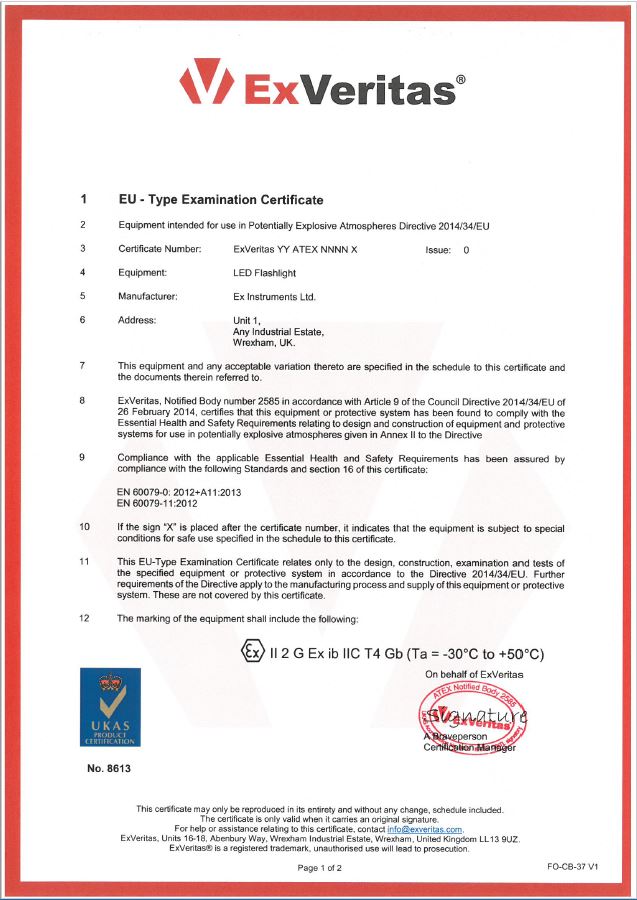
One of the most misunderstood aspects of ATEX and UKCA Ex Certification is the ‘blend’ of Self Certification and Notified/Approved Body Certification.  There are many routes to certification, and this is explained in legislative documents, but for end users and manufacturers it can be very confusing. An example of the routes to conformity is shown below….

exveritas.jpeg

So what exactly does this mean?

  • Electrical equipment that is CAT 1 and CAT 2 (normally for use in in Zone 0 or 1) requires Notified Body Certification for the EU and UK Approved Body Certification for the UK (no self-certification is allowed unless the equipment is Simple Apparatus*)
  • Non-electrical equipment for CAT 1 (Zone 0)requires Notified/Approved Body Certification.
  • Equipment that is purely non-electrical requires a ‘technical file lodging’ with a Notified/Approved Body for CAT 2 (Zone 1) and the Notified/Approved Body will normally issue proof or receipt.
  • All ‘Protective Systems’ (mitigation) require Notified/Approved Body Certification
  • Associated Apparatus (even in the safe area) may require Notified/Approved Body Certification
  • Simple Apparatus can be self-declared even for Zone 0 if you are competent (e.g. CompEx EX12) and produce a DSD (the DSD is effectively the Certification). Simple Apparatus must still be assessed against the appropriate Standards and appropriately marked for inspection.

It is also worth noting that electrical products which are certified as a ‘component’ (a ‘U’ on the end of the certificate number) requires recertification by a Notified/Approved body before they can be used in a potentially explosive atmosphere for CAT 1 and CAT 2.

Equipment Manufacturers Self Declaration (commonly referred to as ‘Self Certification’)

Manufacturers ‘Self Declaration’ under CE or UKCA Marking makes the person who signs the ‘declaration’ legally responsible for the equipment compliance as there is no legal requirements for 3rd party certification and no quality control over what is produced other than internal control of production. Regulatory Authorities may request the evidence (for example clause by clauses standards assessment and test reports) for the standards claimed on the Declaration.

Category 3 Electrical and Category 2 and 3 Non-electrical can be voluntarily certified (and this is sometimes required by end users/buyers) in the following ways…

  • A Conformity Certificate from a Certification Body but with no Quality Control on production (so there can be no Notified/Approved Body number under the CE/UKCA Marking)
  • A Unit Verification Certificate where the Certification Body inspects the equipment for compliance and lists it on the Certificate by serial number (this can be a full Notified/Approved Body Certification with the Body number under the CE/UKCA Marking)


The Requirements for IECEx

IECEx always requires a fully accredited and regulated ‘IECEx Certification Body’ to issue the certification, there is no self certification route. All IECEx Certificates also control the manufacturing quality related aspects via an IECEx QAR.

It’s easy to see why IECEx has become the ‘international’ scheme and why many end users prefer the simplicity and control of an IECEx Certificate. It should be noted however that although IECEx is the ‘baseline’ for most international schemes (including UKCA and ATEX), National Certification is normally required ‘in addition’ to the IECEx Certification, but the process should be far simpler than achieving multiple National Certification that may not be accepted in other countries…

Sean Clarke CEng MSc FIET is the Managing Director of ExVeritas who a UKCA Approved ‘Ex’ Body, an ATEX Notified Body and IECEx Test and Certification Body. With ‘Ex’ test laboratories in the UK and USA. www.exveritas.com

Can you ‘Self Certify’ or do you need a Certification Body?

The Requirements for ATEX/UKCA

One of the most misunderstood aspects of ATEX and UKCA Ex Certification is the ‘blend’ of Self Certification and Notified/Approved Body Certification.  There are many routes to certification, and this is explained in legislative documents, but for end users and manufacturers it can be very confusing. An example of the routes to conformity is shown below….

exveritas.jpeg

So what exactly does this mean?

  • Electrical equipment that is CAT 1 and CAT 2 (normally for use in in Zone 0 or 1) requires Notified Body Certification for the EU and UK Approved Body Certification for the UK (no self-certification is allowed unless the equipment is Simple Apparatus*)
  • Non-electrical equipment for CAT 1 (Zone 0)requires Notified/Approved Body Certification.
  • Equipment that is purely non-electrical requires a ‘technical file lodging’ with a Notified/Approved Body for CAT 2 (Zone 1) and the Notified/Approved Body will normally issue proof or receipt.
  • All ‘Protective Systems’ (mitigation) require Notified/Approved Body Certification
  • Associated Apparatus (even in the safe area) may require Notified/Approved Body Certification
  • Simple Apparatus can be self-declared even for Zone 0 if you are competent (e.g. CompEx EX12) and produce a DSD (the DSD is effectively the Certification). Simple Apparatus must still be assessed against the appropriate Standards and appropriately marked for inspection.

It is also worth noting that electrical products which are certified as a ‘component’ (a ‘U’ on the end of the certificate number) requires recertification by a Notified/Approved body before they can be used in a potentially explosive atmosphere for CAT 1 and CAT 2.

Equipment Manufacturers Self Declaration (commonly referred to as ‘Self Certification’)

Manufacturers ‘Self Declaration’ under CE or UKCA Marking makes the person who signs the ‘declaration’ legally responsible for the equipment compliance as there is no legal requirements for 3rd party certification and no quality control over what is produced other than internal control of production. Regulatory Authorities may request the evidence (for example clause by clauses standards assessment and test reports) for the standards claimed on the Declaration.

Category 3 Electrical and Category 2 and 3 Non-electrical can be voluntarily certified (and this is sometimes required by end users/buyers) in the following ways…

  • A Conformity Certificate from a Certification Body but with no Quality Control on production (so there can be no Notified/Approved Body number under the CE/UKCA Marking)
  • A Unit Verification Certificate where the Certification Body inspects the equipment for compliance and lists it on the Certificate by serial number (this can be a full Notified/Approved Body Certification with the Body number under the CE/UKCA Marking)


The Requirements for IECEx

IECEx always requires a fully accredited and regulated ‘IECEx Certification Body’ to issue the certification, there is no self certification route. All IECEx Certificates also control the manufacturing quality related aspects via an IECEx QAR.

It’s easy to see why IECEx has become the ‘international’ scheme and why many end users prefer the simplicity and control of an IECEx Certificate. It should be noted however that although IECEx is the ‘baseline’ for most international schemes (including UKCA and ATEX), National Certification is normally required ‘in addition’ to the IECEx Certification, but the process should be far simpler than achieving multiple National Certification that may not be accepted in other countries…

Sean Clarke CEng MSc FIET is the Managing Director of ExVeritas who a UKCA Approved ‘Ex’ Body, an ATEX Notified Body and IECEx Test and Certification Body. With ‘Ex’ test laboratories in the UK and USA. www.exveritas.com


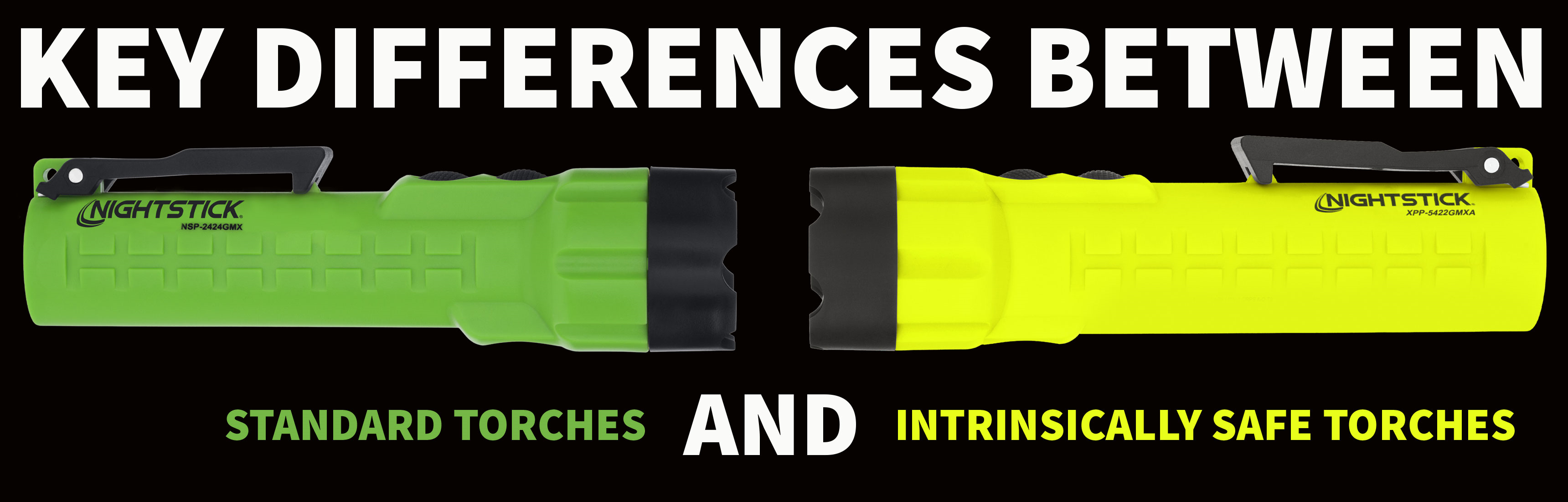
Key Differences Between Standard and Intrinsically Safe Torches

NS.jpeg

Hazardous Environments

Intrinsically safe torches are rated and certified for use in explosive atmospheres and hazardous environments where even the slightest spark can result in an explosion. Standard torches have no consideration for limiting sparks and are extremely dangerous to use in a potentially explosive atmosphere.

Body Materials

Standard torches are generally made from a low-cost ABS (acrylonitrile butadiene styrene) plastic. In contrast, intrinsically safe torches are made from very costly materials like Polycarbonate/ABS Alloy with permanently static dissipative UV stabilized additives. These additives dissipate static electricity that can build up on the surface of the light to prevent sparks and cost twice as much as standard ABS plastic. Additionally, IS torches must posse unique design features to contain battery leakage and venting for gases produced in the event of a battery malfunction.

Lens Materials

Standard torches are traditionally made out of transparent polycarbonate plastic. Intrinsically safe torches also use transparent polycarbonate but require an additional (and costly) special coating that dissipates static electricity.

Circuitry

Intrinsically safe torches require professional electrical engineers to design and develop circuits specifically created to meet the requirements necessary to pass the strict certification levels for an intrinsically safe rating. This is achieved by designing circuits that prevent or limit spark energy through the use of fuses, redundant circuit paths, diodes, and other components. Standard torches have an on/off switch.

Special Fasteners

Because intrinsically safe torches are rated for use in hazardous and explosive environments, they must remain sealed in and around those areas. This requires that torches not be opened to change batteries even by accident while in a hazardous environment, and thus, a special retention screw or "special fastener" is used to keep the light from being opened. A standard torch is easily opened, usually by unscrewing one end of the light.

Because of the knowledge and expense required to engineer IS-certified products, a limited number of companies can achieve this. Nightstick is a global manufacturer of over 50+ Intrinsically Safe professional, portable LED lighting products. Locate a dealer near you at www.nightstick.com

This article can also be found in the issue below.


New flameproof housing supports hazardous area use for key AMETEK Land temperature measuring instruments

 Image of LWIR-640

AMETEK Land, the world's leading manufacturer of monitors and analysers for industrial non-contact temperature measurement, has increased its support for customer applications in hazardous areas with two new housing enclosures.

 The new EXSH1 flameproof housings have been developed for use with the EX SPOT pyrometer range and LWIR-640 thermal imager and are approved for operation in hazardous areas.

 Manufactured from 316/316L stainless steel and highly resistant to corrosion, both enclosures have a certified temperature range of -40 to +70 °C (-40 to 158 °F).

 Ingress protection to IP66 and IP68 means that they can be exposed to dust, water immersion and high-pressure water jets, making them suitable for use in almost any application in the harshest of environmental conditions, including those where explosive mixtures are present.

 The housing has a gridless design, allowing an unobstructed field of view, and is certified for use in areas with dust and gas hazards. Additionally, the enclosure does not require purge air for safety.

 The EXSH1 EX SPOT housing is designed for use with the EX SPOT range, a family of fully-featured, high-performance pyrometers for fixed, non-contact, infrared spot temperature measurements.

 EX SPOT pyrometers are available in a range of operating wavelengths, temperatures, and process requirements, and the new housing will enhance their capabilities in continuous annealing lines, semiconductor growth, and applications in the hydrocarbon processing and chemical industries.

 The EXSH1 LWIR housing has been created specifically for the LWIR-640 thermal imager, a long-wavelength instrument providing measurements between -20 and 1000 °C (-4 and 1832 °F) in three ranges with a choice of different optics and lenses.

 The LWIR-640 measures and streams live true-temperature images at up to 60 frames per second, providing high-precision temperature measurements and thermal profiles to continuously control, document, and visualise industrial processes.

 The new housing protects the LWIR-640 in applications including flare stack monitoring, critical vessel monitoring, storage pile monitoring, and operations within the hydrocarbon processing and chemical industries.

 With ATEX, IECEx and UKEX certifications, the housings comply with multiple international standards. This means that a common specification can be used for worldwide applications, greatly simplifying the task of specifying and quoting the product.

 A range of accessories is available for the housings, including various mounting brackets with pan and tilt adjustment, a sun shield for outdoor applications, and a spoolpiece adaptor. An environmental protection tube is offered for the LWIR housing, for flare stack applications, while further accessories for the EX SPOT housing include purges and a vertical mounting stand.

 Derek Stuart, Product Manager, said: “The EXSH1 housing allows customers in many new industries, including hydrocarbons and semiconductors, to benefit from the accuracy and reliability of AMETEK Land’s thermometers and thermal imagers.”

 For more information, and to download the EXSH1 brochures, go to: ametek-land.com.

 This article can also be found in the issue below.


Making packaging that doesn’t cost the Earth

pl.jpeg

Globally, companies are seeking opportunities to reduce waste and the carbon footprint of their products. This has increased demand for environmentally responsible packaging, and the manufacturing company Futamura has become the world’s largest producer of sustainable cellulose packaging films, including their leading NatureFlex™ range.

The production of sustainable films requires precise monitoring and control of process conditions. Highly accurate temperature and humidity measurement is therefore essential, particularly during the film drying process and when finished products are stored.

Futamura UK uses Vaisala measurement equipment across their site, including Vaisala HUMICAP® humidity and temperature transmitters HMT360 in their coating towers inside their conditioners. The coating towers contain solvents which are flammable, so the products used in these areas must be certified for the Ex environment. The Vaisala HMT360 transmitters, now superseded by the ATEX-certified HMT370EX, are intrinsically safe, making them ideal for use in hazardous areas such as these.

Vaisala measurement instruments can also be found on Futamura UK’s casting machines, installed in the dryer ducting, measuring humidity and temperature. The Vaisala humidity and temperature meter Series HMT330 is designed to provide highly accurate measurements in demanding industrial applications. These transmitters control a valve which manages the amount of steam that goes into the dryers, allowing the humidity to be maintained at the drying set-point needed for each type of film. Moisture content is a significant factor in the properties of the final film, so accurate control is important to ensure product quality and minimise waste. The HMT330 is an older model, so, seeking to future-proof their measurement instrumentation, Futamura contacted Vaisala for advice.

A member of Vaisala’s technical sales team therefore visited Futamura’s UK site in Wigton, Cumbria to demonstrate the benefits of switching to Vaisala’s Indigo platform, and to discuss the options with Electrical Engineering Chargehand, David Carr, and Technical Engineers David Mansergh and Chris Reid.

“We described the applications for the HMT330 series instruments and the Vaisala representative suggested we try the Indigo520 display with a relative humidity and temperature probe HMP5,” explains David Carr. “We were more than happy with the suggestion. His vast product knowledge and expertise in engineering and process systems was a huge benefit in the decision-making process. He also went through the calibration process and explained how to set up the equipment with our electrical engineers. Vaisala’s service and support have been first class – they have gone above and beyond to help us.”

The Indigo520 can connect with two separate probes simultaneously and has a simple, clear, intuitive touchscreen display. Futamura particularly appreciates the screen size and easy-to-read graphs, as well as the ability to swap out probes for calibration. It has also been advantageous that the new HMP5 probes work mechanically in the same way as the previous devices, with which they were already very familiar.

The key benefit of using Vaisala’s measurement instruments in Futamura’s manufacturing process is that they enable accurate control of the production process, which ensures consistent product quality and reduces waste.

Summarising David Carr said: " Futamura has been using Vaisala measurement instruments for many years helping us ensure the quality of our sustainable packaging films, and we will continue to do so in the future. When you find products, and a company, that you can trust, it makes good business sense to continue the relationship. As a plant we like to standardise because it makes spares management and equipment replacement simpler. It’s safe to say that Vaisala is our brand of choice because of product reliability and ease of installation and operation."

www.futamuragroup.com

This issue can also be found in the issue below.