
|
News
| View in Browser | |||||||||||||||||||||||
|

Teledyne Gas and Flame Detection, a global leader in gas and flame detection solutions, is pleased to announce the launch of its new website, featuring updated informational content and a user-friendly interface.
The website is designed to provide an enhanced experience, including improved accessibility and mobile compatibility. It introduces new content on a range of gases, including H2 , CO, O2 , NH3 and more, helping users understand the potential risks associated with each gas and how to detect them. In addition, the site includes detailed information on the company's range of gas and flame detection products, such as detectors, controllers and alarms, making it easy for users to find the right product or service for their specific needs. The new website is designed with a responsive layout, ensuring that it looks and functions seamlessly on all devices, including desktops, laptops, tablets, and smartphones. Moreover, it is further improved with intuitive filtering options, allowing users to easily find the products they need without wasting time scrolling through irrelevant items.
We are thrilled to launch our website, providing our customers with efficient navigation. With proven reputations for quality and reliability, our dedication to safety now goes further.” said Marion Defasques, Global Digital Communication Developer of Teledyne Gas and Flame Detection. “With our updated comprehensive content and smart design, we are confident that our users will find the information they need quickly and easily, creating a more pleasant and productive browsing experience.” Visit Teledyne Gas and Flame Detection's new website to learn more about gas and flame detection solutions, and to take advantage of informational content and intuitive filtering options
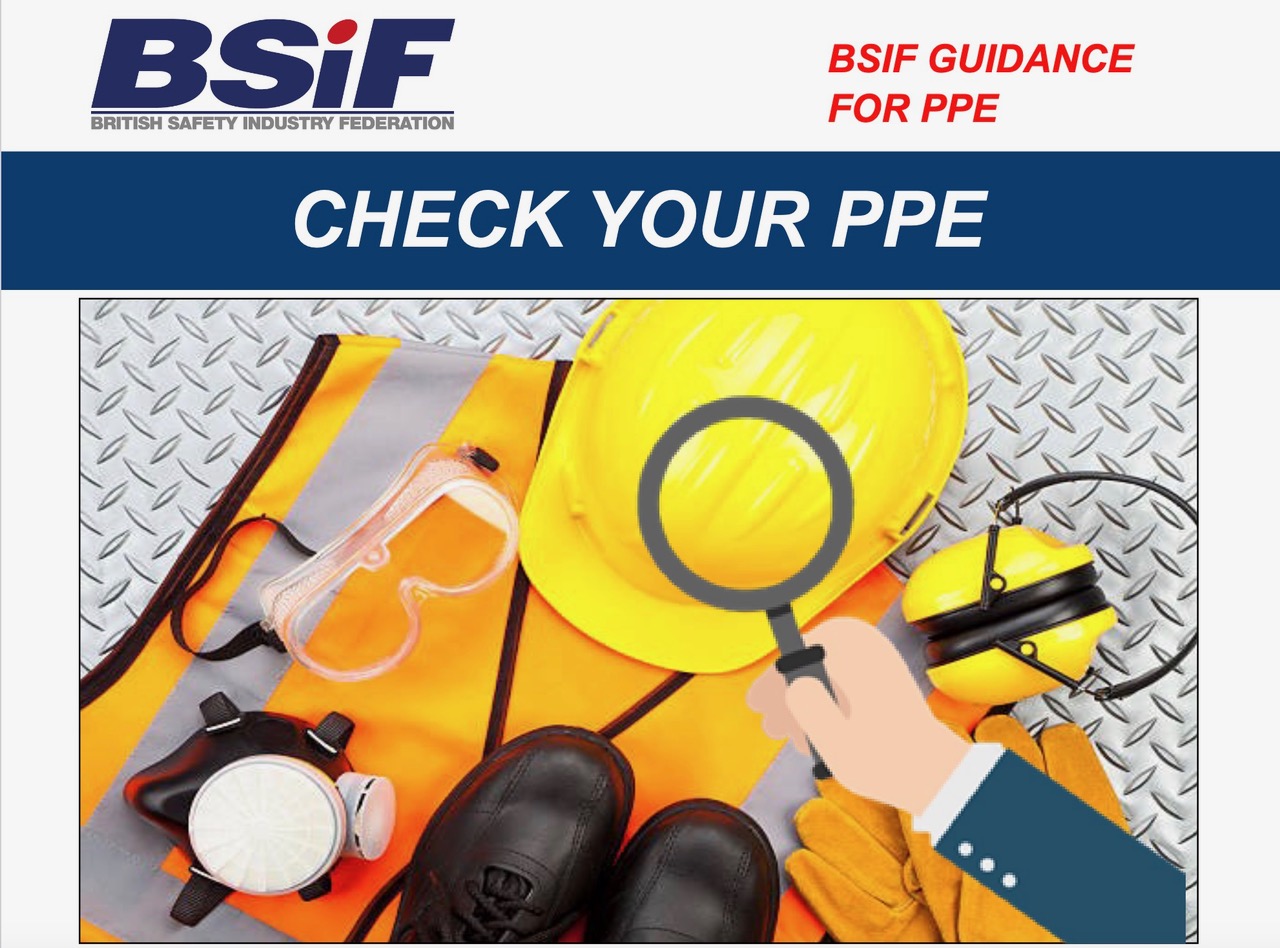
With an increasing volume of substandard products on the market, the British Safety Industry Federation (BSIF) has issued a handy checklist to help specifiers and users check whether personal protective equipment (PPE) is fit for purpose.
BSIF analysis carried out last year showed that much of the PPE on the market fails to match up to the advertised protection.
It completed tests on 127 non-member products, which included checking their compliance with relevant standards and testing whether they perform as claimed. Only 18 (15%) of these products were fully compliant. This means 108 products (85%) failed to meet the regulatory criteria, many of which are still for sale to unsuspecting users.
The findings around non-member products contrast with the results of tests on products supplied by BSIF Registered Safety Suppliers, whose products are tested annually as part of the scheme’s audit process. Of 387 tests completed on Registered Safety Suppliers’ products, 332 (86%) passed immediately, and of the 55 (14%) that initially did not meet the test criteria, all issues were subsequently resolved.
The new BSIF PPE checklist has been created to help specifiers and users ensure that PPE complies with the law and conforms to PPE Regulation 2016/425. It presents a series of questions to ask when purchasing PPE, which are divided into sections for ease of use: Product Markings, Required Documentation, Product Condition, and Storage.
Examples of questions included in the checklist are:
- Does the PPE have a UKCA, UKNI or CE Mark applied to it?
- Was the PPE issued with User Instructions included?
- Is there a Declaration of Conformity with the PPE
- Is the PPE clean, undamaged and suitable for use?
- Was the PPE stored correctly, according to the User Instructions?
If any questions present cause for concern, users are advised to seek support and guidance from their company’s health & safety advisor and the manufacturer of the PPE. The BSIF can also provide general guidance.
BSIF CEO Alan Murray says: “This checklist is a reminder that while anyone can sell safety, you shouldn’t buy safety from just anyone. Failing to check your PPE is fit for purpose could leave you or your employees, for whom you have a duty of care, vulnerable and unprotected, and also expose your organisation to the risk of prosecution. The easiest way to check your PPE is compliant is by only buying from a Registered Safety Supplier.”
The checklist can be downloaded for free at: Check-your-PPE.pdf (bsif.co.uk)
The BSIF also offers an‘Is it Genuine – Certification Checklist’ that provides further advice on how to check if the supporting documentation for your PPE is genuine and what to do if you are concerned. It can be downloaded at https://www.bsif.co.uk/wp-content/uploads/2023/03/Is-it-Genuine-2023.pdf
Facilities maintenance operations can face different circumstantial challenges which require modern solutions. Particularly for hazardous environments such as the oil & gas and petrochemical industries, cold-curing polymeric repair and protection materials can provide a novel means of bypassing these challenges.
This application demonstrates a Customer’s use of Belzona’s cold-curing epoxy two-part structural adhesive, Belzona 7311, to navigate these challenges in the petrochemical industry to fulfil their maintenance needs.
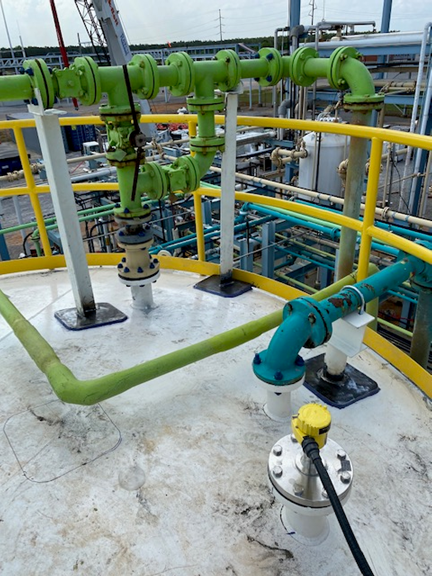
This metal tank needed maintenance to both the base and the roof
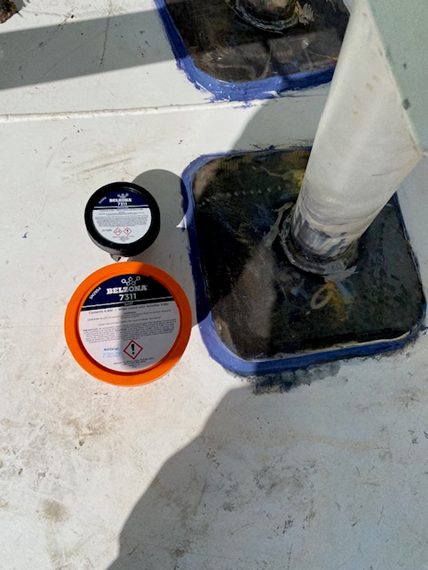
The structural epoxy adhesive, Belzona 7311, provided a cold bonding solution for the metal substrate
What was the Problem?
A metal storage tank in a Chemical Plant containing concentrated sulfuric acid required maintenance to both the base and the roof. The Customer needed to bond pipe supports to the top of the tank to reinforce the pipes directly above. However, the tank was installed with a rubber lining, ruling out hot work such as welding as a means of attaching the pipe supports.
Meanwhile, the existing tank base coating had been exposed to chemical attack and needed to be replaced with a suitable chemical-resistant coating to protect the tank from future chemical spills.
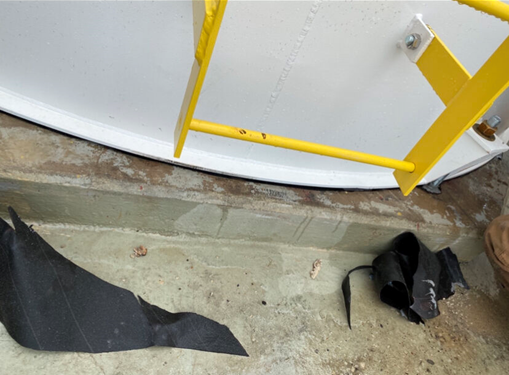
The tank base had been exposed to chemical attack
The internal rubber linning made welding inappropiate to bond the metal pipe support
Belzona 7311: A New Cold Bonding Solution
Belzona’s first ever structural adhesive, Belzona 7311, proved to be the optimal cold bonding solution for the Customer’s requirements due to its high mechanical strength, cleavage and shear resistance. By using this technology, the supports could be cold bonded to the top of the metal tank without the associated risks of welding such as damage to the rubber lining and metal distortion known as Heat Affected Zones (HAZ). HAZ can be the result of the intense process of heating and cooling the substrate, leading to weaknesses in the metal and compromising the integrity of the weld joint.
Bonding of the Pipe Supports
The Contractor specified that the best way of attaching pipe supports was to cold bond six 254 mm by 254 mm (10 inch by 10 inch) metal plates to the top of the tank, which could then be cold bonded to the pipe supports. The chosen areas were marked with tape, before being prepared using handheld surface preparation tools. The application areas were prepared to SSPC-SP11 standard, producing a bare metal surface and a minimum 25 μm (1 mil) profile for a high level of adhesion.
The two-part epoxy adhesive, Belzona 7311, was then mixed and applied to both the substrate and the underside of the metal plates, before being held in place with no additional weight or pressure
while the product was allowed to cure. Once the plates had been cold bonded to the metal tank, the pipe supports were subsequently attached to reinforce the pipes in operation above the tank.
The metal surface was prepared to allow the plates to adhere
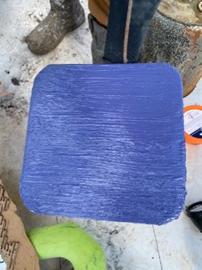
The epoxy 2-part adhesive, Belzona 7311, was applied to both the tank surface and the plates
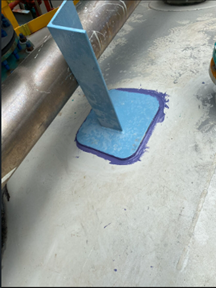
The cold bonding solution was allowed to cure with no extra weight or pressure
Application of the Chemical Resistant Coating
Belzona 4311 (Magma CR1) was specified to protect the tank base due to its chemical resistant qualities, having encountered no significant deterioration after a year of immersion in up to 98% sulfuric acid at 40°C (104°F), when tested in accordance with ISO 2812-1.
The previous tank base coating was removed and the concrete surface was prepared with an ATEX-rated power tool and conditioned using Belzona 4911 (Cleaner/Degreaser) to ensure maximum adhesion for the new coating.
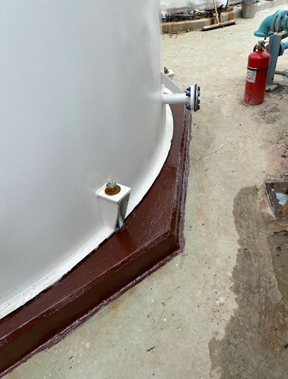
Two coats of Belzona 4311 (Magma CR1) were applied to provide long-term protection to the tank base, avoiding the harmful financial, safety and environmental consequences of a future leak.
Belzona 4311 (Magma CR1) was applied to the tank base
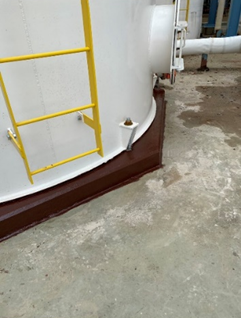
The chemical resistant coating will provide protection in the case of chemical spills
Results of the Repair
The sulfuric acid tank base will be protected against chemical attack for the long term due to the chemical resistant properties of Belzona 4311 (Magma CR1). Meanwhile, the Customer was impressed by the ability of Belzona 7311 to solve the challenges caused by the tank’s rubber lining, cold bonding the metal pipe supports securely without the need for welding. The Customer was also very satisfied by the high mechanical strength, cleavage and shear resistance demonstrated by the cold bonding solution during the application.
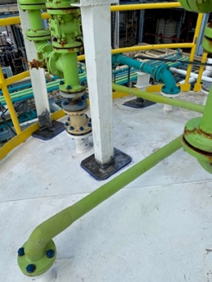
The strength of the cold bonding solution allowed the pipe supports to be seamlessly attached to the top of the tank
Cold Bonding Solution in Action
This application presented an example of the opportunities provided by the epoxy two-part structural adhesive, Belzona 7311 as a cold bonding solution, offering an effective and safe alternative to welding. The solution can be used for structural bonding applications requiring high mechanical strength, cleavage and shear resistance, including ladders, handrails and plate bonding, and is suitable for harsh service environments.
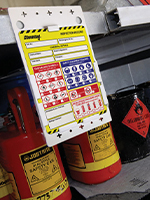
Chemical hazards in industries can cause serious harm to workers and the environment. To prevent these hazards, it is essential to have visual warnings and inspection recording in place. Visual warnings, such as labels, signs, and placards, can alert workers to the presence of hazardous chemicals and inform them of the proper precautions to take.
The purpose of the Chemtag is in case there is an accident or incident where the chemicals are stored or with a person coming into contact. It pulls the pertinent information off the COSHH safety data sheets and makes it immediately available for first aid or medical purposes.
1 = what fire extinguisher is required
2 = what's the immediate first aid action
3 = what's the immediate spill response
So the fire brigades know what they're dealing with, and the ambulance can take the card, take the person and away they go.
Find out more about Visual Tagging Systems for chemical hazards >>
Scafftag – A Brady Business
This email address is being protected from spambots. You need JavaScript enabled to view it.
Tel 0845 089 4060

Chemical hazards in industries can cause serious harm to workers and the environment. To prevent these hazards, it is essential to have visual warnings and inspection recording in place. Visual warnings, such as labels, signs, and placards, can alert workers to the presence of hazardous chemicals and inform them of the proper precautions to take.
The purpose of the Chemtag is in case there is an accident or incident where the chemicals are stored or with a person coming into contact. It pulls the pertinent information off the COSHH safety data sheets and makes it immediately available for first aid or medical purposes.
1 = what fire extinguisher is required
2 = what's the immediate first aid action
3 = what's the immediate spill response
So the fire brigade know what they're dealing with and the ambulance can take the card, take the person and away they go.
Hazardous substances:
- Substances used directly in work activities such as adhesives, paints and cleaning agents
- Substances generated during work activities such as fumes from soldering and welding
- Naturally occurring substances such as grain dust
- Biological agents such as bacteria and other micro-organisms
The control of substances hazardous to health (COSHH) regulations 2002 specifically requires employers to:
- Assess the risks to health from hazardous substances used in or created by your workplace activities. Decide what precautions are needed. If you have five or more employees you must make and keep a record of the main findings of the assessment, either in writing or on computer
- Prevent or adequately control exposure
- Ensure that control systems used are maintained properly and that safety procedures are followed
- Monitor the exposure of employees to hazardous substances
- Carry out appropriate health surveillance where your assessment has shown this is necessary or where COSHH sets specific requirements
- Prepare plans and procedures to deal with accidents, incidents and emergencies involving hazardous substances
- Ensure employees have suitable and sufficient information, instruction, training and supervision
Which Scafftag systems can help you?
- Permit Wallets: Provides ultimate protection and ease of viewing of permits / documents at the point of use.
- Chemical hazard inspection tagging systems: the pertinent information off the COSHH safety data sheets and makes it immediately available for first aid or medical purposes
- SafeTrak Inspection Software: Recording details of inspections and testing results
Find out more about Visual Tagging Systems >>
Scafftag – A Brady Business
This email address is being protected from spambots. You need JavaScript enabled to view it.
Tel 0845 089 4060

Many of you will be aware that the Ex-Standards aimed at ‘end users’(such as IEC60079-14) have very specific requirements for competence. These can include both ‘knowledge’ and ‘skills’ assessments and the need to retain and be reassessed regularly. ‘Installers’ have historically had to have some form of special certificationto be allowed to work in Hazardous Areas (for Example, CompEx 01-06) but it is now also the case that people involved in design and equipment selection will also be asked for their qualifications and evidence of competence.
In addition to the current requirements of the users’standards, a new standard (initially a technicalspecification) is being developed specifically covering Ex Competence (IEC TS 60079-44 Personal Competence) so now is a good time to refresh our memory on the role of the designers and project engineers!
Ex Design Competence
The requirements for personnel involved in the process of designing plant or equipment for use in potentially explosive atmospheres (including equipment that may be in the safe area but have functionality involved in the safe explosion prevention or mitigation) should be given serious consideration.
Reviewing case studies of many recent explosions will demonstrate that it was the fundamental design that was unsafe, even when correctly built and installed (such as an incorrectly specified level switch or an impractical maintenance procedure post installation).
The requirements will obviously be applicable to companies who design plant but are equally applicable to project engineering companies or manufacturers who may provide rigs, skids or assemblies (now covered by IEC TS 60079-46) that may or may not utilise certified hazardous area equipment. (ExVeritas offer specific course for ‘Assembles’ that cover these specific risks and challenges for ‘manufacturers’ as well as end users)
According to the Installation Standard, Designers must possess, to the extent necessary to perform their tasks, the following skills:
• Detailed knowledge of the general principles of explosion protection; this would include knowledge of terms such as LEL, MESG, Flashpoint and factors that affect dust and gas explosion properties (pressure, temperature, oxygen etc).
• Detailed knowledge of the general principles of types of protection and marking; this would include all of the electrical concepts such as i.c., m.a. op is, Non-electricalh, etc., group markings such as IIB+H2 (Gas) or IIIC (dust) and EPL’s such as Ga/Gb.
• Detailed knowledge of those aspects of equipment design which affect the protection concept; this may include SIL if safety systems or protective systems are used and in-depth design knowledge if concepts such as constructional safety (c) or IEC special safety (s) are used.
•Detailed knowledge of content of certificates, such as use of the ‘X’ or ‘U’ and the many different certificate types and issuing bodies. It is also important to make sure these corticates are to ‘current’ Standards and not certified to ‘withdrawn’ standards!
•An understanding of practical skills for the preparation and installation of relevant concepts of protection (full knowledge of the installation requirements).
•Detailed knowledge of the additional importance of ‘Permit to Work systems’, safe isolation and ‘risk assessment’ in relation to Explosion Protection; Process and procedure documentation – most explosions occur during startup/shut down or maintenance!
•Detailed knowledge of the techniques to be employed in the selection and installation of equipment referred to in IEC/EN 60079-14 and a general understanding of Inspection and Maintenance requirements of IEC/EN60079-17.
Designers must be able to demonstrate their competency and provide evidence of attaining the knowledge and skill requirements specified above, relevant to the types of protection and/or types of equipment involved. They must also be able to demonstrate their competency with documentary evidence such as ‘Designers training Certificates’ to the user and suitable documented safe operating procedures and list of required checks and maintenance (including intervals).
One of the most used and widely accepted levels of certification for Designers is CompEx EX12, it is also worth noting that CompEx has also added an introductory Functional safety course to their portfolio which is useful alongside EX12.
Full details of the new CompEx Courses can be found here: CompEx Training and Competence Certification or email This email address is being protected from spambots. You need JavaScript enabled to view it. for a prospectus.
This Article can also be found in the issue below.
|




Abstract
When identifying solutions that can offer assurance and longevity, the maintenance and reliability of assets repairs can be challenging, this white paper will look into the use of structural adhesives as the first-choice solution.
Structural adhesives can be used for affixing metal substratesor components as they provide high modulus and high strength. However, they are not currently internationally recognised like the traditional methodseven though adhesives are already used in a wide range of industries, such as aerospace, rail, and construction.
Traditional practice such as welding, riveting, nuts and bolts and mechanical fixing are perceived as the go to method.However, they all have their inherent inadequacies. Welding can be hazardous to health, riveting,nuts and bolts concentratethe stress locally while mechanical fasteners can concentrate stress.
This paper introduces a novel, two-component, solvent-free toughened epoxy adhesive material that provides high adhesion to metallic substrates while also being able to withstand high movement or cyclic fatigue in comparison to general epoxy materials.
As well as potential application areas, the article also discussesa number of benefits, including ease of use, load bearing andimpact resistanceproperties.
Introduction
Most industrial maintenance or repair procedures can eitherinvolve welding or use of mechanical fasteners as these can be perceived as easy andquicker, however, these procedures might initially seem to correct the issue but may cause more harm than good.Depending on the repair situation for instance welding or drilling to connect mechanical fasteners on a storage tank containing flammable liquid is not recommended for obvious reasons this is where a structural adhesive can really offer a solution for that maintenance repair.
There are many structural fixings used across a whole range of industries that may be part of any maintenance or repairthese include support brackets such as cable trays, antennas, heating coils filter pans or any other internal fixtures in vessels that’s suffer from corrosion, impact orvibration damage. Within construction there are fire water deluge systems, nozzles connections, facades panels and signs which can require maintenance overtime or adverse weather conditions.
Processequipment or piping can suffer from thinning or the steel or even through wall defects which will need either monitoring or repairing depending on whether the integrity of the equipment has been lost.
Structural fittings are generally for fixing of static members but maybe subjected to forces unbeknown at time of installation this could include thermal cycling of the joints, cyclic loading or vibration due to fatigue of a component.
If there are repairs due to the above, the contractor maybe in asituation where a choice of solution can be made, then the strengths and weaknesses need identifying.
Welding is regularly used for repairs as it is widely available while being well regulated with high customer confidence and high strength of the repair it does come with its inherent risks both the use, the material by heat stressingand the user as welding can cause both acute and chronic health risks.Application of welding repairs onto live piping sections, storage tanks or process systems and equipment should not be undertakendue to the high temperatures involved and not forgetting the combustible nature of the process fluid or gasrunning through or being stored in these components.
Bolted joints are seen as simple and low cost due to the ease ofdisassembly and reassembly and these can be dissimilar metals,but the use of dissimilar metals will contribute to galvanic corrosion, add weight to the joint, requiring routine inspection and tensioning while the drilled holes in the support material, stress distribution is not uniform and concentrated at the holes.
Structural adhesives have high bond strength whilst being lightweight, adhesive applied to cover the entire joint, resulting in uniform stress distribution, reducing metal distortion under strain.
Importance of a Strong Bond
Adhesive bonding is the joining of similar or dissimilar members together while creatingpermanent high strength bonds which can transfer structural stress without loss of structural integrity.
Regardless of the joint type used, it is important to understand the different stresses that are imparted onto a bonded assembly. Adhesives perform the best when the stress is two-dimensional to the adhesive, allowing the force to be applied over the entire bond area.
Joints that are well designed for adhesives place most of the stress into compression or shear modes, adhesives perform the worst when stress is one-dimensional to the adhesive, concentrating the load onto the leading edge of the bond line. Joints placing stress into cleavage or peel concentrate the stress onto the leading edge, which may lead to premature bond failures, especially if subjected to vibration, impact or fatigue
Bonds of high strength are obtained after cleaning of the substrate by removal of any contaminants followed by the roughening of the substrate generally in the form of grit blasting to international recognised standards, this is why surface preparation is critical to success regardless of what type of adhesive is used.
There are three types of bonding that are important to achieve to ensure good adhesion. These are:adhesive, chemical, and mechanical.
Adhesive relies on surface energy to generate adhesion to the substrate. While chemical relies on chemical bond formation and electronic bonding to produce adhesion. Mechanical adhesion is due to the creation of an irregular profile that allows a deeper profile to be produced.
Thetypes of structural adhesivesavailable have been summarised in Table 1
Table 1 - Types of Structural Adhesives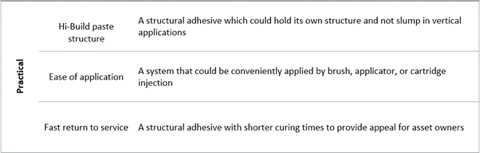
There are two types of failure mechanisms associated with structural adhesives:
1. Cohesive failure occurs in the bulk layer of the adhesive material. This failure mode is limited by the strength of the adhesive material and can be caused by insufficient curing of the adhesive and applications at a greater thickness than that recommended among others.
2. Adhesive failure occurs when the mechanical adhesion between the adhesive and the parts being joined is overcome by the loading. This failure mode is associated with inadequate surface preparation, presence of contaminants, or insufficient curing of the adhesive among others.
Background
Design considerations for Belzona 7311 were based on both technical target requirements and a practicality approach, as summarised in Table 2.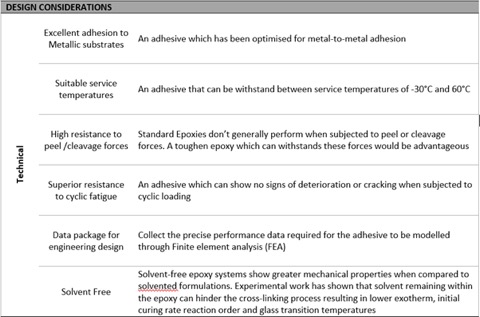
Table 2 - Design Considerations
Belzona 7311 was subjected to at least the following tests and evaluation protocols in to ensure that it met the design criteria previously discussed. Where possible, internationally recognised standards were used.
1. Cleavage Adhesion – ASTM D1062
2. Tensile Shear Adhesion – ASTM – D1002
3. Tensile Fatigue Resistance – ISO 9664
4. Impact Resistance –ASTM D256
Experimental Procedure
1. Cleavage Adhesion – ASTM D1062
Cleavage adhesion is used to assess the strength of an adhesive bond between two substrates when exposed to cleavage stress.
Belzona 7311 wasapplied between two identical grit blasted metallic cleavage test pieces to create a fixed bond area of 125mm² of minimal bondline thickness.
The specimen was allowed to cure then attached to a 25kN tensometer using suitable grips. The tensometer then applies a load at a fixed rate of 1.3mm/min exerting a cleavage force on the specimen until bond failure. This test is repeated five times so an average force can be calculated.
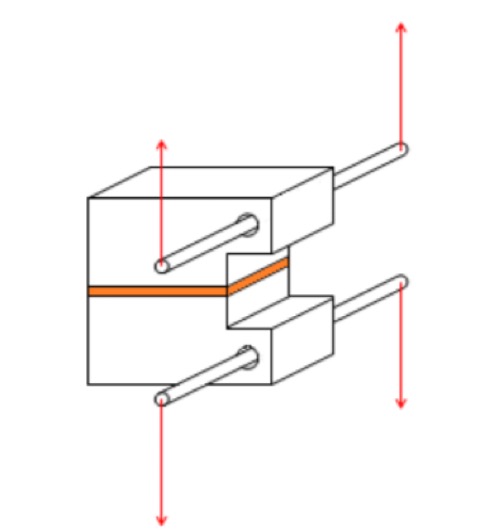
Figure 1 - Cleavage adhesion test
2. Tensile Shear Adhesion – ASTM – D1002
Tensile Shear Adhesion or lap shear adhesion is used to determinethe adhesive strength of a material when bonded between two ridged metallic substrates.
Samples are 100 x 25.4 x 2mm and are overlapped lengthwise by approximately 12.7mm and bonded toa minimalbondlinethickness with Belzona 7311.
The specimen was allowed to cure then attached to a 25kN tensometer using suitable grips. The tensometer then applies a load at a fixed rate of 1.3mm/min exerting a cleavage force on the specimen until bond failure.
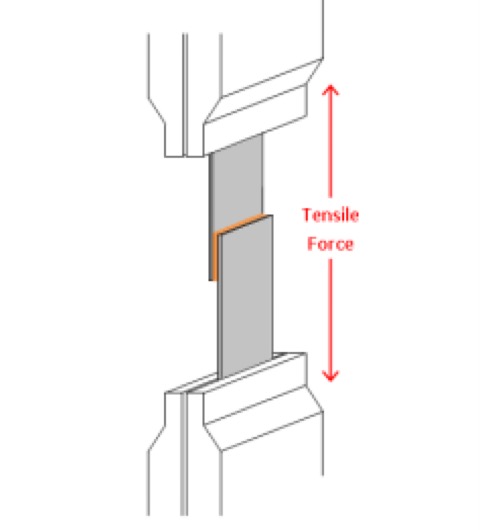
Figure 2- Tensile force
3. Fatigue Resistance – ISO 9664
Fatigue resistance is the highest stress that a material can withstand for a given number of cycles without breaking.
A standard static Tensile shear adhesion test was conducted to determine the mean breaking stress – 24.17 MPa following this 35% of the mean breaking stress value is used as the mean stress in fatigue testing - 35% mean shear stress = 8.461 MPa (24.17 MPa x 35%)
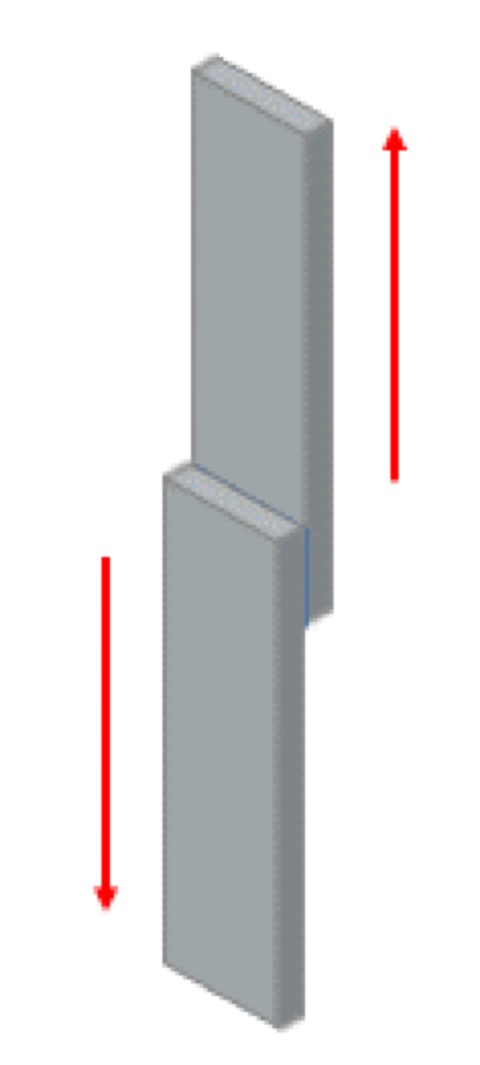
Figure 3- Tensile shear adhesion test
At four different alternating stresses, fatigue testing was conducted at 30Hz until failure:
1. 80% = 6.8 MPa (8. 461 MPa x 80%) Stress amplitude cycles between
2. 60% = 5.1 MPa (8. 461 MPa x 60%) Stress amplitude cycles between
3. 57.5% = 4.9 MPa (8. 461 MPa x 57.5%) Stress amplitude cycles between
4. 55% = 4.7 MPa (8.461 MPa x 55%) Stress amplitude cycles between
Figure 4 - ISO 9664 Fatigue stress cycle
Impact tests can be used to assess the toughness of a material, a material’s toughness is a factor of its ability to absorb energy during plastic deformation. Brittle adhesives have low toughness as a result of the small amount of plastic deformation that they can endure. Tougher materials on the other hand can absorb greater energy during fracture and thus, have improved impact resistance.
The Izodimpact test allows for samples to be tested in two forms: either ‘notched’ or ‘un-notched’ in our case the testing will be notched which has a V-shaped notch of approx. 2.5mm in depth with a total defect angle of 45°in the centre of a specimen sample with dimensions of 12.7 x12.7 x 65mm. The notch concentrates stress and allows measurement of crack propagation.
Non-standard testing:
5. 3-Point Load Test
This comparative technique is used to assess the relative flexibility of adhesives when applied to a metallic substrate. In this test a mild steel panel of dissimilar dimensions
Plate 1 550 x 50 x 10 mm thick
Plate 2 225 x 50 x 10 mm thick
are stressed to the point the adhesive fails. The panel is held in position at two points, one at either end of the sample and is gradually stressed at a single point in the centre of the specimen via a hydraulic press as seen in figure 3. The greater the displacement i.e., the further the press travels until failure the more flexible the adhesive. The thickness of the adhesive will influence the degree of flexibility so analysis should be duplicated for repeatability purposes. In the case of this testing at the manufacturing stage the specimens were compressed by hand pressure only, to try and replicate ‘in field’ applications of achieving below the maximum bondlinethickness of 2mm.
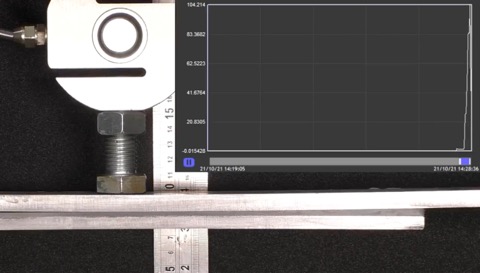
Figure 5– 3-Point Load Testing
Testing Results and Discussion
1. Cleavage Adhesion – ASTM D1062
Table 3 - Cleavage Adhesion Results - ASTM D1062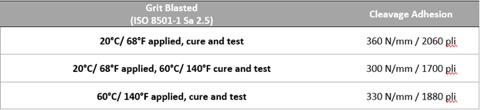
2. Tensile Shear Adhesion – ASTM – D1002
Table 4 - Tensile Shear Adhesion Results– ASTM D1002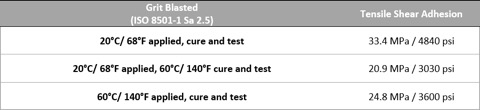
3. Tensile Fatigue Resistance – ISO 9664
Table 5 - Cyclic Fatigue Testing Results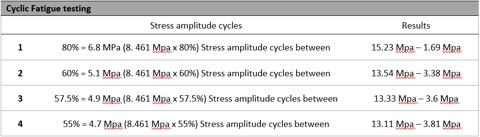
Figure 6 - Belzona 7311 SN Curve
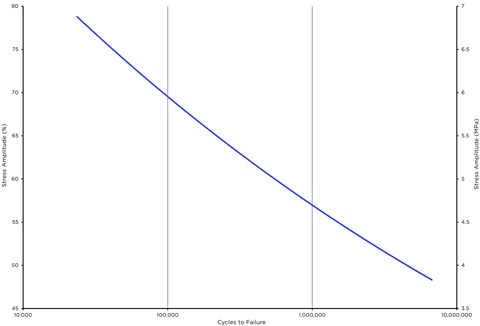
From a mean breaking stress of 35% (8.461 Mpa), Belzona 7311 will survive 106 cycles at 56.6%, with an alternating stress amplitude of ± 4.791 Mpa = 13mpa to 3.67 Mpa
4. Impact Resistance – ASTM D256
Table 6 - Impact Resistance Results – ASTM D256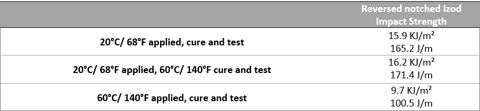
5. 3-Point Load Test
Table 7– 3-Point Load Test Results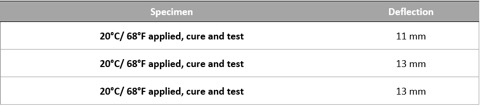
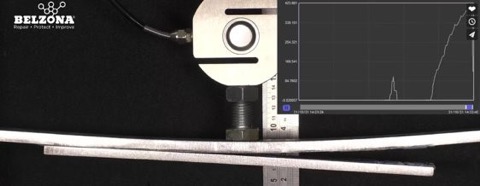
Figure 7–3-point load Specimen Testing
Conclusions
Several conclusions can be drawn from the use of Belzona 7311 as a solution for the repair or maintenance of assets:
1. Belzona 7311 offers high resistance to structures that are subjected to forces such as peel, cleavage, vibration, or cyclic loading.These include, but are not limited to,support bracketsfor fire deluge systems, internal and external fixtures on process equipment, wear pads and wind girders on storage tanks.
2. As Belzona 7311 offers an array of additional practical features including ease of application, ability to hold its own structure when placed in vertical applications and superior adhesion to metallic substrates, the toughenedepoxy can be used on structural support reinforcements, load transfer supports and metallic staircases and ladders.
3. Plate bonding to repair thinning or through wall defectson areas such as pipe/piping, process equipment,storage tank floating roofs and platform decks can utilise Belzona 7311 as it offers high impact resistance and flexural properties.
4. Belzona 7311 has been optimised for metal-to-metaladhesion and exhibits an extensive data listwithover 20 testssolelybased on adhesion. The performance data can be used for Finite Element Analysis (FEA) or simulationstoaid in bond designing or qualification of the adhesive in areas that would normally be seen as high risk for standard epoxies such as handrails and walkways.
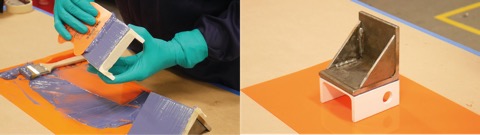
Figure 8 - Structural adhesive, Belzona 7311, used to bond bracket
Please click here for more information about Belzona 7311.