News

The Heat is on says Hart

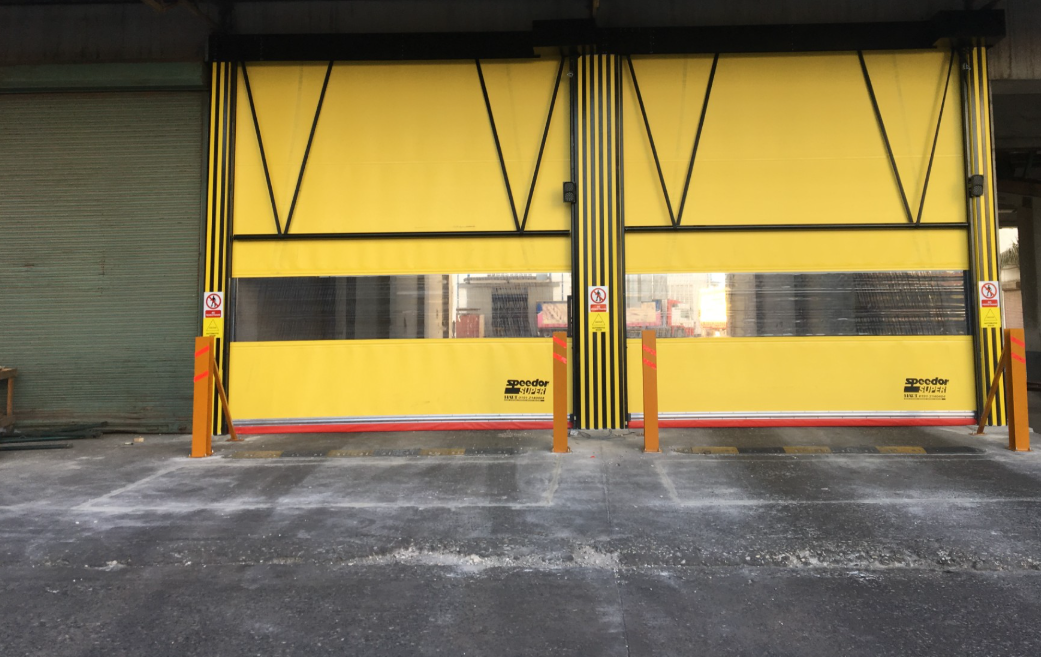
The high-speed door is associated with protecting buildings and the manufacturing/storage activities within, says Doug Hart, chairman, Hart Door Systems. However, this mega climate event, which, at the time of writing, is delivering very high temperatures across Europe, is causing unheard of challenges for industry, the main one being high temperatures in manufacturing and storage areas.

Our highspeed door brand, Speedor, is in daily use across significant areas of industry. As Speedors help to maintain temperatures within a building so can Speedors be used to protect buildings from the inflow of very warm air.

Maintaining temperatures within a building is essential even if faced by external weather issues be they extreme cold or heat challenges. The key is to reduce the inflow of very warm air and it’s the speed of Speedor which helps to reduce that.

www.hart.com

Author: Chris Dobson, Fellow of the Royal Geographical Society

Enerpac announces Remote-Operated Toe Jack - High-Capacity Lifting with a Compact Footprint

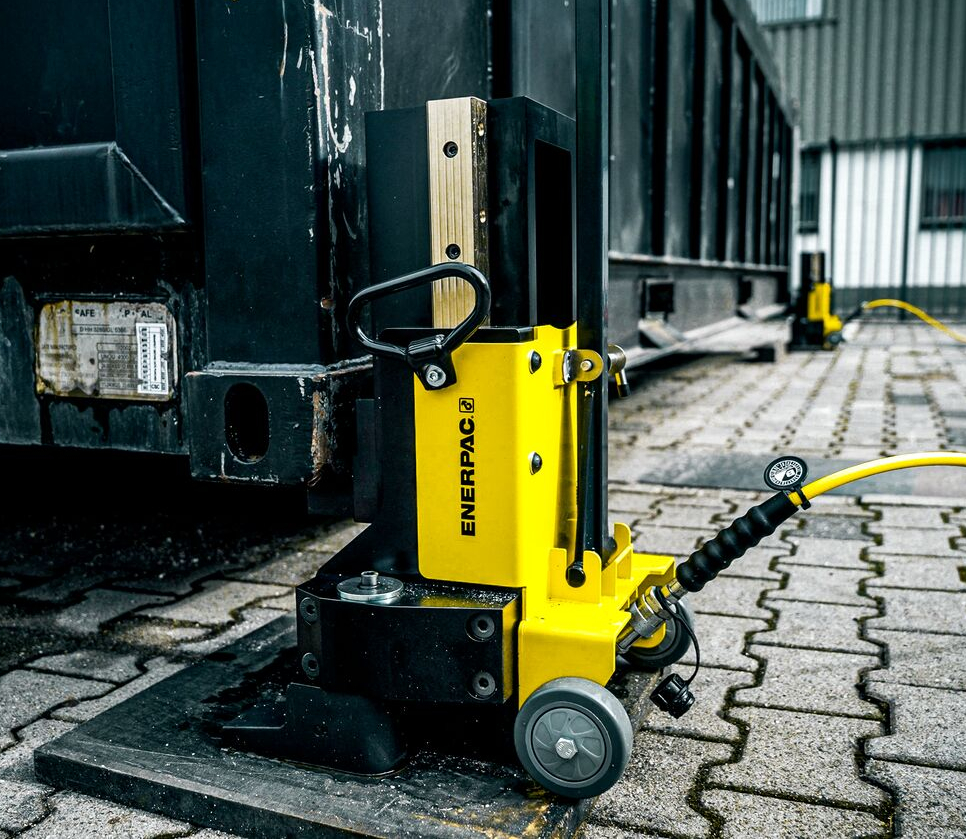
Industrial tools and heavy lift specialist, Enerpac, announces the new TJP308 Remote-Operated Hydraulic Toe Jack. Engineered specifically for professional machinery movers and heavy equipment installers, the Enerpac TJP308 combines a 33-ton lifting capacity with a lightweight, highly manoeuvrable design to optimise safety and precision in space restricted industrial environments.
Extended Stroke and Multi-Point Synchronisation
Featuring a 200 mm stroke, among the highest available for a lightweight toe jack, the Enerpac TJP308 allows operators to lift machinery higher in a single cycle. This extended stroke reduces the need for repetitive repositioning or packing blocks, enabling faster placement of machine skates and supports.
For complex industrial moves, the TJP308 is fully compatible with Enerpac Split-Flow Pump systems. While traditional configurations rely on multiple single jacks paired with individual hand or battery pumps, the TJP308’s design allows for the simultaneous control of up to four jacks. This enables synchronised, multi-point lifting and real-time load monitoring from a single control panel, enabling shorter setup and lift times.
To ensure maximum versatility and stability when handling irregular loads, the TJP308 jack features an adjustable 3-Position Tilting Toe allowing precise lifting from tight access points and varying load angles up to 5°.
“By utilising hydraulic power supplied from a remote pump, the Enerpac TJP308 allows operators to control lifts from a safe, ergonomic distance, says Carsten Daft, Senior Product Manager at Enerpac Heavy Lifting Technology. “This remote capability eliminates the need to work in close proximity to unstable loads or tight-clearance areas, significantly minimising exposure to pinch points and reducing physical strain.”
Engineered for Crowded Factory Floors
Built with a robust yet lightweight aluminium construction and integral solid rubber wheels, the Enerpac TJP308 weighs just 80 kg, offering a highly portable alternative to bulky steel jacks. It is purpose-built for crowded factory floors where machinery is tightly spaced or installed close to walls.
The Enerpac TJP308 is equipped with foldable side legs, a long removable driving handle, integrated lifting eyes, and optional side handles for rapid positioning. Lastly, the TJP308 includes a single-acting RAC308 cylinder and a CR400 female coupler for seamless integration into existing fleets.
For more information on the Enerpac TJP308 Toe Jack visit www.hazeng.com
 

Industry and government set new bar for workplace health


A new framework has been launched to raise the standards of physical and mental health at work, within the chemicals and major hazards industries. 

The new Principles of Workplace Health and Wellbeing Leadership have been officially launched today (24 June) at the House of Lords at an event hosted by Lord Ian McNicol and sponsored by Baroness Brenda Dacres OBE. The launch event featured an address by the Minister for Social Security and Disability, Sir Stephen Timms, who spoke on the importance of preventing work-related ill health, keeping people in work and growing the economy.    

The principles were developed by the onshore Chemicals and Major Hazards working group, as a response to Health and Safety Executive’s (HSE) Prevention Programme, to place clear accountability on senior leaders, building on the model established for process safety leadership following the 2005 Buncefield tragedy.  

The working group involved HSE alongside trade associations, unions and employers, including the Chemical Business Association, Chemical Industries Association, GMB Union, Grain LNG, National Gas, Tank Storage Association, Unite the Union and Yorkshire Water.  

The launch of the principles reflects a shared commitment to preventing work-related ill health through the sharing of best practice and key learnings to drive continuous improvement. The Principles were built on a proven model following the Buncefield incident in 2005. Industry developed the Process Safety Leadership Principles, which have since become a foundational standard across onshore and offshore major hazard sites. The same rigour is now being applied to occupational health.  

The initiative also aligns with Sir Charlie Mayfield's Keep Britain Working review, reinforcing a cross-government approach to reducing the economic and human cost of preventable work-related ill health. 

Minister for Social Security and Disability, Sir Stephen Timms, said: “The launch of the Principles of Workplace Health and Wellbeing Leadership marks an important step towards improving health and wellbeing in the onshore chemicals and major hazards industry. I welcome its clear focus on preventing work-related ill health. Working together, we can create healthier workplaces, support economic growth and raise living standards.” 

Ken Rivers, Non-Executive Board Member for the Health and Safety Executive, said: “These Principles of Workplace Health and Wellbeing Leadership represent a significant step forward in how we approach occupational health across the major hazard industries. By bringing together regulators, industry leaders and trade unions, we have created a framework that builds on the sector’s proven track record in process safety leadership. I am pleased to have contributed to this collaborative effort, which I believe will help businesses protect their most valuable asset; their people.” 

Peter Davidson, CEO of the Tank Storage Association, said: “The Tank Storage Association has played an active role in the Working Group since its inception. These principles reflect our firm commitment to workforce wellbeing and cross-industry collaboration. I am proud to support this important initiative on behalf of the bulk storage and energy infrastructure sector.” 

Luke Collins, National Health and Safety Advisor, Unite Central Office, said: “Work-related ill health remains one of the greatest challenges facing workplaces across Great Britain. These Principles rightly recognise that protecting workers' health and wellbeing requires visible leadership, meaningful worker engagement, competent management, and a relentless focus on prevention. Unite strongly supports the principle that workplace health must be given the same priority as safety, with board-level accountability and effective trade union and workforce involvement at its heart. By working collaboratively, sharing learning, and focusing on both leading and lagging indicators, employers, workers, and trade unions can help prevent harm, improve wellbeing, and create healthier, more productive workplaces for all. From a personal perspective, it is great to be involved with an initiative that is driven by likeminded, supportive professionals aiming towards the same goal; healthier workplaces!” 

Clare Middleton, Head of Safety, Health & Wellbeing, National Gas, said: “This document is a really strong step forward in helping organisations take a more thoughtful and proactive approach to health and wellbeing. It clearly reinforces that looking after people isn’t just the right thing to do - but it also drives better performance and resilience across the business. I particularly value the emphasis on visible leadership, early intervention, and genuine workforce involvement, as these are the areas that truly make a difference in practice. Overall, it provides a practical and encouraging framework that supports organisations in creating healthier, more engaged workplaces while reducing risk and improving long-term outcomes.  

Simon Culkin, Managing Director, Grain LNG, said: “The Workplace Health and Wellbeing Leadership Principles provide businesses with a structured approach on how to both manage and measure the health and wellbeing of their employees.  Grain LNG are proud to have been involved in helping to develop these principles and help close the gap between safety and health in industry, and in doing so, raise the standard of this important area.  

Stephen Elliott, Chief Executive of the Chemical Industries Association, said: “The future of our industry is built on people - their energy, creativity, and resilience. These Workplace Health & Wellbeing Principles are a call to action in shaping workplaces where every individual can flourish. By embracing wellbeing as a shared commitment, we unlock potential, spark innovation, and create a culture that inspires pride and purpose. Together, we can lead the way in setting a new standard - one where thriving people drive thriving businesses,”   

Susan Gee, Head of Occupational Health & Wellbeing, Yorkshire Water, said: “At Yorkshire Water, protecting the health and wellbeing of our people is a core business priority, not an optional extra. We recognise the significant impact that work‑related ill health can have on individuals, their families and the wider economy, and we are committed to acting early to prevent harm wherever possible. Through ongoing investment in workplace health, open reporting of concerns and a strong focus on understanding and managing health risks, we aim to create a working environment where every colleague has the best possible opportunity to stay well and thrive at work.”      

Tim Doggett, Chief Executive, Chemical Business Association, said: “People are our greatest asset, and health and safety has always been at the heart of what we do. We were pleased to play an active role in the development of these Principles of Workplace Health & Wellbeing Leadership, which provide a practical framework for creating workplaces where people feel supported, listened to and valued. The Principles reinforce the vital role that leadership, culture and workforce engagement play in promoting positive wellbeing and building stronger organisations. Investing in the health and wellbeing of our workforce is not simply the right thing to do; it is a shared responsibility that helps create safer, more inclusive and supportive workplaces for everyone.”    

Lynsey Mann, National Health, Safety and Environment Officer, GMB, said: “GMB are pleased to have played a part in the development of these Principles and strongly welcome their introduction. They mark an important step forward in strengthening leadership and raising standards for workplace health and wellbeing across the onshore chemicals and major hazards sectors, helping to ensure that workers in these industries are protected.  We hope representatives from other industries will replicate this work in their sector working groups too.” 

MSA Safety Launches Latest FieldServer Modbus Gateway Helps strengthen security and connectivity across leading cloud platforms

MSA Safety, Inc. (NYSE: MSA), a global leader in the development of advanced safety products and solutions that protect people and facility infrastructures, today announced the launch of its latest industrial connectivity solution, the FieldServer Modbus IoT Gateway.

A versatile, secure solution that bridges legacy Modbus devices with today’s Industrial Internet of Things (IIoT) infrastructure, this new Modbus IoT Gateway is the latest in MSA Safety's suite of FieldServer Protocol Gateways. FieldServer Gateways are secure, easy-to-configure devices that serve as entry points for data communication and processing between internet-connected products and network protocols to the cloud.

Designed for original equipment manufacturers (OEMs), system integrators, and automation professionals, the Modbus IoT Gateway supports Modbus RTU (serial) and Modbus TCP (Ethernet) protocols and enables seamless conversion to OPC UA and MQTT protocols. The conversion allows for cloud-based integration and remote access, helping make it easier for users to communicate with their devices, platforms, data, and streamline workflows.

“We know facilities utilize Modbus for their core operations, and we want to help make it easier for them to bring their systems into the connected era safely and efficiently,” said Gustavo Lopez, MSA Safety Vice President, Product Strategy and Development. “The new Modbus IoT Gateway is ideal for organizations looking to upgrade legacy infrastructure, enable remote monitoring, or meet evolving digitalization standards without replacing existing equipment by enabling edge-to-cloud communication and modern protocol compatibility.”

Key features of the Modbus IoT Gateway include:

  • Multi-protocol support for Modbus RTU and TCP to OPC UA and MQTT
  • Secure cloud connectivity with X.509 certificate support through MQTT and OPC UA for leading cloud platforms including AWS IoT Core, Azure IoT Hub and Ignition
  • Web-based interface for simplified setup, configuration, and diagnostics
  • Scalable deployment for both device retrofit and new installations
  • Industrial-grade security designed for modern Operational Technology/Information Technology (OT/IT) convergence

The FieldServer Modbus IoT Gateway is available now through MSA Safety and authorized channel partners. To learn more about the new Gateway and other FieldServer solutions, click here.

IS541.1: The world’s first 5G 450 MHz smartphone for Zone 1/21 enables mission-critical communication in potentially explosive atmospheres


Image

i.safe MOBILE is presenting its latest development at Critical Communications World (CCW) in London from 16 to 18 June 2026 at Stand J20: The IS541.1 is the first explosion-proof 5G smartphone with 450 MHz support for use in Zone 1/21. The device combines critical communication with the highest operational reliability and is approved for mission-critical use in potentially explosive atmospheres.

Communication without restrictions – even in emergency situations
Critical infrastructure, energy suppliers, industry and public authorities face the same requirements: reliable, independent communication even when public mobile networks are overloaded or down. This is made possible by the dedicated 450 MHz network. With IS541.1 from i.safe MOBILE, this network is now available for use in Zone 1/21 environments.
 

450 MHz: Range and resilience for critical infrastructure

Image

The 450 MHz band offers physical characteristics that set it apart from conventional mobile networks. Low frequencies ensure long range and optimal building penetration. The mobile network enables highly available, autonomous and blackout-resilient communication for mission-critical applications such as control, monitoring and crisis management in sectors like energy, water, transport and public administration. Around 40 commercial networks are in operation worldwide in the 450 MHz band.

IS541.1 supports the frequency bands of the 450 MHz band and, in addition, a broad global spectrum of all relevant bands for 2G, 3G, 4G and 5G networks.

 The 5G smartphone is built on the proven platform of the IS540.1. The replaceable 4,400 mAh battery enables continuous shift operation, as spare batteries can be charged at any time outside the ATEX zone and inserted into the device. The 6-inch FHD display with Corning® Gorilla® Glass withstands the toughest conditions. Accessories such as PTT headsets or remote speaker microphones can be connected quickly and securely via the 16-pin ISM interface connector. Programmable function keys, including an SOS button, provide direct access to PTT communication and lone worker protection (LWP).

IS541.1 is designed for a wide range of critical applications: from the energy sector through industry, mining and oil and gas to public safety and government agencies, as well as transport, retail and agriculture.
 

450 MHz Alliance
i.safe MOBILE is a member of the 450 MHz Alliance, the international advocacy group for the promotion and further development of networks in the 380–512 MHz band. The Alliance brings together network operators, public authorities, equipment manufacturers and users worldwide and is committed to standardisation, regulation and global market development.

In Germany, 450connect builds and operates the nationwide, dedicated 450 MHz mobile network for operators of critical infrastructure (KRITIS).

Availability
The IS541.1 is available now through the i.safe MOBILE sales network.

Detailed product information, technical data sheets and information on compatible accessories and solution partners are available here.

JCE Awarded Transformer Control Enclosure Contract for Major American Client

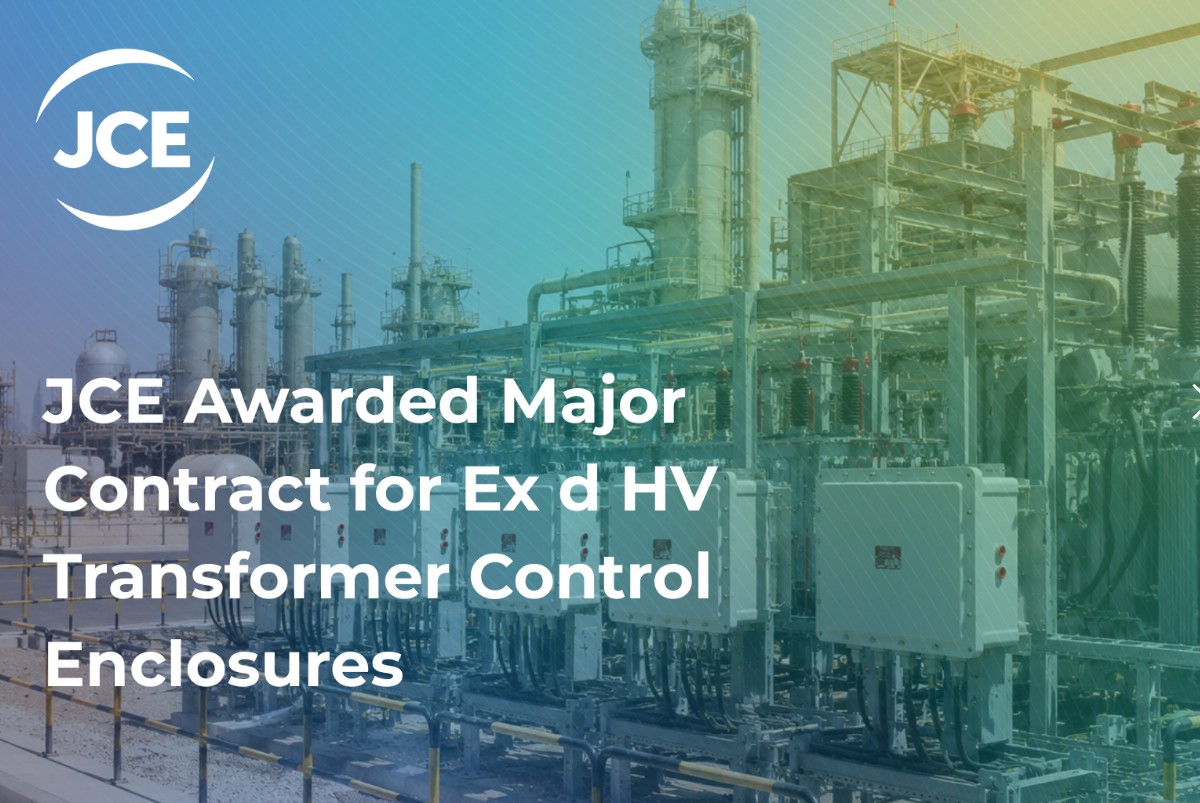
JCE is pleased to announce the successful award of a significant contract for the design and supply of speciality Ex d high voltage transformer control enclosures for supporting a major American client’s operations in the Middle East.

Designed for use in Zone1&2 hazardous locations, the control enclosures will provide critical monitoring, protection, and operational control functions for the clients HV transformers operating in potentially explosive atmospheres.

The contract covers the engineering, manufacture, testing, and delivery of IECEx & ECAS certified Control Enclosures. Constructed from marine grade LM25 aluminium and protected with a C5M corrosion resistant coating, the enclosures are engineered to deliver reliable performance in harsh industrial and marine environments.

Production and delivery will be completed in phased batches throughout Q3. The equipment will support transformer manufacturing operations in the States, further strengthening JCE's presence within the North American power and energy sector.

"This contract award represents another significant milestone for JCE and reflects the confidence customers continue to place in our engineering expertise, manufacturing quality, and hazardous area certification capabilities," said Martin Craig, Managing Director, JCE. "The project demonstrates our ability to deliver highly engineered electrical control solutions for critical infrastructure applications while supporting customers across international markets."

Through its combination of engineering excellence, international certification expertise, and in-house manufacturing capability, JCE continues to deliver reliable, compliant, and innovative solutions to customers operating in some of the world's most demanding environments.

Teledyne Gas and Flame Detection Helps Maritime Operators Address New IMO Safety Recommendations

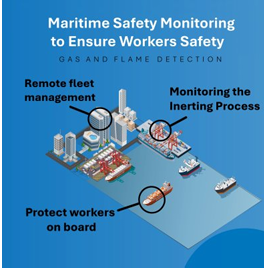
Teledyne Gas and Flame Detection (Teledyne GFD), part of Teledyne Technologies Incorporated (NYSE:TDY), is responding to updated International Maritime Organization (IMO) recommendations for entering enclosed spaces aboard ships with gas detection solutions that help operators strengthen atmospheric monitoring and address evolving safety expectations.

teledyne_gs.jpeg

MO Resolution MSC.581(110) broadens recommended gas testing protocols to include carbon dioxide alongside other key atmospheric hazards. Growing demand for these solutions has contributed to multiple related awards year-to-date, reflecting increased focus across the maritime sector on safety readiness and compliance.

“The IMO’s revised recommendations represent an important advancement for maritime safety,” said Thibault Fourlegnie, Vice President and General Manager, Teledyne GFD. “We provide practical gas detection solutions that help customers improve enclosed-space safety and meet evolving compliance expectations.”

Manufactured at Teledyne GFD’s facility in Renfrew, Scotland, the company’s gas detection solutions draw upon more than 75 years of engineering and manufacturing expertise in industrial safety technologies. Investment at the plant is ongoing in line with growing global demand.

Teledyne Gas and Flame Detection

www.teledyne.com


Breaking the efficiency ceiling in hazardous areas with ABB's IE6 SynRM Increased safety motor

Interest in hazardous area motors has never been greater. According to a report by Strategic Market Research, the total global market for all types and ratings – including low-, medium-, and high-voltage motors – had an estimated value of $7.1 billion in 2024, and is projected to grow to $10.4 billion by 2030. The forces behind that trajectory are converging in ways that are fundamentally changing how operators approach motor selection: tightening environmental regulations, volatile energy costs, the shift to industrial electrification, and an operational footprint expanding into remote and inaccessible environments.

Prashanth SN, Global Product Manager for IEC Low Voltage Motors at ABB, explains that the days of treating a motor specification as a routine procurement exercise are over. The right choice today carries long-term consequences for operating costs, sustainability credentials, and site safety. The wrong one can echo for decades.

Introducing ABB's IE6 SynRM Increased safety motor

In response to this evolving landscape, ABB is the world's first manufacturer to offer an IE6 Hyper-Efficiency motor certified to ATEX and IECEx requirements for Zone 1 and Zone 2. Built on magnet-free synchronous reluctance (SynRM) technology, ABB's SynRM Increased safety range covers shaft heights IEC 90–315 and power ratings from 0.75 to 315 kW. First launched in 2023 in IE5 efficiency, the motors from 110 kW have now been upgraded to IE6, achieving this certification in hazardous areas for the first time.

The IE6 SynRM Increased safety motor delivers up to 60% lower energy losses than the IE3 induction motors that remain the default choice across chemicals, oil and gas, pharmaceuticals, food and beverage, and marine sectors. In industries running continuous processes around the clock, that 60% gap carries serious weight.

Quantifying the lifecycle economics

The purchase price of an industrial motor accounts for only around 2% of its lifetime cost, with 1% accounting for maintenance and the remaining 97% dominated by energy usage. That ratio makes efficiency class the single most commercially significant specification parameter, yet many hazardous area installations continue to operate on IE3 motors. ABB's IE6 SynRM motor introduces a more efficient path forwards.

The figures make a clear case. Over a standard 20-year service life – modelled at 8,760 operating hours per year, 75% average load, and an energy cost of €0.20/kWh – choosing a single 110 kW IE3 induction motor over an IE6 SynRM unit generates €87,520 in energy savings, with a payback period of just eight months and 157,540 kg of CO2 avoided. This is the emissions equivalent of 37 petrol-powered passenger cars driven for a full year. Scale that across an installation running hundreds of motors and the aggregate impact moves from compelling to extraordinary. The International Energy Agency's Energy Efficiency 2025 report calls explicitly for sustainable technology to be made affordable. An eight-month payback on a 20-year asset makes that case on its own.

The technical case for SynRM in hazardous areas

SynRM technology operates on the principle of magnetic reluctance. The rotor contains no windings, no magnets, and no rare earth materials – yielding significant advantages in thermal performance and long-term reliability.

The absence of rotor copper losses means the SynRM motor has up to 30°C lower winding temperatures and up to 15°C lower bearing temperatures than an equivalent induction model. Lower bearing temperatures are particularly important in reducing life-cycle costs because bearing failures cause about 70% of unplanned motor outages. Cooler running also has direct implications for how the SynRM motor can be classified and deployed in explosive atmospheres.

In Zone 1, where flammable gases or vapors are likely to be present under normal operating conditions, that cooler running profile unlocks a real specification edge. Where a Flameproof motor with a special enclosure would previously have been the default choice, operators can specify an Increased safety motor – a more cost-effective installation without any compromise on certified safety.

In Zone 2 applications, the improved loadability of SynRM technology means more power from a given frame size, enabling a smaller, lower-cost motor to fulfil the same duty. For offshore installations and mobile plants – where every kilogram and every centimeter of footprint is an engineering constraint – that specification brings real operational value.

Certified for the conditions that matter

ABB's IE6 SynRM Increased safety motor carries full ATEX and IECEx certification for Zone 1 and Zone 2 applications and is certified for use with variable speed drives (VSDs). Running the motor with a VSD enables precise speed and torque control across the full operating range, including the partial-load conditions where conventional induction motors suffer their steepest efficiency penalties. For pumps, fans, and compressors running variable load profiles, that combination of VSD compatibility and IE6 efficiency is exactly what the application demands.

With protection ratings up to IP66, the motor is hardened against dust, water ingress, and environmental exposure. Temperature class compliance across both arctic and high-heat operating conditions extends the deployable envelope from LNG terminals to high-ambient chemical processing sites. The full SynRM Increased Safety motor range covers shaft heights IEC 90–315 and power range from 0.75 to 315kW – with motors up to 90kW classed as IE5 efficiency, and above 90kW as IE6 as standard.

A platform for the long term

The IE6 SynRM Increased safety motor sits within the industry's broadest portfolio of IEC LV motors for hazardous areas, spanning Increased Safety, Flameproof, and Dust Ignition Proof protection types, with induction alternatives available up to IE4. Hazardous area installations combine different zone classifications, process duties, and environmental conditions that demand a flexible, application-specific approach to specification. ABB backs that portfolio with a global service network providing lifecycle support from pre-engineering to installation, commissioning, and condition-based maintenance.

For OEMs and end-users evaluating the next generation of hazardous area motors, the efficiency ceiling that previously constrained Zone 1 and Zone 2 selection has been broken. ABB's IE6 SynRM Increased safety motor delivers certified safety and a TCO case that is hard to dispute. That is ABB's ‘Engineered to Outrun’ philosophy, made tangible.

To find out more, please visit: https://www.abb.com/global/en/areas/motion/campaigns/motors-for-hazardous-areas

IEC 60079-0 Edition 8 expected to address the increasing complexity of hazardous area operations

1e

The imminent publication of IEC 60079-0 Edition 8 will likely mark a significant development for the explosion-protection industry, with expected refinements reflecting both evolving industrial realities and lessons learned from the practical application of Edition 7. For manufacturers, certification bodies, and end users alike, the updated standard will represent more than a routine revision; signalling a broader industry shift toward greater transparency, more robust verification requirements and improved clarity in the communication of safety-critical information. 

At its core, Edition 8 is expected to address the increasing complexity of hazardous area operations. Modern industrial environments are now shaped by wider global temperature variations, the continued growth of portable electronic equipment and the integration of digital technologies into plant infrastructure. The revised standard will likely respond directly to these changes while also resolving a number of technical ambiguities identified in the previous edition. 

One of the most noticeable expected changes is the revised approach to ambient temperature marking. Under Edition 7, equipment operating within the commonly accepted range of -20 °C to +40 °C often required no specific temperature marking. Edition 8 may remove this assumption entirely by requiring manufacturers to state the exact rated ambient temperature range on all certified equipment. Although seemingly straightforward, this amendment will introduce a much higher level of clarity for operators and maintenance teams working across diverse environmental conditions, from arctic installations to high-temperature process environments. 

The standard will place greater emphasis on verification through testing rather than reliance on procedural controls. This is particularly evident in the treatment of portable equipment. Previous editions allowed certain electrostatic discharge considerations to be addressed through Specific Conditions of Use, commonly identified by an “X” suffix on certification documentation. If Edition 8 moves away from this approach, we will see transferred charge testing and maximum capacitance assessments mandatory for portable devices. The result will be a more consistent and demonstrable safety baseline supported by measured performance rather than operational caveats. 

Several of the revisions may appear relatively minor at first glance, yet they carry potentially significant engineering implications. Updated voltage ratings for batteries

and cells, for example, can directly influence the calculations associated with intrinsically safe circuits. Similarly, if ingress protection requirements are expanded, it will ensure equipment integrity is maintained even while systems are not in operation. We expect to see enclosures incorporating socket-outlets to include protective caps or equivalent safeguards to prevent the ingress of dust or moisture during periods of inactivity. 

The industry’s digital transformation will likely be addressed in Edition 8. Manufacturers should be permitted to supplement conventional product markings with QR codes and machine-readable codes, providing improved access to certification data, instructions and safety information. At the same time, the standard should reinforce the importance of clearly identifying equipment subject to Specific Conditions of Use, ensuring that “X” markings remain explicit and easily understood. 

For manufacturers operating in global markets, the introduction of Edition 8 will provide an opportunity to reassess existing product portfolios against revised requirements. While equipment certified to Edition 7 remains valid to that standard, a proactive review of product markings, documentation and technical assumptions will help organisations align with the latest expectations of the international hazardous area sector. In an industry where compliance, clarity and confidence are inseparable from safety, the transition to Edition 8 will be a meaningful step forward. 

Jayson Shepherd, Certification Engineer, Element 

Learn more about explosive atmosphere testing and certification with Element at

https://www.element.com/connected-technologies/explosive-atmosphere-testing-and-certification 

EPIT India Launches Through Strategic Industry Collaboration

Specialist Explosion Protection Training and Consultancy Company Opens Purpose-Built Training Facility in South India

EPIT India, a specialist training and consultancy company formed through a strategic partnership between Explosion Protection International Training Ltd (EPIT UK) and TUFF Offshore Energy & Engineering (India) Pvt Ltd (TUFF INDIA), has officially launched its purpose-built Explosion Protection and CompEx training facility in Tiruchirappalli, Tamil Nadu.

The launch brings together EPIT UK’s internationally recognised expertise in hazardous area and Explosion Protection training with TUFF INDIA’s strong industrial capabilities and regional presence to support growing demand for specialist industrial competency development across South India and surrounding regions.

EPIT India has been established to deliver specialist training, consultancy, and competency solutions for engineers and technicians working in hazardous and industrial areas, offering courses on, electrical safety, high voltage and low voltage (HV & LV), and explosion protection (Ex), including internationally recognised CompEx courses.

The new company will support engineers, technicians, supervisors, contractors, and industrial organisations operating across sectors including oil & gas, petrochemical, renewables, manufacturing, energy, EPC, offshore operations, and industrial services.

Purpose-Built Training Facility

EPIT India has opened a dedicated custom-built training facility designed specifically for practical hazardous area (Ex) training and competency development.

The facility has been developed to provide both classroom based learning and practical assessment within a realistic industrial training environment, supporting safer working practices and improved workforce competency.

EPIT India will provide:

  • CompEx Certification
  • IECEx Certification
  • Explosion Protection (Ex) Training
  • Hazardous Area Awareness
  • Electrical Safety Training
  • HV & LV Training
  • Industrial Competency Development
  • Specialist Consultancy Services

Built around real-world industrial application, the centre has been designed to support the increasing demand for qualified personnel trained to internationally recognised standards.

Supporting Industrial Growth Across South India

As industrial sectors across South India and the surrounding regions continue to expand, demand for skilled personnel continues to increase significantly.

EPIT India aims to support this growth by providing practical, internationally aligned training and consultancy services for:

  • Electrical Engineers
  • Instrumentation Engineers
  • Maintenance Technicians
  • Offshore Personnel
  • Supervisors & Industrial Teams

The company will support both individual professionals seeking internationally recognised certification and organisations focused on improving workforce competency, compliance, and operational safety standards.

Centre Information

EPIT India
36 Sundar Towers, Salai Road
Woraiyur, Tiruchirappalli, 620003
India

Email: This email address is being protected from spambots. You need JavaScript enabled to view it.
Website: https://epitindia.com/