Find ATEX, IECEx, Explosion Protection & Hazardous Area Content...

News

The new i.safe MOBILE RSM sets a benchmark for industrial use in Ex zone 1/21

In explosive atmosphere environments across the oil and gas industry, reliable communication equipment that meets stringent safety standards is paramount. The newly introduced i.safe MOBILE IS-RSM3x.1 series of Remote Speaker Microphones (RSMs) sets a new benchmark for communication technology certified for Ex-Zone 1/21 classified areas.

The new RSM features two distinct models: the IS-RSM3A.1 wired version, which integrates with i.safe MOBILE devices featuring the 16-pin ISM interface, and the IS-RSM3B.1 Bluetooth® model, compatible with standard Bluetooth®enabled industrial equipment. Both units carry ATEX/IECEx certification essential for deployment where flammable gases, vapors, and combustible dust create potentially explosive atmospheres.

The technical architecture delivers exceptional audio performance with a powerful speaker capable of reaching 103 dB. Dual microphones enable intelligent passive noise cancellation, while an integrated Digital Signal Processor actively minimizes background noise in real-time, ensuring clear communication even in environments where industrial noise regularly exceeds 85 dB.

Field-Proven Application Scenarios

Maintenance technicians on offshore platforms benefit significantly from the Bluetooth® IS-RSM3B.1 model. Workers can secure their primary communication devices while maintaining continuous communication through the RSM attached to their PPE. During critical maintenance procedures, this configuration enables hands-free communication with control room personnel without compromising safety protocols or equipment integrity.

When conducting inspection rounds in processing units where potentially explosive vapors create Zone 1 environments, the programmable interface buttons allow for immediate Push-to-Talk functionality or emergency alerts without requiring glove removal. The superior noise cancellation technology ensures clear transmission even in proximity to high-noise equipment such as compressors and pumps, maintaining critical communication channels in challenging acoustic environments.

During petrochemical emergency scenarios, the programmable red button can be configured for immediate SOS activation, while the device's robust IP68 construction withstands exposure to harsh environmental conditions. The extended battery capacity ensures communication remains functional throughout prolonged emergency operations, providing critical coordination capabilities when they are most essential.

Engineered for Industrial Practicality

Weighing just 205 grams, the IS-RSM3x.1 features an ergonomic design with intuitive button placement for operation even with heavy-duty chemical-resistant gloves. The device includes a reinforced clip for secure attachment to safety clothing, while the exchangeable 2200 mAh battery offers extended operational life for long shifts in hazardous environments.

Additional connectivity options include an 8-pin ISM interface for connecting certified headsets within hazardous areas, while the NFC chip in the Bluetooth® version enables efficient pairing in field conditions.

Through implementation of these advanced communication systems, petrochemical operations can enhance both safety compliance and operational efficiency in Zone 1/21 classified areas where conventional communication technologies present unacceptable risk profiles.

www@isafe-mobile.com

ATEX – why you should be worried

TPI_May.jpeg

If you are even asking yourself the question “should I be worried about explosive atmospheres (ATEX)” then the answer is most probably “yes”. The Dangerous Substances and Explosive Atmospheres Regulations (DSEAR) require employers to control the risks to safety from fire, explosions and substances corrosive to metals. This places the onus firmly on you!

It is well understood that equipment for use in more obvious hazardous locations such as flour mills, coal mines, petrochemical plants and fuel transfer facilities, needs to be certified “intrinsically safe”. However, hazardous locations also include places like water treatment plants, tunnels and underground passageways or any location where a build-up of naturally occurring flammable material (such as methane or dust) could occur.

Most people are familiar with the definitions of ATEX ‘Zones’. Put simply, Zone 0 means an explosive atmosphere is very likely and Zone 2 means it is unlikely, with Zone 1 being the “grey area” in between. It is easy enough to identify from its markings whether a particular piece of equipment is suitable for a particular Zone, e.g. Ex ia for Zone 0, Ex ib for Zone 1 and Ex ic for Zone 2. However, what is not so obvious is identifying which locations in your plant are in which Zones.

As if the issue of Zones wasn’t enough, there is also the consideration of which gases are likely to be encountered. For example, equipment marked as Group IIB must not be used in Zones with hydrogen or acetylene likely to be present. Those gases would require at least Group IIC certification.

graph_1_TPI.jpeg

Then there is also consideration of the equipment’s temperature classification, which specifies the maximum surface temperature that could arise due to a fault. For example, equipment coded T2 could potentially get hot enough to ignite gasoline! However, an equipment coding of T4 is generally considered acceptable, being safe for all gases apart from Carbon Disulfide, which requires T6.

The TPI 9085Ex features on-meter analysis for the detection of machinery faults such as unbalance, misalignment, looseness and bearing wear. With full colour OLED display and Bluetooth communications, the TPI 9085Ex also features colour coded alarms and zoomable on-screen vibration frequency plots with cursor readout. It can store lists (routes) of up to 1000 machines, each with up to 10 measurement points, with full waveform and frequency spectrum (FFT) capture. Uniquely, the TPI 9085Ex delivers high level functionality and capability, including instantaneous bearing temperature measurement, all at very low cost.

The included free-to-use VibTrend PC-based trending and reporting software features high-end benefits such as automatic email notification of alarms and report generation, to implement a full Condition Based Maintenance strategy.  Routes and readings can easily be transferred to/from the TPI 9085Ex via Bluetooth using a smart phone or tablet running the free TPI Bridge App. This allows service personnel to be sent routes and return readings, no matter where they are in the world. 

For more information please contact TPI Europe’s head office on +44 1293 530196 or take a look on the website at www.tpieurope.com or email This email address is being protected from spambots. You need JavaScript enabled to view it.

TPI_Final.jpeg

JCE Energy supports Aquaterra Energy to deliver 100% solar-powered platform, offshore Angola

Aberdeen-based JCE Energy, a specialist in off-grid power solutions, has supplied Aquaterra Energy, a leader in global offshore energy engineering solutions, with a bespoke modular solar power system for a supermajor’s offshore platform in Angola.

The autonomously powered, unmanned Sea Swift production platform operates entirely on renewable energy, supporting offshore operations while enabling the energy transition. This approach enhances long-term viability and adaptability in an evolving energy landscape.

Under a £1.5 million contract, JCE Energy designed, manufactured and supplied the bespoke system which incorporates over 100 high-efficiency solar panels suitable for the challenging offshore conditions. It has been engineered to maximise energy capture in the maritime environment, where space is at a premium and resilience against saltwater corrosion and storm conditions is paramount.

The project was delivered by a team of over 50 skilled professionals, comprising JCE’s in-house engineers and project managers, supported by contracted electrical fitters and additional mechanical specialists. Approximately 90% of the system’s design, manufacturing, and module assembly was completed at JCE Energy’s Aberdeen headquarters, with additional fabrication work carried out at their Plymouth facility.

The modular design allows for scalability, ensuring the system can be expanded to meet future energy needs without extensive redesign or disruption to platform operations. Coupled with advanced energy storage solutions, the system guarantees a reliable power supply, even during periods of low sunlight. By reducing reliance on diesel generators, it reduces C02 emissions by at least 90%. The long-term operating expenditure is expected to be significantly reduced, leading to substantial cost savings of around £5,900,000 over the 30-year lifespan of the platform.

Stewart Maxwell, Technical Director of Aquaterra Energy said “As operators look to reduce their carbon footprint while managing offshore platform costs, we’ve ensured that Sea Swift is ready by reimagining topside power sources. With JCE Energy’s support, we successfully delivered a 100% autonomously-powered platform using solar energy, eliminating the need for traditional fuel sources.”

Marco Gheza, General Manager of JCE Energy, commented: “Our solar power package for the project stands as a testament to the evolving energy sector’s potential to balance operational needs with environmental and social responsibilities. This project not only demonstrates our engineering expertise but also reinforces our commitment to helping the energy sector transition to more sustainable practices.”

www.jceenergy.com.

Explosion Safety for Battery Energy Storage Systems (BESS) by REMBE

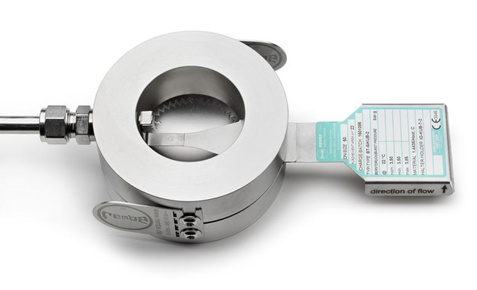
Battery Energy Storage Systems (BESS) are transforming our energy landscape – and REMBE is pushing the boundaries of their protection. No two BESS are identical, and each requires its own tailored approach. Drawing on over 50 years of explosion protection expertise, we are leading the way in developing protection solutions that balance safety requirements with commercial objectives. Our integrated approach leverages multiple layers of safety, combining options for early detection and combustible concentration reduction with optimized deflagration vents to safeguard next-generation BESS installations.

rembe_1.jpeg

Fig. 1: Energy Storage System protected by REMBE

REMBE offers a comprehensive range of products that help safeguard BESS against explosions. Three distinct product series enable optimal solutions for any BESS installation, each bringing unique advantages to your project.

fig_2.jpeg


Fig. 2: The BESS Core Venting Series

The BESS Core Venting Series delivers efficient roof venting through our proven EGV products. Engineering excellence meets customization – each product is precisely tailored to customer specifications, from size and burst pressure to insulation materials and properties. This series offers proven protection with attractive volume pricing.

fig_3.jpeg


Fig. 3: The BESS Smart Venting Series

Innovation takes center stage in the BESS Smart Venting Series with BESS.TGV, our revolutionary deflagration vent for BESS enclosure sides. The patented TargoVent principle deflects explosion effects upward to a safe location. By moving explosion protection from roof to container sides, BESS.TGV eliminates concerns about snow loads and hail impact while freeing up valuable roof space. This creates new possibilities for BESS configuration, such as vertically stacked installations. With a uniquely slim profile, BESS.TGV seamlessly integrates into any BESS enclosure.

fig_4.jpeg

 
Fig. 4: The BESS Premium Venting Series

The BESS Premium Venting Series represents our latest breakthrough in explosion protection. As pioneers of flameless venting technology, REMBE has developed BESS.Q.Vent – the first flameless vent specifically engineered for BESS applications. By eliminating external flames and minimizing thermal and pressure effects, BESS.Q.Vent enables safe installation of BESS in indoor locations and other sensitive environments.

Enhancing this comprehensive protection portfolio, advanced detection systems provide an extra layer of safety. Our Hotspot and GSME sensors detect critical faults before they escalate: Hotspot through precise thermal monitoring, and GSME through multi-gas detection. This early warning capability enables early intervention before potential issues develop into thermal runaway events, completing our integrated approach to BESS safety.

Beyond our products, REMBE is your global consulting and engineering partner throughout your entire project. Our explosion protection experts and external engineering partners work closely with you to determine the optimal safety solution for your specific requirements.

www.rembe.de


Driving Workplace Safety Forward MSA Safety Sparks Industry Conversation on Improving Worker Safety

In a crucial step toward enhancing workplace safety, MSA Safety brought together a diverse group of industry experts to address the stagnation in reducing workplace accidents and fatalities.

With Health and Safety Executive (HSE), Great Britain’s national regulator for workplace health and safety, highlighting that UK statistics around fatal workplace accidents plateauing over the past decade, experts from fields including architecture, manufacturing, media, charities, and those who’ve experienced life-altering accidents, offered valuable insights to help improve safety practices across industry.

The discussion, focused on the risks of working at height, revealed that despite advances in technology and attitudes around safety, fatalities remain each year. In 2024 alone, 138 people lost their lives in workplace accidents, 36% of which were due to falls from height. The current figures on non-fatal accidents have remained consistent for years, the current rate being similar to 2018/19 levels, further underscoring the need for change.

Key takeaways from the discussion include the importance of clear communication, accessible safety education, and the need for comfortable, well-designed personal protective equipment (PPE) that workers are more likely to wear. The panel also identified barriers such as human nature, poor equipment design, and budget constraints that may often hinder safety improvement efforts.

Panel member Jason Anker, who has dedicated his life to safety advocacy after a life-changing fall, emphasised that a total safety culture must be ingrained at every level of the industry when it comes to working at height - from designers to contractors and to workers themselves.

Panellists agreed that engaging key stakeholders, improving PPE design, and making safety a priority from the beginning of a project are all critical steps in helping to foster a culture of safety.

The goal is clear: by driving communication, collaboration, and education, the industry can help reduce accidents and fatalities, ultimately creating a safe, resilient workforce.

To download the insights paper or watch the full panel discussion, visit www.msasafety.com/whitepaper-creating-safer-workplaces

Hart Door Systems reports sales boost across its range of doors

Newcastle upon Tyne-based Hart Door Systems, the oldest British manufacturer of high-speed doors and shutters, reports strong activity throughout its product range.

Hart’s chairman, Doug Hart, says it has been a very active Spring with every sign this will be continuing. “Our innovative products and problem-solving approach helps companies  maintain quality working conditions and general business efficiency.

“This spirit of innovation is embedded in in the company’s philosophy of continually evolving our product range of Speedor high-speed doors, our fire shuttersTerror Screen security rated shutters and specialist doors such as ATEX compliant high-speed doors and shutters.”

Hart’s products are manufactured to international standards such as the ISO9001:2015 Quality Assurance scheme and LPS 1056 and LPS 1271, Loss Prevention Council Standards for Fire Doors tested to UK and US standards.

“We offer consultancy, design, manufacture, shipping, installation, maintenance, servicing and training from a single source. This approach to project management, helps clients save on resources and reduces administrative burden,” adds Mr Hart.

“Despite global uncertainties on the political front and the ever present debate on climate change I believe our leading Speedor and Typhoon brands will continue to be in demand.  

“We have had many successes at home and abroad so far this year, not just through our Speedor range of high-speed doors but through our range of high quality shutters too. Both these leading brands offer industry a choice of solutions for industry and commerce.  

“The fundamentals delivered by Hart are quality throughout from manufacture to installation as well as service back-up to comply with changing national and international safety standards. 

“We have always had quality as our prime driver and our success with new variants, not just in Speedor high-speed doors but shutters such as our new Typhoon range.

“The fundamentals are quality from manufacture to installation and service thereafter to comply with changing national and international safety standards. Above all we deliver long-term operational reliability.” 

http://www.hartdoors.com

HSE provides free online learning to help employers tackle work-related stress

The Health and Safety Executive (HSE) has today (12 May) launched a free online learning module to help employers get to grips with risk assessment of work-related stress. 

The launch coincides with Mental Health Awareness Week (12-18 May) and expands HSE’s Working Minds campaign, which supports businesses in preventing work-related stress and supporting good mental health. 

With around half of all work-related ill health attributed to stress, depression and anxiety, the new module provides step-by-step guidance for employers on conducting effective risk assessments, identifying root causes of work-related stress, and implementing solutions that have a real impact. 

 Kayleigh Roberts from HSE’s Engagement and Policy Division said: “Preventing work-related stress isn’t just the right thing to do for your workers—it’s also a legal requirement. Our new online learning module aims to make it easier for businesses, particularly small to medium organisations to understand their obligations and what they need to do on a practical level.
 

“This isn’t about ticking boxes. It’s about embedding good practices into everyday business operations. By taking a proactive approach, employers can improve productivity, reduce sickness absence, and retain their valued workers. The module provides all the practical templates, tools and resources needed to get started or to review existing practices.” 

HSE highlights six main areas that can lead to work-related stress if not managed properly: demands, control, support, relationships, role, and change. 

Businesses are encouraged to implement the Working Minds campaign 5Rs approach to support the risk assessment process: 

  1. Reach out and have conversations 
  2. Recognise the signs and causes of stress 
  3. Respond to risks by agreeing action points 
  4. Reflect on the actions taken 
  5. Make it Routine to check in regularly 

Employers can register for the online learning module to access step-by-step advice, practical tools, and downloadable templates. 

Visit the Working Minds campaign website for more information about the Working Minds campaign and to download materials. 

ION SENSE® Unveils Revolutionary New PID Sensors

ION SENSE no IS open under


ION SENSE®, an industry leader in advanced gas detection technologies, is proud to announce the introduction of its next-generation photoionisation detectors, the ION SENSE® PID 10.6eV 3 and the ION SENSE® PID 10.6eV 10, at the prestigious Sensor + Test 2025 exhibition in Nuremberg, Germany. This groundbreaking product line redefines the standards of volatile organic compound (VOC) detection, promising enhanced performance, accuracy, and reliability alongside low cost of ownership.

Next-Generation Detection Capabilities

The ION SENSE® PID 10.6eV 3 features an impressive detection limit of 0.5 ppb, with a measurement range of 3 ppm, while the ION SENSE® PID 10.6eV 10 offers a 1 ppb detection limit paired with a wide measurement range of 10 ppm. Both variants boast a remarkable 50% reduction in response time, 15,000 hours of lamp and filter life, robust EMI protection, and patent pending intelligent diagnostics aimed at ensuring operator safety. Additionally, the exceptional humidity resistance and superior lamp stability of these sensors equips users with confidence in their performance, even under challenging environmental conditions.

Investing in Innovation

The launch comes after four years of extensive research and development by industry leading talent, fuelled by feedback from industry professionals and a dedication to excellence. Designed for longevity and stability, ION SENSE® has developed and tested over 300 prototypes to ensure each product not only meets but exceeds performance expectations, providing superior air quality monitoring while significantly reducing maintenance costs.

"We are redefining what's possible in gas detection," said Peter Morris, Head of Sensors at ION SENSE®. "Our unique sensor technology enhances the monitoring of air quality, while simultaneously reducing operational costs and extending the lifespan of the equipment."

Seamless Integration

To complement the PID sensors, ION SENSE® is introducing a suite of integration boards: ION CONNECT and ION TRANSMIT. These integration boards allow rapid evaluation and provide seamless installation options, allowing for adaptation across diverse applications, from compact air quality monitors to comprehensive industrial systems.

The ION TRANSMIT board ensures effective long-range communication for remote monitoring, while the ION CONNECT board facilitates easy data interpretation by converting analogue signals into digital outputs. Advanced features such as MODBUS compatibility streamline system control, thereby enhancing operational efficiency across diverse applications.

Visit Us at SENSOR + TEST 2025

We invite all industry professionals to visit us on stand 1-300 during the Sensor + Test 2025 exhibition to experience live demonstrations of the new ION SENSE® PID sensors and integration boards. This event marks a bold step forward in our commitment to innovate and redefine PID technology for the evolving global market.

At ION SENSE®, our vision is clear: to leverage advanced sensing technology to safeguard lives, protect the environment, and transform industrial processes. The next-generation ION SENSE® PID sensors are a testament to this mission, combining greater sensitivity, long-term stability, and user-friendly integration.

Contact Us About ION SENSE® PID

For more information about the revolutionary new ION SENSE® PID sensors or to schedule a meeting at the exhibition, please email This email address is being protected from spambots. You need JavaScript enabled to view it. or call +44(0)1763 208503 or visit www.ionsense.com.

Advancing gas detection: Meet the PrimaX® IR+ Gas Detector

Want to inspire greater confidence in your workers? Need local indications of combustible gas concentration levels to satisfy user and application requirements? The PrimaX® IR+ Gas Detector could be the answer you’re looking for.

When you’re the person responsible for safeguarding people and places in the oil, gas, and chemical process industries, you naturally want to stay abreast of innovation in gas detection.

Advances in gas detection

But rapid technological developments over recent years mean there are now a wide range of  solutions. These range from conventional sensing methods like infrared detectors and catalytic bead sensors which have wide customer acceptance to newer technologies like ultrasonic detectors, open path infrared or laser-based detectors. Different technologies work in different ways – ultrasonic solutions ‘hear’ the ultrasonic sound from a compressed gas leak whereas other technologies ‘see’ a gas cloud using infrared absorption or ‘smell’ trace elements of a combustible gas.

Each of these solutions has its own strengths and weaknesses and are suited to particular applications and environments. For example, fixed point detectors like point infrared  detectors can help protect high risk locations from combustible gas leaks, including enclosed areas. They can also help in locations with potentially low oxygen content like ventilation ducts. Meanwhile, open path solutions can detect gas leaks in wide open areas providing integrated measurement of gas cloud. Ultrasonic detectors are suitable for high pressure offshore and onshore gas facilities where gas clouds can easily disperse, for example because of high winds.

The benefits of a layered approach

Choosing the right detection solutions for your site depends on many factors including the type of risk you’re trying to address, the placement, size and shape of your equipment, and the topology of your site. A layered approach in which several different detection technologies work together may be the best way for you to enhance safety and protect both people and plant. Using a combination of solutions helps to mitigate the limitations of single technologies and the risk that a system using the same method of detection will fail to detect a gas release.

Your first line of defence – point detectors

Fixed point detectors, including Point Infrared detectors, are likely to be your first line of defence. Infrared (IR) gas detectors rely on the ability of a hydrocarbon gases to absorb infrared energy (they’re therefore not suitable for hydrogen). They use two wavelengths – a gas-absorbing ‘active’ wavelength and a ‘reference’ wavelength not absorbed by the gas. With resistance to contamination and poisoning a long sensor life can be achieved, and minimal validation requirements help provide combined low cost of ownership. These detectors are suitable for environments where there’s continuous combustible gas presence, including oxygen deficient environments. They are positioned near potential leak sources such as pipe joints, valves, compressors, pumps and tanks.

Meet our PrimaX® IR+ Gas Detector

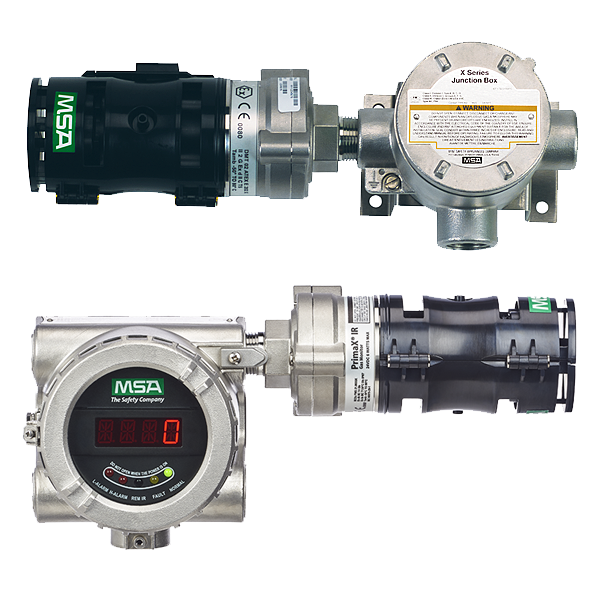
At MSA Safety, we’re now introducing a new point infrared gas detection solution, the PrimaX® IR+ Gas Detector. It is an extension to our PrimaX IR family that combines the trusted performance of the PrimaX IR® sensor with a user-friendly display providing real-time local gas concentration readings.

Tried and tested sensor performance

The reliability of the PrimaX® IR sensor will already be familiar to many health and safety decision-makers. With more than 45,000 units sold around the world, it offers the tried and tested reliability that inspires confidence in both health and safety professionals and workers alike. Its patented dual-source design helps provide excellent reliability and seamless monitoring in the event of one source failure. And heated optimised optics provide stability and accuracy even in humid conditions.

Now, with the addition of an LED display providing local gas concentration levels, the PrimaX® IR+ Gas Detector offers even greater confidence, enhancing your safety systems further.

Real-time local gas concentration readings and remote notifications

The addition of an LED display offers instant situation awareness and a local indication of gas concentration levels so workers can see at a glance that they’re working in a safe environment. There are four LED status indicators to signal normal operation (green), a fault (yellow), a low alarm (red) or a high alarm (also red). Two onboard alarm relays for low and high gas alarms and an additional fault relay can trigger desired safety actions.

Easy installation and operation

Users of our PrimaX® IR detector will know how easy it is to set up, calibrate and troubleshoot. And the same is true of the PrimaX® IR+. The factory calibration means it’s ready to use straightaway. But if you do need to recalibrate for different gases, the HART® technology and intuitive calibration cap complete with icon-driven interface make this a straightforward process.

Remote sensor option for maximum flexibility

Other notable benefits of the PrimaX® IR+ include the remote sensor option, enabling the sensor to be mounted up to 30 metres from the display unit. This allows you to position the display unit in the optimum location for your needs. The durable aluminium and stainless-steel enclosures add to user confidence and mean both sensor and display unit can be installed in the most demanding of environments.

Why you might want local indications

Offshore platforms, gas compressor stations and onshore terminals are complex environments and, in putting together a layered safety system and keeping it up to date, you will want to know you’re choosing the right solutions to meet today’s rigorous safety standards and expectations.Additionally, some sites may require a local indication of gas concentration levels to support safety protocols and provide workers in combustible environments with added reassurance.

To find out more about our PrimaX IR+ Gas Detector https://gb.msasafety.com/Fixed-Gas-%26-Flame-Detection/Gas-Detectors/PrimaX%C2%AE-IR%2B-Gas-Detector/p/000070001800001244 


Learn more about our Fire & Gas Detection Controllers https://gb.msasafety.com/detection-controllers

Teledyne Gas and Flame Detection to put hydrogen detection solutions in the spotlight at trio of forthcoming events

Teledyne Gas & Flame Detection (Teledyne GFD) is making its final preparations for a trio of forthcoming energy sector events taking place in Europe and Asia.

all_eNERGY.jpeg
 Visitors to the Teledyne GFD booth at All Energy 2025 (Glasgow, UK, 14-15 May), World Hydrogen Summit 2025 (Rotterdam, Netherlands, 20-22 May) and World Gas Congress 2025 (Beijing, China, 19-23 May) will learn for themselves the advantages of tapping into sector knowledge and solutions that stem from decades of empowering safety in all forms of power generation. Key for these events will be Teledyne GFD’s hydrogen detection expertise and technologies.


The All-Energy exhibition and conference is the UK’s largest low-carbon energy and renewables event, with hydrogen among key focus areas regarding both grid integration and battery energy storage systems (BESS). Hydrogen is produced in BESS systems during the charging and discharging process of the batteries, or if a fault occurs that leads to thermal runaway. Once initiated, thermal runaway will likely result in a fire, but with the right detection technology it is possible to contain the consequences.

On stand B39, Teledyne GFD, which has its UK manufacturing facility just 8 km west of Glasgow in Renfrew, will be shining the spotlight on four key technologies.

The recently introduced Spyglass™ Xtend triple-infrared flame detector offers the simultaneous detection of both hydrogen and hydrocarbon fires. It boosts safety in environments where hydrogen flames can spread to co-located systems or nearby equipment and start fires involving hydrocarbon fuels that are invisible to a hydrogen-only detector. Integrated high-definition CCTV video delivers clear, rapid imaging of fuel fires like gasoline and jet fuel, while the near-IR video option detects fires caused by hydrogen and methanol, making it ideal for BESS applications. Five selectable sensitivity levels are available.

Other instruments of note at All Energy 2025 will include the tried and tested GD10P infrared (IR) gas detector, as well as the GS700-Hydrogen, a high-performance and highly flexible all-in-one instrument that is able to detect both hydrogen and natural gas in utility grid integration projects. Whether it is 100% hydrogen, hydrogen blends or natural gas, the portable GS700-Hydrogen simplifies gas detection in applications that include outdoor/indoor leak detection, purging, barholing and pipeline gas testing. Providing both safety and peace of mind, the fully ATEX-certified instrument means utilities can quickly determine the source of gas leaks, saving valuable time and reducing detection-related costs such as unnecessary excavations.

Also on show will be Teledyne GDCloud™, a user-friendly new cloud solution which enhances gas detection measurement by recording hazardous events. Users can take advantage of this technology to help ensure regulatory adherence and streamline safety programmes. Among Teledyne GDCloud’s most powerful capabilities is visualising detailed gas sensor readings from field sessions. Users can trace the route that a technician takes during investigations via advanced location mapping functionality. This capability enables breadcrumb mapping to identify the exact locations that correspond to gas readings logged by the detector. Users can also interact with dynamic charts and tabulated data displays to reveal further insights into field activity and events.

wea.jpeg

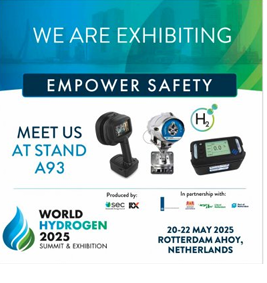
The same four technologies will also take centre stage at the World Hydrogen Summit 2025, where visitors will find Teledyne GFD at booth A93. In fact, such is Teledyne GFD’s expertise in the hydrogen arena that it has been invited to deliver a presentation at the event entitled ‘Regulatory Framework and Compliance along the Hydrogen Value Chain’.

chain.jpeg


At World Gas Congress, a flagship gas and energy industry event staged once every three years, Teledyne GFD will again present these technologies to visitors from booth Z12 in hall D. A team of local experts will be present to discuss current and/or future gas detection challenges.

Further reflecting its strong global presence, Teledyne GFD will also take booths at two events in the United States during May: AGA (American Gas Association) 2025 on May 4-8 in Aurora, Colorado; and OTC (Offshore Technology Conference) 2025 on May 5-8 in Houston, Texas.

For more information, visit www.teledynegasandflamedetection.com or contact This email address is being protected from spambots. You need JavaScript enabled to view it.