News

MTX3297Ex Intrinsically Safe Digital Multimeter for Explosive Atmospheres

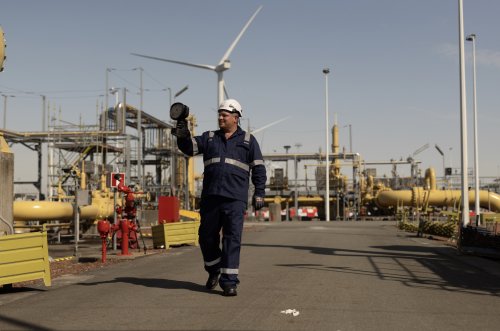
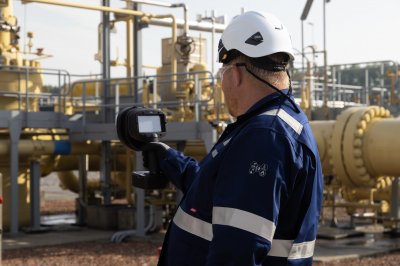
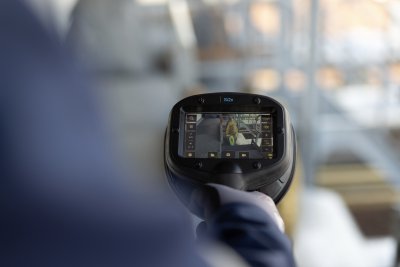
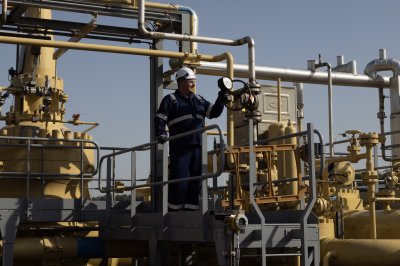
Chauvin Arnoux is delighted to introduce the new MTX3297Ex, an intrinsically safe digital multimeter specifically designed for continuous use in hazardous and explosive environments. This robust, ergonomic, and highly accurate instrument delivers exceptional industrial performance, ensuring measurement reliability, enhanced electrical safety, and increased productivity.

Designed for ATEX/IEC Ex environments, the MTX3297Ex is certified for the highest levels of risk and classified as a Category 1 instrument and meets the most stringent safety requirements.

The MTX3297Ex carries the prestigious ATEX certification, which is recognised across the EU region, and is also IEC Ex-certified, affirming its compliance with essential safety standards. Designed for versatility, the MTX3297Ex is certified for use in gas zones IIC (0, 1, 2), dust zones IIIC (20, 21, 22), and mining zones M1.

This allows the device to be safely operated in a wide range of sectors, including oil, chemical, pharmaceutical, and mining industries. In addition to its capabilities in explosive environments, the MTX3297Ex delivers high performance outside of these zones while complying with the IEC Ex 61010-2-033 standard for measurements up to 1000V CAT III and 600V CAT IV.

This makes it an invaluable instrument for industrial applications, even in non-hazardous areas. The MTX3297Ex offers unparalleled efficiency, combining versatility, precision, and reliability to simplify electrical troubleshooting and industrial maintenance tasks across all sectors. With the MTX3297Ex, Chauvin Arnoux continues to set the standard for safety, performance, and innovation.

Learn more or request a customised quote: cauk.tv/product-mtx-3297-ex/

Chauvin Arnoux

 MTX 1200 x 150

Explosive Atmospheres 101 – Part 2

Selecting Ex Concepts of Protection

The Explosive Atmospheres market is both lucrative and expanding, but certification requirements—and the level of scrutiny by both buyers and regulatory authorities—are increasing. To access this market, it is imperative that equipment manufacturers understand the specific design, manufacturing, and certification requirements for their products.

When a ‘Zone’ has been established, special precautions must be taken by the manufacturer to reduce the likelihood of ignition to an acceptable level—and, where necessary, use mitigation measures to reduce the consequences of an explosion. These special methods are typically achieved by applying defined EX concepts from published standards and usually require specially designed products. The ‘a’, ‘b’, and ‘c’ designations after the protection concept indicate the level of protection:

a = Zone 0/20

b = Zone 1/21

c = Zone 2/22

Selecting the correct concept (or often, a combination of concepts) is critical before any design or development takes place.

Examples of Commonly Recognised Ex Concepts of Protection

FLAMEPROOF: Ex da, db or dc

A method of protection where the equipment is contained within an enclosure capable of withstanding an internal explosion of a flammable gas or vapour without damage, and without transmitting the internal flame to the external explosive atmosphere through any joints or structural openings.

INTRINSIC SAFETY: Ex ia, ib or ic

A protection technique based on limiting the electrical energy within the apparatus and interconnecting wiring exposed to an explosive atmosphere to a level below that which can cause ignition—either by sparking or heating effects.

PRESSURISATION: Ex pxb, pyb or pzc

A method of protection using pressurised protective gas to prevent the ingress of an explosive atmosphere into a space that may contain an ignition source. If necessary, it includes continuous dilution of any atmosphere within that space that might contain an emission source.

INCREASED SAFETY: Ex eb or ec

A method of protection in which additional measures are applied to electrical apparatus to provide increased security against excessive temperatures, arcs, and sparks during operation.

LIQUID IMMERSION: Ex ob or oc

A method of protection where electrical apparatus is made safe by oil immersion, preventing ignition of an explosive atmosphere either above the oil or outside the enclosure. The oil acts as a barrier between the explosive atmosphere and the electrical components.

POWDER FILLING: Ex qb or qc

A method of protection where the enclosure is filled with granular material, so that if an arc occurs, it is unlikely to ignite the external explosive atmosphere.

ENCAPSULATION: Ex ma, mb or mc

A method of protection in which components that could cause ignition by sparking or heating are enclosed in a compound, preventing any contact with the explosive atmosphere.

NON-INCENDIVE: Ex nC or nR

A type of protection applied to electrical apparatus such that, under normal operation, it cannot ignite a surrounding explosive atmosphere—and any fault capable of causing ignition is unlikely to occur.

In addition to these commonly used electrical concepts, there are also protection methods for:

  • Non-electrical equipment (Ex h)
  • Optical equipment (Ex op is, op sh, and op pr)
  • Dust-only atmospheres (Ex ta, tb, and tc)

Where no standard concept is suitable (which is very rare), special protection may be used (Ex sa, sb, and sc). However, this is a complex and challenging process.

Sean Clarke CEng MSc FIET is the General Manager of ExVeritas are a UK Government Appointed Body for UKCA ‘Ex’, an ATEX Notified Body and an IECEx Certification Body and Test Laboratory, ExVeritas offers design reviews to help determine which protection concepts are feasible for your equipment and training courses for equipment designers. www.exveritas.com for more information.

PFAS: TÜV Rheinland expands global testing capabilities

Demand for PFAS testing at TÜV Rheinland has increased globally by more than 30 percent / Chemical restrictions require a great deal of development and testing effort from manufacturers and distributors / TÜV Rheinland offers companies precise product analysis and support in implementing legal requirements / www.tuv.com/pfas

TÜV Rheinland is expanding its testing capacity worldwide to meet the growing global demand for testing services for per- and polyfluoroalkyl substances (PFAS). The testing services provider has seen demand increase by more than 30 per cent year-on-year. PFAS, a group of more than 10,000 known substances, are used in many industries for their functional properties, including textiles, food packaging, furniture and carpet fabrics, as well as mechanical and automotive engineering. However, their potential risk to the environment and human health is increasingly the focus of regulatory and public attention.

The chemical ban on PFAS in many countries in the world poses new challenges for manufacturers and retailers and requires a lot of development and testing. Companies that manufacture, trade or import products will need to monitor and reduce PFAS. TÜV Rheinland is helping companies prepare for changes in legislation by providing accurate chemical analysis. "This enables companies to adapt to changes in the legal situation at an early stage, establish responsible action as a quality feature and thus remain competitive," explains Steffen Tümptner, an expert at TÜV Rheinland.

PFAS in industry – further restrictions on the horizon

In the EU, several classes of PFAS are already subject to restrictions, for example under the REACH and POP regulations. In September 2024, EU Regulation 2024/2462 was adopted, which will phase in bans on PFHxA (C6 PFAS) in certain applications over a five-year period. This includes a ban on PFAS in clothing, footwear, paper and board in contact with food and in cosmetics from October 2026. From October 2027, the ban will be extended to other textiles and leather products. European authorities are currently considering further restrictions that could cover more and more PFAS in the long term. The US authorities are also taking far-reaching action to restrict PFAS at the national level. In April 2024, the

US Environmental Protection Agency (EPA) issued nationwide limits for six groups of substances in tap water, making them among the strictest in the world.

Accurate analysis and expert advice from TÜV Rheinland

TÜV Rheinland's testing packages, training and on-site audits provide the tools needed to analyse products, find suitable alternatives and ensure more sustainable production. More information on PFAS for interested parties and companies is available at: www.tuv.com/pfas

TÜV Rheinland has been involved in chemical testing and certification for several decades and now employs more than 500 specialists worldwide to minimize technical and quality risks. TÜV Rheinland's experts conduct more than a hundred thousand chemical tests around the world every year, enabling access to international markets through testing and certification. The experts develop new testing procedures, work on research and development projects, and collaborate with standardization committees. With the constant flow of new scientific discoveries, the demand for chemical testing has also increased in recent years. As a leading provider of testing services for chemicals, TÜV Rheinland operates laboratories in Bangladesh, China, Germany, India, Turkey, the United States, and Vietnam, among other countries.

TÜV Rheinland stands for safety and quality in virtually all areas of business and life. The company has been operating for more than 150 years and ranks among the world’s leading testing service providers. It has more than 22,000 employees in over 50 countries and generates annual revenues of more than 2.4 billion euros. TÜV Rheinland’s highly qualified experts test technical systems and products around the world, support innovations in technology and business, train people in numerous professions and certify management systems according to international standards. In doing so, the independent experts generate trust in products as well as processes across global value-adding chains and the flow of commodities. Since 2006, TÜV Rheinland has been a member of the United Nations Global Compact to promote sustainability and combat corruption. Website: www.tuv.com

Draeger UK secures contract extension with INEOS O&P UK, Grangemouth

Draeger Safety UK Ltd, a global leader in the field of safety technology headquartered in Blyth in North East England, has secured a contract extension with INEOS O&P UK.

A direct continuation of the existing work scope, the indirect services agreement, which will run until 2029, covers the provision and maintenance of Portable Gas Detection and Rental Robot services to support the company’s operations.

Draeger UK has been working with INEOS O&P UK since 2018, supplying safety critical services and helping to maintain the company’s operations.

Under the updated agreement, Draeger UK will supply new products for use at the site, including ConHub for the individual monitoring of personnel on site, with visibility of real time gas readings.

Also due to be introduced is INARA, Draeger UK’s new digital safety guard which can monitor multiple work sites and ensure available equipment is quickly deployed, thereby eliminating the need for personnel to be on site.

Matthew Bedford, Managing Director - Sales & Service Division, Draeger UK, said: "This contract extension with INEOS O&P UK is a testament to Draeger UK’s reputation as the first choice for companies seeking to prioritise safety and innovation.

“By continuing our collaboration with INEOS O&P UK , we demonstrate our ability to deliver cutting-edge safety solutions that drive operational efficiency and protect personnel in the petrochemical sector.

“This agreement not only strengthens our long-standing partnership with INEOS but also positions us to enhance our footprint throughout the UK. By leveraging our proven expertise and advanced technology to support other critical sites and operations, we are further solidifying Draeger UK’s role as a trusted leader in safety technology on a global scale."

Draeger UK developed the Rental Robot – an automated ‘vending’ and equipment dispensing system – to store and track the usage of wearables such as personal gas detection monitors, breathing apparatus and other associated equipment, which must be regularly tested and serviced to ensure their reliability.

After training, personnel are issued a barcode on their site access pass which allows them to collect their gas detection equipment from the system as part of their mobilisation to a worksite.

Based on stored user information, the system will identify which products the employee may require, displaying them on an intuitive touchscreen. It will then dispense only the products they are trained in or certified to use from the list.

The system also processes returns. An analysis of items such as usage data, damage or other issues can be provided to INEOS Health and Safety or procurement colleagues, giving them an overview of cost saving and an auditable trail of the equipment used by their employees and contractors.

www.draeger.com 

PEP500 by Peppers Cable Glands – Defining Excellence, Reinforcing Trust

With a legacy spanning over seventy-five years, Peppers has built a reputation for quality, innovation, and integrity. Over time, the company has honed its focus and emerged as a leader in the cable glands and accessories sector. Today, Peppers is trusted by industries worldwide for its long-standing commitment to quality and service, providing cable gland solutions that meet the highest standards.

The introduction of PEP500 is an acknowledgment of what Peppers has always done – it is neither a radical new initiative nor a change in service. Instead PEP500 formally reinforces Peppers Cable Glands’ unwavering commitment to quality.

PEP500 represents Peppers’ own internal quality benchmark, highlighting the meticulous standards and time-tested, efficient processes that have defined the Peppers’ name for over three quarters of a century. By giving a name to these long-established principles, Peppers provides customers with a visible framework that underscores its dedication to reliability, precision and performance.

At the heart of Peppers’ success are its products - whether for everyday functionality to pushing the boundaries of innovation, each one is made with the same meticulous attention to quality and precision that PEP500 epitomises.

PEP500 is not a departure from past methods or ways of working but an acknowledgement of the long-standing practices and success that define the Peppers name. It is a testament to the Peppers’ approach: scrupulous craftsmanship and outstanding customer service.

For those who have yet to discover Peppers Cable Glands, PEP500 serves as a reassurance of Peppers' dedication to quality and reliability. For longstanding customers, it is a reminder of why they continue to choose Peppers – reaffirming that excellence is not just an achievement but an ongoing standard to uphold.

www.cableglands.co.uk


PEP500 final logo blk

Predictive maintenance in hazardous locations

march1.jpeg

In avoiding costly breakdowns, Condition Based Maintenance (CBM) is proven to be far superior to Planned Periodic Maintenance (PPM). Not only is PPM needlessly costly, due to the time wasted stripping down perfectly functioning machinery, it can sometimes make matters worse by introducing faults during the process of stripping down and rebuilding the machine. Even more of a problem is deciding the correct PPM time intervals. Too short an interval, means more wasted time and cost (and more potential for introducing faults) but too long means more unexpected breakdowns.

CBM makes use of tools such as vibration and temperature analysis to run an efficient and effective maintenance program able to predict faults BEFORE they occur. This is where the major cost benefit of CBM lies. Repairing faults AFTER a breakdown can be VERY costly, particularly where there has been collateral damage and/or injury to personnel. This is even more the case in hazardous locations where a complete shutdown of operations may also be required to effect repairs.

However, for use in hazardous locations, CBM instruments are required by law to be intrinsically safe and unable to ignite explosive atmospheres (ATEX). This means that vibration and temperature analysers must be CERTIFIED for use in the hazardous location. But the certification rules are different in different parts of the world AND in different “Zones” where explosive atmospheres are likely to exist. For example, a tanker vessel could visit many different oil and gas terminals in different countries, or a maintenance team might find themselves working unexpectedly at a wastewater treatment plant with the potential for methane build-up. So, how do you know you have the correct certification for your tools in all the different locations?

The simplest solution is to cover all eventualities by using instruments certified for Zone 0 (hazard exists continuously). Normally, that would make them much more expensive but fortunately, Test Products International (TPI) has achieved a significant cost breakthrough with the very affordable TPI 9085Ex vibration analyser. With built-in on-meter diagnostics and the all-important ability to TREND readings over time, the “go anywhere” TPI 9085Ex has WORLDWIDE Zone 0 certification, meaning it can be used in ANY hazardous atmosphere and in ANY location.

The 9085Ex detects unbalance, misalignment and looseness in rotating equipment. It also measures “bearing noise” and displays it in bearing damage units (BDU) roughly equivalent to “percentage bearing wear”. In addition, the 9085Ex uniquely incorporates a directly contacting temperature sensor within its vibration probe. This gives a highly accurate, virtually instantaneous, surface temperature reading for the bearing, simultaneously as the vibration reading is taken. With a high BDU reading and high temperature, you know that what you are seeing really is a worn bearing.

The compact handheld TPI 9085Ex is extremely affordable and simple to use and an invaluable part of every maintenance tool kit. It can be used standalone for fault diagnosis or by using the FREE TPI Bridge App, “routes” and readings can be transferred to and from the 9085Ex anywhere in the world using mobile devices (e.g. smart phone or tablet PC) and then via Bluetooth to and from the 9085Ex. “Routes” are simply lists of machines showing exactly what readings need to be taken and where to take them. The readings are then automatically time and date stamped by the 9085Ex and saved back into the route for automatic transfer to computer-based trending software.

For more information please contact TPI Europe’s head office on +44 1293 530196 or take a look on the website at www.tpieurope.com or email This email address is being protected from spambots. You need JavaScript enabled to view it.

march_2.jpeg

How Flame Detection Can Enhance Workplace Safety

In industrial settings, safety is paramount, especially in environments where flammable or toxic gases are present. A robust gas detection system is an important line of defense, but it’s not the whole story. Integrating flame detection into your safety setup can create a safer and more reliable environment.
 

The Role of Gas and Flame Detection Systems

Gas detection systems are designed to identify harmful gases in the air, whether combustible, toxic, or asphyxiating. They provide early warnings, helping to enable preventive action before conditions become dangerous. However, gas detection alone doesn’t account for what happens when a gas leak ignites.

Flame detection systems complement gas detectors by identifying the presence of fire, which may occur even where gas concentration hasn’t yet reached detectable levels. Together, these systems can contribute to a more comprehensive safety net that addresses both potential and actual hazards.
 

Seven Reasons to Include Flame Detection in Gas Detection Systems 

1. More Comprehensive Hazard Mitigation

Gas detectors and flame detectors work hand-in-hand to prevent accidents and mitigate risks. While gas detectors alert you to the presence of a leak, flame detectors respond to fires that could result from undetected or ignited gases. 

2. Faster Response to Fire Emergencies

A gas leak can ignite in seconds, turning a potential hazard into an active emergency. Flame detectors react in real-time to the presence of a flame, helping to enable prompt action to contain the fire and prevent escalation. 

3. Helps Eliminate Blind Spots

Gas detection systems can only monitor specific zones. In scenarios where a leak occurs outside the detection range or a minor leak ignites directly, flame detectors can be an important second layer of protection. 

4. Tailored for High-risk Industries

In industries like oil and gas, petrochemicals, and manufacturing, the risk of fire due to flammable gases is ever present. Flame detection helps protect these high-stakes environments against both minor and catastrophic ignition events. 

5. Meeting Regulatory Standards

Safety regulations often require both gas and flame detection systems for compliance. Adhering to these standards not only protects your team and assets but also ensures your operations meet legal and industry benchmarks. 

6. Minimizing Damage and Downtime

Early flame detection can activate suppression systems, limit the spread of fire, and enhance the safety of personnel. By containing incidents quickly, businesses can avoid costly equipment damage and extended downtime. 

7. Enhanced Operational Safety and Continuity

Combining gas and flame detection creates a more resilient safety framework that reduces the likelihood of accidents and enables a quicker recovery in the event of an incident. This reliability is key to maintaining trust and productivity.
 

Despite its importance, users might hesitate to include flame detection in their safety systems due to perceived challenges such as cost, complexity, or maintenance. Users may also assume that gas detection alone is sufficient for preventing incidents, underestimating the speed at which a leak can escalate into a fire. Addressing these misconceptions and highlighting the critical role of flame detection in mitigating catastrophic events is key to overcoming reluctance and ensuring comprehensive safety solutions.

The Bottom Line: A Layered Defense is Key

Safety in industrial environments is not about choosing between gas or flame detection—it’s about understanding the benefits of both to build a layered defense. While gas detectors prevent potential hazards by identifying leaks, flame detectors act as a safeguard when ignition occurs.

Safety managers may consider this combination a necessity in today’s high risk, high stakes industries. By integrating flame detection into your gas detection system, you help to ensure that your operations are protected from the full spectrum of potential hazards, safeguarding lives, assets, and your reputation.

Ready to Enhance Your Safety System?

Investing in a comprehensive detection system is an investment in the future of your business. Discover how gas and flame detection solutions can work together to create a safer workplace. 

Talk to an expert today

Learn more: Artificial Neural Network Technology

Explosion-proof compressor motor for oil refinery

Producing a customized explosion-proof high-voltage motor within just 12 calendar days, Menzel Elektromotoren saved an oil refinery a considerable amount of money. The failure of the previously installed compressor motor was causing enormous financial damage. The team of the German family business Menzel worked on this project with considerable commitment, including weekend shifts, and thus completed all necessary works in record time. An in-stock MEBKSW-type three-phase squirrel-cage induction motor in size 710 was enabled for ignition protection type Ex ec, increased safety, with purging. Menzel’s certified explosion protection experts gave it the ATEX marking II 3G Ex ec IIA T3 Gc and prepared the extensive documentation required by the customer within the tight time frame.

The motor generates an output of 10 MW and 64132 Nm rated torque at 6600 V rated voltage. It features IP55 protection and IC 81W cooling (air-to-water heat exchanger) and is suitable for outdoor installation and the increased ambient temperature range of -20 °C ... 48 °C. To ensure a smooth installation in the existing plant environment, Menzel made various mechanical adaptations such as machining the motor shaft, manufacturing a new base frame and providing flanges for the purging device.

More about electric motors with ignition protection type Ex ec, increased safety: https://www.menzel-motors.com/ex-na/

Mike Hawes Appointed Managing Director of ION Science Ltd as Duncan Johns Transitions to Director of Innovation.

ION Science Ltd, a global leader in photoionisation detection (PID) technology, is pleased to announce the appointment of Mike Hawes as its new Managing Director. This transition aligns with the company’s strategic vision for continued growth and innovation, as Duncan Johns, who has successfully led ION Science since 1999, moves into the role of Director of Innovation. ION Science Ltd is part of Hive Technologies Group Ltd, a dynamic group encompassing Analox, Shawcity, and ION Science. Under Duncan Johns’ leadership, ION Science has strengthened its market position and significantly expanded its research, development, and manufacturing capabilities. A pivotal part of this growth has been the development of The Hive and The Hive Technology Centre (HTC), state-of-the-art facilities designed to drive future technological advancements.

To differentiate its instrumentation division from its sensing technology solutions, ION Science recently launched the ION SENSE sub-brand, reinforcing its commitment to innovation across both product categories. Duncan remains Hive Technologies Group CEO and transitions to Director of Innovation at ION Science Ltd, reflecting his unwavering commitment to pioneering new technologies and enhancing ION Science’s position as the global leader in PID detection solutions. His vision has been instrumental in shaping the company’s trajectory. In this new role, he will focus on steering the innovation roadmap to ensure ION Science remains at the forefront of the industry. This change complements the existing Board members, reinforcing a collaborative approach to driving technological advancements.

As the incoming Managing Director, Mike Hawes brings a wealth of experience and a deep alignment with the company’s core values and business principles of innovation, quality, and customer focus. His leadership will build upon the strong foundation established by Duncan, ensuring a seamless transition and continued success for ION Science Ltd. Duncan Johns commented on the transition: “I am incredibly proud of what we have achieved at ION Science over the past 25 years. The company has grown significantly, and our commitment to innovation has never been stronger. Moving into this new role allows me to dedicate my focus to advancing our technology and ensuring we remain the market leader in PID and sensing technologies. I have every confidence in Mike’s leadership and look forward to supporting the next chapter of growth and innovation.” Mike Hawes added: “It is an honour to step into the role of Managing Director at ION Science Ltd.

The company’s dedication to innovation and excellence is truly inspiring, and I am excited to build upon the incredible work led by Duncan and the team. ION Science has a strong reputation in the industry, and I look forward to driving its continued success alongside our talented workforce.” The Hive Technology Group, under Duncan Johns’ leadership as CEO, continues to foster a culture of innovation and excellence across its subsidiaries. With ION Science’s ongoing commitment to research and development, the company remains poised for a future of technological breakthroughs and sustained market leadership.  

www.ionscience.com


WELTEC BIOPOWER strengthens its presence in Japan with two new biogas projects and WELTEC BLUE WATER treatment

Cattle and pig farms rely on stable, earthquake-proof building constructions


The German biogas specialist WELTEC BIOPOWER continues to be very active on the Japanese market. Following the installation of several agricultural plants in recent years, the company from Lower Saxony has now reported an order for a 450-kilowatt plant from the agricultural sector as well as a 250-kilowatt biogas plant in Yamagata Prefecture with additional WELTEC BLUE WATER treatment, which is currently being implemented. In addition, a 450-kilowatt plant for a pig farm near Nagano Prefecture is currently being planned. Thanks to its many years of project experience in earthquake zones – in Japan and Greece – WELTEC BIOPOWER is able to adapt its technical solutions to seismically active areas in the shortest possible time using special structural engineering.

Processing of fermentation residues ensures operational material cycle
Two digesters are available in Yamagata Prefecture to feed the 80 tons of cattle manure per day, which is used exclu- sively to generate electricity and heat in the 250-kilowatt plant. WELTEC‘s scope of supply also includes two storage tanks, a pump container, a separation unit and the combined heat and power plant (CHP). In addition to the biogas project, a WELTEC BLUE WATER plant with a processing capacity of 50,000 tons of digestate (manure and wastewater from milk production) per year is currently being constructed. The treatment technology separates the digestate from the biogas plant in a multi-stage process into solid and liquid fertilizer and dischargeable water. The resulting solid phase offers a wide range of marketing options, such as use as fertilizer in the field or as bedding in stables. This enables the operator to make additional savings on transport costs by reducing the volume of the source material.

The distribution of output materials varies depending on the dry matter content of the fermentation residue. In this project, the amount of solid fertilizer is around 3 percent, the nutrient concentrate 29 percent and the water 68 percent. Thanks to the sophisticated modular design, the industrial technology can be easily expanded in the future. A WELTEC BLUE WATER plant in Reichenbach in Vogtland, Germany, was already put into operation in March 2024 (see press release ‘Reichenbach’, March 2024).

Special solution for digesters for processing pig and cattle manure
From 2025, the operators of the 450-kilowatt plant will be filling a mix of 18 tons of cattle manure and food waste from the surrounding area into their digesters every day. WELTEC‘s innovative modular digester system makes it possible to individually adapt the diameter and height to meet customers‘ volume requirements or local building regulations, such as height restrictions. Instead of the usual height of 6.30 m, the digesters have been adapted to a height of 5.03 m. At both plant locations, the electricity is fed into the grid and the heat is utilized for efficient fermentation in the digesters. The fermentation residue from the 450-kilowatt plant is processed in sewage treatment plants near the sites before being used as fertilizer. A further plant is currently being planned in Nagano Prefecture. The height of the digester is also adapted as a special solution to 05.03 meters and equipped with a capacity of 450 kilowatts.

WELTEC CONTROL for quick access
The installed, web-based WELTEC CONTROL software gives Japanese operators quick access to all important system parameters. The system with its intuitive user interface also simplifies feeding processes thanks to the FellowFeed and GuidoFill functions as well as exportable reports as evidence for banks and experts. If faults occur, WELTEC offers operators training and support via remote control. Equipped with this technology and local biomass sources, the projects are exemplary for the economical operation of small biogas plants.


Forward-looking statements
Although the forward-looking statements contained in this presentation are based on what the Company's management believes to be reasonable assumptions, there can be no assurance that the forward-looking statements will prove to be accurate, as actual results and future events could differ materially from those anticipated in such statements. The Company undertakes no obligation to update forward-looking statements should circumstances or management's estimates or opinions change, except as required by applicable law. Readers are cautioned not to place undue reliance on forward-looking statements.