
News

What is FLIR Nexus and why is it important?

Situational awareness involves understanding a given circumstance, collecting relevant information, analyzing it, and making informed decisions to address any potential risks.

flir_May_1.jpeg

When applying this to perimeter security, it is common practice to see designs that fortify the perimeter; but once that alarm happens, it is uncommon to have a system that provides the continuous coverage and relevant information operators need to make an informed decision as the potential threat progress.

So, in thinking about a traditional perimeter design, you would expect to see some sort of intrusion detection system encompassing a variety of technologies. Often FLIR works with customers to set up a virtual barrier that includes a combination of thermal and visible cameras coupled with detection analytics. Together these systems can provide accurate information about people or vehicles at the perimeter.

However, it is the action that comes after a perimeter breach that determines how a security team should respond. This is, unfortunately, where we see gaps in security system designs and can ultimately mean the operator does not have total situational awareness.

This is where FLIR Nexus comes in. Nexus is a proprietary communication protocol that helps bridge the gap between devices and systems, ensuring a more complete understanding of the environment outside and inside a security perimeter.

Creating a detection system's tracking layer and providing complete situational awareness requires a system integrator to coordinate the communication between many different technologies. Without an overarching communication system, this type of coordination can be quite complicated, requiring the integrator to set up a series of rules to first identify the target, classify it as a threat, locate the physical location, and then track the target as it moves. It's unlikely this potential threat would stay in the field of view of a single sensor, so the integrator would further have to coordinate communications between different sensors to maintain continuity as the target moves.

Often, to execute this level of situational awareness, a customer would need some sort of advanced software that collects the geodata being presented by a variety of different sensors and then coordinate proper handoffs as the target moves.

may2.jpeg

FLIR Nexus provides customers with the situational awareness needed for exterior spaces by allowing edge devices to communicate in a server/client format without the need of software or server in the middle. There is no need for additional software or servers, reducing the cost of ownership when compared to similar solutions in the market. FLIR Nexus devices also allow for a simplified installation, since all of the edge devices are communicating in real-time and there is nothing to configure at the headend.

When combined with FLIR's camera analytics for detection, this total security system can identify, locate, and track targets all at the edge. As a potential threat moves through the scene, Nexus-enabled devices communicate the geodata to other Nexus devices and provide seamless handoffs for continuous tracking. This allows an operator to have the relevant information needed to make informed decisions on what is happening, thus providing complete situational awareness. Since all FLIR devices have ONVIF drivers, all of the video information can be recorded to any VMS.

Another advantage of Nexus is it allows customers to extend their coverage over large area using fewer devices. This makes providing complete situational awareness much more affordable.

For example, consider a commercial building parking lot. Trying to cover such a large area often presents many challenges such as low visibility at night and minimal infrastructure. With FLIR’s Nexus sensors we can cover 180 degrees from a building with just three devices. Two flat-panel radars can provide detection for a 180-degree field of a view, and a multi-spectral pan-tilt camera will provide visibility in both day and night. The devices allowing for alarm scheduling and zone configuration, so with three devices we can detect and track any potential threat who is in the area outside the desired hours.

may3.jpeg


See the FLIR Nexus Bundle and learn how it can improve perimeter security.

Today there is an abundance of options when it comes to analytics. If you want to receive a notification about some sort of detection, there is probably an analytic for that. When it comes to perimeter security, do these analytics help secure your environment, or do they end up creating nuisance alarms which makes the overall solution less effective? Nexus enabled devices from FLIR help customers create a simplified solution at a lower cost while ensuring that the information provided to the operator is not only relevant but accurate.

A New Material Class for the Drive Technology of the Future: How Lambda Resins Could Enable the Mass Production of Axial Flux Motors

Lambda Resins isn’t a typical industry giant – and that’s precisely its strength. As a highly specialized resin manufacturer, the company has emerged over the past two years – under the umbrella of Nagel Technologies GmbH – as a sought-after technology partner for OEMs and innovation leaders. With powerful, thermally conductive casting resins, Lambda Resins GmbH (Germany) addresses some of the central challenges of electromobility, especially where conventional solutions reach their limits.

 Axial Flux Motors: Compact, Efficient, and Resource-Saving

A key application area is the axial flux motor – a forward-looking alternative to the traditional radial flux motor. Where compact design, high torque, and low power-to-weight ratios are essential, axial flux motors come into their own. They also offer a tangible economic advantage: significantly less copper, iron, aluminum, and magnetic materials are needed per kilowatt of output.

 Key advantages at a glance:

  • Lightweight design
  • High power density
  • Optimal torque-to-weight ratio
  • Improved energy efficiency
  • Reduced raw material consumption

The Challenge of Scalability – and How Lambda Resins Provides a Breakthrough

Despite these technical advantages, many axial motor concepts have so far failed to reach mass production. The main hurdle: costly bonding and joining processes have hampered industrial scalability. This is where Lambda Resins steps in – with an innovative encapsulation material and an integrated system approach for thermal and structural optimization of electric motors.

Why Axial Flux Motors Aren’t Yet Mass-Produced – and How Lambda Resins Can Change That

Axial flux motors promise a new dimension of power density, spatial efficiency, and torque – all while consuming fewer materials. However, the complexity of their geometry demands precise alignment, extensive fixation, and a high share of bonding operations – often paired with thermal intermediate steps. The result: high energy consumption, long cycle times, and excessive production costs.

In the automotive industry especially, this represents a major barrier to mass adoption. "For any drive concept to be viable for series production, it needs a cycle time of less than one minute per stator – a benchmark that most axial motor concepts currently fail to meet," says Uwe Köhler, CEO of Lambda Resins.

Lambda Resins offers a highly practical solution. Through targeted material development, the company has created a thermally conductive resin system so structurally robust that it can eliminate the need for bonding processes entirely. Instead of maintaining dozens of hot-press stations for bonded joints, Lambda Resins enables the direct casting of entire functional units – faster, more reliably, and with drastically lower capital investment. This doesn’t just make axial flux motors technically attractive – it makes them economically feasible.

 Radical Simplification in Production: Fewer Parts, Less Effort, Greater Control

Lambda Resins' technology radically simplifies axial flux motor assembly. Instead of bonding, fixing, and thermally treating individual teeth, the innovative resin system enables the direct casting of complete functional units – including coils, tooth structures, and insulation. The result:

  • Elimination of time-consuming bonding steps
  • More robust components
  • Shorter cycle times
  • Higher process repeatability

A further technical benefit: the resins’ thermal expansion behavior is finely tuned to match the metal components used. Traditional weak points such as cracks and delamination are effectively avoided – even under the extreme lateral and torsional forces generated by high-frequency magnetic fields.

The encapsulation process also unlocks new design freedoms. By eliminating adhesives, mounting plates, and insulation layers, many components can be left out altogether – including intricate busbar holders and expensive GFRP or CFRP covers, which are prone to failure under vibration stress. Their removal allows the air gap between coil and magnet to be reduced by more than 60% – directly boosting efficiency through more torque, greater output, or lower energy consumption at equivalent performance.

From a production planning perspective, these advantages are significant. Traditional axial motor manufacturing might require over 100 hot-press stations to meet sub-one-minute cycle times. Lambda Resins' encapsulation approach achieves similar results with a fraction of the infrastructure – reducing floorspace, energy demand, and capital expenditure, while increasing flexibility for OEMs.

 More Than Just a Material: Lambda Resins as a System Partner for E-Mobility

Unlike traditional resin suppliers, Lambda Resins goes far beyond delivering materials and data sheets. In close collaboration with the internationally active Nagel Group and its sister company Gehring Technologies, the team has developed dedicated process and equipment technologies that enable reliable, fully automated integration of casting resins into both existing and new production lines.
“We don’t just supply a material – we deliver a solution,” explains Köhler. “From component design and prototyping to casting strategies and production line integration, we support our customers as true partners.”

This includes a modular machine platform that automates the encapsulation process, controlling critical parameters like fill volume, thermal management, and curing. Complementing the hardware is design consultancy: Lambda Resins works closely with clients to optimize designs for resin integration – such as wall thickness reduction, improved thermal pathways, or even complete part substitution.

 Proven Performance Gains – Across Applications

Lambda Resins’ resin systems are already being used in projects for motorcycle drives, commercial vehicle components, industrial drives, marine systems, and aviation – and since 2023, the company has supported several Formula Student teams as a development partner. One striking example: in a motorcycle motor application, Lambda Resins enabled a performance boost of up to 40% without any mechanical modifications.
The secret? Improved thermal dissipation, which reduced internal electrical resistance – translating directly into higher torque and greater efficiency. “We prove time and again that our resin doesn’t just work technically – it delivers measurable performance advantages. And word is spreading – we’ve become a bit of an insider tip,” says Köhler.

One Contact. One Process. One System.

Together with the Nagel Group and Gehring Technologies, Lambda Resins offers a fully integrated system for electric motor production – from resin development and process integration to complete line planning. By combining materials, machinery, and application expertise, OEMs receive a solution-focused, all-in-one package that minimizes coordination overhead, interface risks, and friction losses – while maximizing market readiness and investment security for innovative motor concepts.

 Enabling the Axial Flux Motor for Mass Production

The future of drive technology isn’t just about new motor architectures – it’s about the materials and processes that make scalable production possible. Lambda Resins delivers exactly that: high-performance resin systems, combined with deep process and manufacturing know-how, specifically tailored to the needs of modern axial flux motors.
For OEMs and suppliers seeking efficiency and readiness for mass production, Lambda Resins and the Nagel Group offer a reliable and visionary partnership.

www.nagel.com

Safer Chain Cutting with Enerpac Electric Cutters

enerpac_May.jpeg
The Enerpac ECCE-Series Electric Chain Cutters provide a faster, safer and more precise method than cutting with torches, angle grinders and cut-off tools. Capable of cutting 25mm chain in 35 seconds, and up to 16mm chain in just 6 seconds, the portable tools are ideal for cutting high-strength industrial chain.
Until now, chain cutting has typically involved torches, angle grinders and cut-off tools. The introduction of flames, shooting sparks, dust and smoke into the workplace is potentially hazardous, requiring operators to wear specialised PPE, including flame retardant clothing and respirators. The ECCE-Series Electric Chain Cutters provides a safer method of cutting for both the cutter operative and those close by.
The ECCE26 Chain Cutter weighs 25kg allowing it to be easily transported to the worksite. With a capacity of 312kN, ECCE26 applications range from 25mm grade 70 and grade 80 chain up to 13mm grade 100 chain. The lightweight cutter offers safe and precise general-purpose chain cutting.
The higher capacity ECCE32 Chain Cutter weighs 48kg and has a capacity of 471kN. It can be used for chain up to 32mm grade 70, 25mm grade 80 and 19mm grade 100. It is ideal for specific cutting applications including grade 100 chains, such as those used for overhead lifting.
Minimal Effort
The highly durable blades on Enerpac chain cutters can tackle a wide variety of chain – from small, low-grade chains to large, heavy-duty chains - all while maintaining effectiveness throughout rigorous use. Powered by a single or double acting hydraulic cylinder, Enerpac chain cutters move through difficult cutting tasks with speed and ease.
Maximum Safety
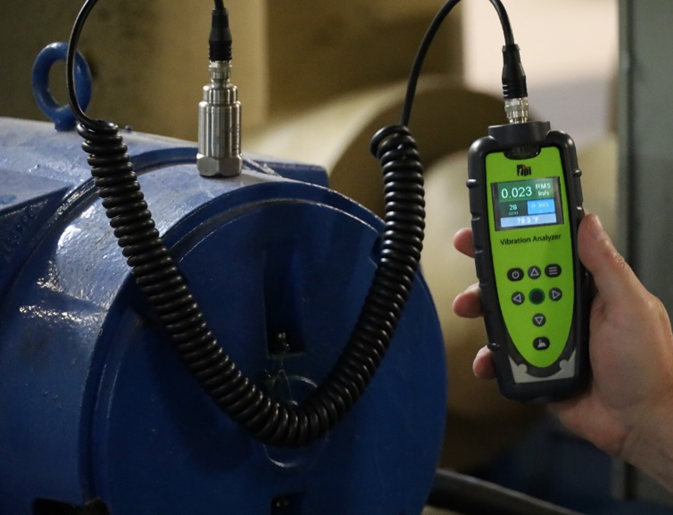
The ECCE-Series Electric Chain Cutters feature a transparent safety guard to protect hands and allow continuous monitoring for better management of the cutting process. In addition, the cutters produce minimal vibration, helping prevent HAVS (Hand Arm Vibration Syndrome). A lifting handle and eyebolt enable easy positioning and transport.
For more information on the Enerpac ECCE-Series Electric Chain Cutters, visit

Enhancing Hydrogen Safety Through Advanced Detection Technologies

As hydrogen cements its role in the global transition to cleaner energy, prioritizing safety in its production, storage, and use is critical. Hydrogen’s properties — colourless, odourless, and highly flammable — present unique challenges, requiring a proactive and multi-layered approach to risk management.

A key element in risk prevention is the use of advanced leak detection technologies. Continuous monitoring through gas and flame detection systems supports the timely identification of leaks, enabling quicker, more informed responses to help safeguard people, assets, and the environment.
MSA - The Safety Company Safety recommends a comprehensive fire and gas safety strategy that layers diverse yet complementary technologies. Facilities can benefit from combining ultrasonic leak detection, traditional point gas monitoring, and hydrogen-specific flame detection to create a robust safety net.

Ultrasonic Leak Detection: Ideal for high-pressure systems, ultrasonic detectors such as the Observer® i Ultrasonic Gas Leak Detector quickly identify leaks by detecting ultrasound waves, unaffected by wind or gas dispersion.

Point Gas Detection: Effective for monitoring low-concentration and combustible hydrogen levels, devices like the ULTIMA® X5000 Gas Monitor and General Monitors® S5000 offer catalytic bead or electrochemical sensing options.
Hydrogen Flame Detection: Specialized flame detectors, such as the FL500-H2 UV/IR Flame Detector, are designed to sense the distinct UV and IR signatures of hydrogen fires, providing early warning to trigger emergency responses.

Fire and Gas Detection Controllers: Centralized systems power detectors, display gas concentrations, and automate critical safety actions when hazards are detected.
Building a safe hydrogen infrastructure calls for thoughtful investment—not only in innovative detection technologies, but also in education, robust standards, and forward-looking safety planning. By focusing on these areas, industries can better harness hydrogen’s potential while working to protect their people and operations.
Learn more at:
https://lnkd.in/eQfy7Xtk

JCE Energy celebrates innovation award win at Northern Star Business Awards

JCE Energy Ltd., a specialist in off-grid power solutions for hazardous areas, has been awarded the prestigious Inspiration from Innovation Award, sponsored by Port of Aberdeen, at this year’s Northern Star Business Awards.
The ceremony, held at P&J Live on Friday, April 25, recognised outstanding achievements by organisations across the region, with JCE Energy standing out for its groundbreaking Modular Ex Renewable Power System.
Designed specifically for hazardous offshore environments, the Modular Ex system offers a revolutionary, low-carbon alternative to traditional diesel generators. By seamlessly integrating solar panels, batteries, and remote communication systems into a self-contained modular unit, it delivers reliable, off-grid power while cutting CO₂ emissions by more than 90%. The system not only supports significant cost savings but also addresses key operational challenges in the offshore oil and gas sector, showcasing the company's leadership in sustainable innovation.
Receiving the award highlights JCE Energy’s ongoing commitment to challenging conventional thinking and delivering cutting-edge energy solutions that generate tangible commercial and environmental benefits.
"This award is a testament to our team’s hard work and dedication to innovation and sustainability," said Alison Cox, Managing Director at JCE. "It reflects our commitment to providing our clients with solutions that not only meet their operational needs but also support their energy transition goals."
JCE Energy specialises in the design, manufacture, installation, and maintenance of control and off-grid power systems for alternative energy sources in industrial, commercial, marine, and hazardous environments. With a full-service approach, the company supports clients through every stage of their renewable energy projects – from initial concept and design to installation and ongoing maintenance – ensuring safety, efficiency, and sustainability in the most demanding conditions.
About JCE Energy:
JCE Energy specialises in off-grid and grid-connected renewable energy solutions, providing design, manufacture, installation, and maintenance of control and power systems for industrial, commercial, marine, and hazardous areas.
With a focus on innovation and sustainability, we deliver custom-engineered solutions integrating alternative energy sources, ensuring reliable power in demanding environments.
For more information or to request a demo, visit www.jceenergy.com.

Rugged level sensors for hazardous areas up to 180 °C

EGE-Elektronik manufactures intrinsically safe capacitive level controllers for hazardous areas with potentially explosive gas atmospheres. The compact KGFTa-series sensors feature a high temperature stability of -20 °C to 180 °C. They have the ATEX and IECEx approvals for installation in zone 0 and in partition walls between zone 0 and zone 1. The KKa 030 Ex external amplifier, which is also approved for zone 0 and zone 1, enables remote parameterization outside the high-temperature area. The system consisting of KGFTa and KKa 030 is connected to an IKMb 123... analysis device, which provides an intrinsically safe power supply. The series includes sensors with G1/4 and G1/2 threads. The level controllers made of stainless steel 1.4571 feature IP68 protection, a PEEK measuring tip and a PTFE cable. They are therefore also suitable for monitoring aggressive media. Typical applications include level monitoring of process fluids in chemical and pharmaceutical production.

More about capacitive level sensors for hazardous areas: https://www.ege-elektronik.com/products/fill-level-sensors/capacitive-level-switches-for-hazardous-areas-high-temperature/

New Machinery Regulation: TÜV Rheinland recognized by EU Commission as Notified Body

 For the protection of people and technology: TÜV Rheinland recognized as a Notified Body for testing and certification according to the new Machinery Regulation (photo: TÜV Rheinland/Shutterstock)

Our world is increasingly being shaped by machines. They are becoming smarter, more powerful and more versatile. With the new EU Machinery Regulation (EU) 2023/1230, the European Commission is setting new standards for the protection of people and technology. TÜV Rheinland, one of the world's leading providers of testing, inspection and certification services, is now playing a key role in this: the EU Commission has officially recognized the company as a Notified Body for testing and certification according to the new Machinery Regulation. In this way, TÜV Rheinland is able to provide comprehensive support to companies on their way into the future of the industry in compliance with the standards.

New EU regulation 2023/1230

“The main changes to the Machinery Directive relate to the digitalization and connectivity of machines. The focus is on artificial intelligence (AI), cyber security, human-robot collaboration and the networking of machines via the internet,” explains Thomas Koester, Global Head of the Technical Competence Centre for Industrial Machinery at TÜV Rheinland. “In this context, the EU Commission has defined stricter health and safety requirements, such as protection through software updates and protection against cyber-attacks.”

The regulation explicitly applies to machinery and related products such as interchangeable equipment, safety components, load-handling equipment, chains, ropes, belts, cardan shafts and partly completed machinery. Aircraft, motor vehicles, agricultural tractors and most household and office appliances are among the exceptions.

Transition period has begun - prepare now

From 20 January 2027, manufacturers will have to comply with the new requirements of the Machinery Directive. Koester recommends: “Manufacturers of industrial machinery should prepare for the new requirements at an early stage and use the transition period to adapt their machines and processes accordingly.”

Meet the standards of the future with TÜV Rheinland

As a Notified Body, TÜV Rheinland offers manufacturers support in the form of testing and certification services in accordance with the new health and safety requirements. For example, the company's experts check the plausibility of cyber security documents and carry out individual conformity assessments. By preparing early, manufacturers can avoid downtime and additional costs and get their machines onto the European market faster. Experts of TÜV Rheinland provide support with tailored testing procedures and ensure that companies can effectively implement the new requirements. More information is available at: http://tuv.li/1lb6

Safety and quality in almost all areas of business and life: That’s what TÜV Rheinland stands for. The company has been active for more than 150 years and is one of the world’s leading testing service providers. TÜV Rheinland has more than 22,000 employees in over 50 countries and generates annual sales of more than 2.4 billion euros. TÜV Rheinland’s highly qualified experts test technical systems and products around the globe, accompany innovations in technology and business, train people in numerous professions and certify management systems according to international standards. In this way, the independent experts ensure trust along global flows of goods and value chains. Since 2006, TÜV Rheinland has been a member of the United Nations Global Compact for more sustainability and against corruption. Website: www.tuv.com

The HI6200: Compact Pressure Sensing Built for the Hydrogen Industry


As the hydrogen industry continues to grow, the demand for compact, reliable, and high-performance pressure measurement solutions has never been greater. The HI6200 compact pressure transmitter from ESI Technology Ltd is designed specifically to meet these challenges, offering outstanding capability in an incredibly small and robust package.


Engineered with the latest technology, the HI6200 provides accurate and stable pressure measurement for hydrogen applications, where safety, precision, and durability are critical. Despite its compact size, this transmitter delivers exceptional performance, making it the ideal choice for use in space-restricted systems such as hydrogen fuel cells, refuelling stations, and storage solutions.


One of the key advantages of the HI6200 is its suitability for hydrogen environments. Hydrogen presents unique challenges due to its small molecular size and high diffusivity, which can often lead to material degradation or leakage in unsuitable sensors. The HI6200 overcomes these issues through its specialised design and carefully selected materials, ensuring long-term stability, reliability, and resistance to hydrogen embrittlement.


With high accuracy and excellent long-term stability, the HI6200 allows operators to monitor pressure with confidence, supporting both safety and operational efficiency. Its compact form factor makes installation easy, even in tight spaces, without compromising on performance.


Additionally, the HI6200 offers a range of output options and pressure ranges, providing flexibility to suit a variety of hydrogen applications. Whether used in mobile hydrogen-powered vehicles or fixed industrial systems, it ensures consistent and precise monitoring — critical for maintaining system integrity and safety.
In a sector where reliability and safety are paramount, the HI6200 compact pressure transmitter from ESI Technology offers a cutting-edge solution. Designed for the unique demands of hydrogen applications, it proves that when it comes to pressure measurement, size isn’t everything — performance is.

EEMUA releases new edition of its globally renowned guidance on above ground storage tanks – EEMUA 159

EEMUA has published Edition 6 of its highly respected guidance EEMUA Publication 159, ‘Above ground flat bottomed storage tanks – a guide to inspection, maintenance and repair’.

EEMUA 159 is considered to be the most comprehensive users' guide available on above ground vertical cylindrical, steel storage tanks. It is also used worldwide by regulators as an example of what good practice looks like.

EEMUA 159 is intended to assist in the establishment of essential inspection and maintenance requirements in order to minimise in-service problems and extend the useful life of these storage tanks. It offers guidance on tanks built to BS, EN or API standards for the storage of petroleum and chemical feedstocks and products and refrigerated gases. These standards include BS 2654, API 620 and API 650, DIN 4119-1 and -2, CODRES, G0801 and EN 14015. In addition, since EEMUA 159 contains information on many topics that are not covered in API 653, the EEMUA publication can be considered complementary to the API standard.

The publication sets out key features for planning and executing inspection, maintenance and repair works. It includes descriptions of the key tank components that require inspection and maintenance, degradation mechanisms and common inspection techniques, and details on tank lifting. Appendices offer guidance on how to perform assessment calculations on tank components, illustrated by means of sample calculations, as well as on repair methods.

The newly released Edition 6 includes three integrity assessment levels of increasing complexity. The use of integrity assessment levels helps to understand that different kind of rejection limits can exist for the same component. There are revised chapters on tanks and their components, degradation mechanisms and failure modes, general inspection techniques and interpretation of inspection data, tank foundations and hydrotesting. Revised flowcharts for assessing the fit-for-purpose of the tank bottom, shell and roof are now available.

The new edition also contains guidelines on change of service and guidance on new inspection methods and technologies including robotics and drones. It provides increased guidance on settlement assessment and a new chapter on stainless and duplex steel tanks. The guidelines for hydrotest exemption for major repairs and the remaining life calculations for bottom pitting have also been updated.

Availability: EEMUA 159 Edition 6 is available directly from EEMUA: https://www.eemua.org/products/publications/digital/eemua-publication-159

BSIF launches "PPE Saves" campaign 

The British Safety Industry Federation (BSIF) is proud to launch "PPE Saves", a new campaign spotlighting the vital role performed by Personal Protective Equipment (PPE) in protecting workers and ensuring people and businesses thrive.
 
Personal Protective Equipment is sometimes undervalued, yet it can mean the difference between life and death, safety and injury, long-term health and preventable harm. While other safety controls are essential, PPE remains a vital line of defence when risks cannot be eliminated.
 
Every day, millions of workers rely on PPE not just for protection but for peace of mind. When it’s well-designed, fit for purpose, correctly certified, and correctly fitted, PPE supports comfort, confidence, and a stronger safety culture.
The PPE Saves campaign urges organisations to take great care and involve their employees when selecting these safety critical products.
 
PPE Saves Lives!
PPE is far more than just a precaution—in some cases lives depend on it. While it's often difficult to prove when PPE has directly saved a life, there are consistently high levels of serious workplace accidents where the right protective equipment could have made a critical difference.
 
For example, incidents involving moving vehicles remain one of the leading causes of workplace deaths. Wearing high-visibility clothing can help workers stay seen and safe and reduce such incidents. Another serious hazard is asbestos exposure, which the WHO identifies as the top cause of work-related deaths globally. Respiratory Protective Equipment (RPE) is crucial in protecting workers from inhaling these deadly fibres. 
 
Every part of the body matters
PPE not only saves lives but also saves heads, eyes, faces, hearing, lungs, hands, bodies, and feet. From head to toe, it prevents injuries, reduces severity, and improves recovery outcomes:
 
• In a study of occupational use, the correct non-slip footwear reduced falls by 49% (BMJ).
•  90% of eye injuries could have been prevented by wearing the correct eye protection (Manchester Royal Eye Hospital).
•  Over 1 million people attend A&E in England and Wales with a head injury annually (NICE). Many incidents could be prevented or their severity reduced with the right safety helmets.
•  Noise-induced hearing loss is 100% preventable with properly fitted hearing protection (HSE).
•  Hand injuries account for 25% of all non-fatal injuries in workplaces (HSE), yet these can be prevented with the right hand protection.
 
When PPE performs, people thrive 
Properly specified, well-fitting, quality PPE not only enhances safety but also allows workers to carry out their jobs effectively and remain in the industries they enjoy for longer. Work can be demanding but the right PPE does more than just protect—it enables people to work safely and comfortably. Beyond protection, great PPE improves comfort, confidence, and morale and even staff retention. 
 
When sourced responsibly, well-designed, fit for purpose, correctly certified, and correctly fitted, PPE contributes to a safer, more productive workforce. PPE isn’t just about compliance, it’s about keeping people well, engaged, and performing at their best. 
 
Commenting on the launch of "PPE Saves", BSIF CEO Alan Murray says: “PPE is vital for protecting lives across Britain every single day. But not all PPE performs well, and that’s a serious problem.
 
“ "PPE Saves" is a campaign dedicated to making sure workers have access to suitable and reliable PPE because investing in quality products isn’t just about safety, it shows you value your people.
 
“There’s a wide range of innovative, comfortable, and sustainable PPE on the UK market. Yet poor-quality products are still in widespread use, compromising worker comfort and putting lives at risk. That’s why we’re raising awareness of what good PPE looks like, where to find it, and how to make sure it performs.” 
 
For PPE that protects people and helps workers and businesses to thrive, visit: www.registeredsafetysupplierscheme.co.uk
 
For support in specifying PPE, find out more about the BSIF’s Sourcing Safety course as well as the Duty Holder Membership Scheme, which includes access to a PPE Helpline, visit: bsif.co.uk/join-bsif/
 
Share your PPE story
The "PPE Saves" campaign highlights real-life impact. We invite workers, employers, and safety professionals to share their experiences. Has PPE saved your life, prevented an injury, or improved your working conditions? Join the conversation and help raise awareness by sharing your story using #PPESaves.