News

Enerpac Cutter Spreads and Cuts in One

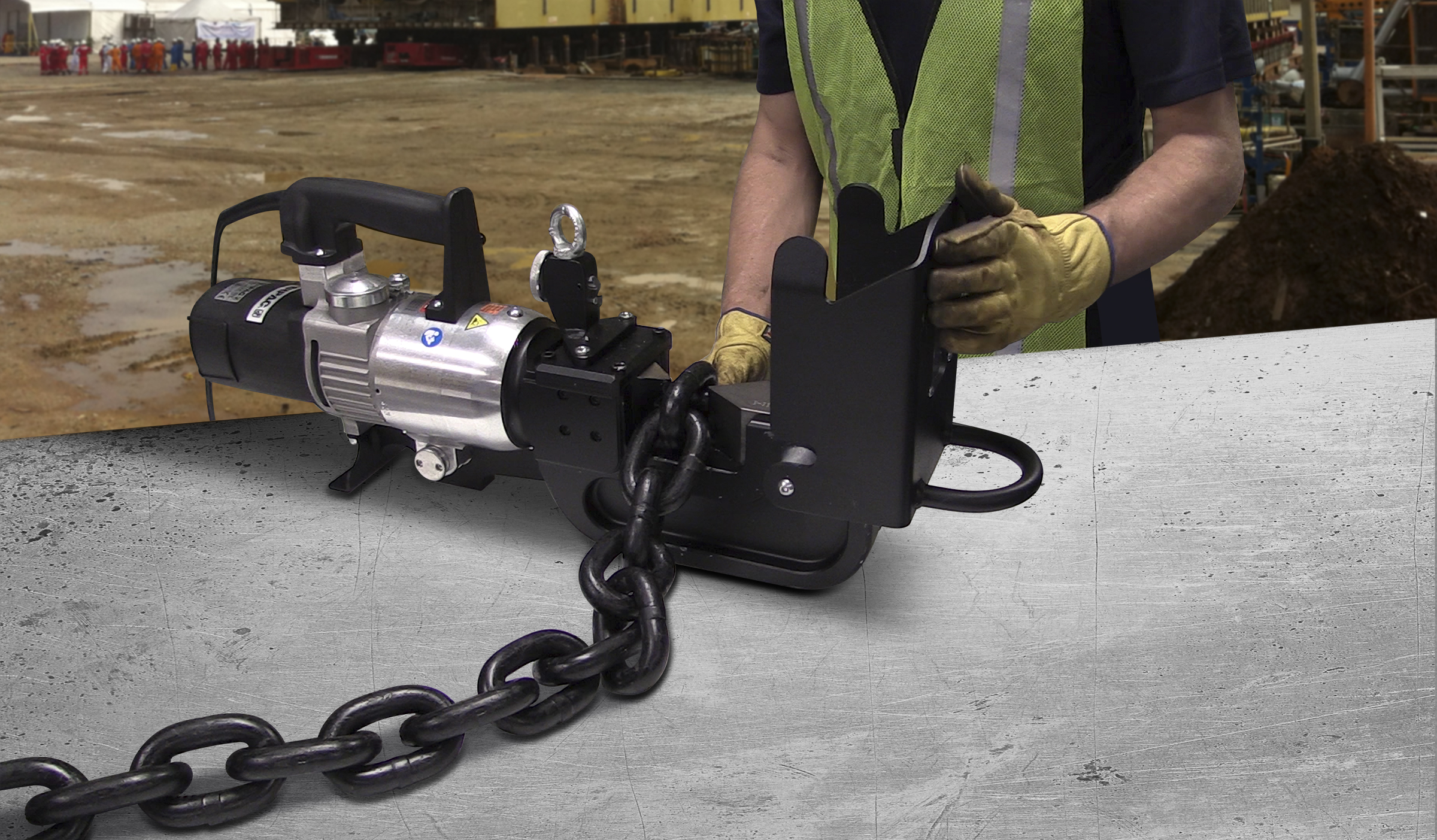
The Enerpac ECS-Series Cutter Spreader combination tool features powerful jaws that can cut and spread, bringing a versatile and simple tool to industrial customers.

Two Tools in One
With a 30cm maximum aperture, the powerful spreading jaws apply five tons of force to quickly open workpieces and expose the internal parts of vehicles, appliances and other industrial equipment. A pair of large blades grip and cut through extensive sections of sheet metal and similar materials, streamlining and accelerating the cutting operation. Whether recycling appliances, removing impediments or cutting materials down to size, the Enerpac Cutter Spreader combination tool is the ideal tool to access required parts and get the job done.

Easy to Use
The Cutter Spreader combination tool is an innovative and simple design that offers both cutting and spreading action in a single plug-and-play tool without the need of pumps, hoses or batteries. The tool only weighs 15 Kg and features a rotatable head for optimal positioning of the jaws on the workpiece. A large control knob positioned directly at the front of the handle makes it easy to activate the jaws, regardless of how the tool is positioned.

Fast and Powerful
The Cutter Spreader combination tool's wide aperture blades are able to grip and cut a large variety of work pieces within two to three seconds. Unlike typical spreading tools that deliver only one ton of spreading force, the powerful ECS-Series tools generate over five tons of force to get the job done fast and with ease.

For more information on the Enerpac ECS-Series Cutter Spreader tool, visit www.enerpac.com.

Clean Air Solutions on Show at Southern 2025

Industrial clean air specialist Filtermist Limited will be showing two of its latest innovations on stand F245 at Southern Manufacturing 2025. The UK manufacturer will be launching a brand-new mobile stand for its larger Filtermist oil mist filters, as well as showcasing an A.erity 10-30 oil mist collector from sister company Absolent AB.

The new portable stand is designed to make it simple to move a Filtermist oil mist filter to wherever it’s needed and is ideal for use on grinding applications when used with a cyclone pre-filter. The height of the stand also makes it easy for the Filtermist unit to be serviced and maintained – helping customers comply with Working at Height Regulations 2005.

Josh Palmer, Product Manager for Filtermist, elaborates, “We work closely with our key customers to identify how we can improve our product offering. As well as being perfect for any applications where enhanced flexibility is required, this new mobile oil mist extraction solution is also ideal for customers that would like to trial a Filtermist unit before committing to a permanent installation.”
Filtermist will also be showcasing an A.erity oil mist filter at the Farnborough show for only the second time since the new product’s launch in 2023. Key Account Manager Simon Harkis, comments, “The A.erity range from Absolent is relatively new and additional models are still being introduced. The current product line-up includes filtration units with airflows from 500-4,000m3/hr, capable of handling particle loads from 5-70mg/m³. With the modular design of the A.erity range this maximum airflow can be increased further to 12,000m3/hr using multiple units driven by one controller.
“A.erity units include multiple filtration stages with a HEPA filter as the final stage, and thanks to Absolent’s patented Catch&Release filtration media and energy efficient EcoDrive technologies, A.erity offers users up to 8760 hours of maintenance free operation.
“We have installed several A.erity units for customers across the UK and they are being very well received. Absolent also offers its A.Smart IoT monitoring solution - allowing customers to check the performance of their Absolent units from any location via an easy-to-use dashboard which can be accessed from any internet enabled device. This is a big plus for companies with multiple machines where keeping downtime to an absolute minimum is critical.”
The Filtermist team will also be reminding show visitors that it manufactures Kerstar industrial vacuum cleaners, including ATEX rated models available with a choice of compressed air or electric power. The Southern stand will include a KEVA 45H with carbon fibre kit and a KAV15 – the smallest model in the Kerstar range.
Visitors to the stand can also learn about Filtermist’s comprehensive Aftermarket division which offers spares and consumables, servicing and maintenance, and COSHH compliant LEV testing throughout the UK.
Please visit the team on stand F245 to discuss how Filtermist can support with effective extraction for oil mist, dust, fume and smoke, or go to www.filtermist.co.uk to find out more about all of the products and services available for UK manufacturers.

The Third Dimension of Risk: The use of organisational maturity in assessing and mitigating risk

Mike_Meen.jpeg

Mike Meen, Technical Director at Bureau Veritas, assesses whether the traditional two-dimensional approach to risk is adequate in today’s complex society, and highlights the importance of organisational maturity and resilience in hazardous environments.


The traditional two-dimensional risk model sees probability weighed up against consequence, predicting the likelihood of a risk occurring and the severity of the outcome. The problem with this model, particularly in potential hazardous environments and industries, is that it undermines the influence and importance of organisational maturity.

The 10th edition of Deloitte’s Global Risk Management Survey found that amongst organisations with mature risk management processes, 66% were more likely to achieve their objectives, and have a 30% lower likelihood of experiencing critical incidents compared to companies with low-risk management maturity. In addition, mature organisations demonstrated stronger regulatory compliance, with 85% of mature organisations reporting fewer regulatory breaches, compared to just 55% of less mature ones.

Since the Deloitte report, McKinsey's 2023 research found only 50% of organisations feel well-prepared to handle external shocks like economic volatility and geopolitical instability, reflecting a significant gap in organisational resilience. Moreover, two-thirds are struggling with complexity and inefficiency in their structures, highlighting the need for more agile and mature systems to better manage risks and disruptions​.

Plant, Procedures, People

In today’s complex society, where technology and artificial intelligence are becoming as sophisticated as people, many organisations can become too reliant on their equipment.

Industries and plants operating in the chemical, manufacturing, nuclear, or oil and gas sectors work heavily on both physical equipment and control logic – particularly safety and environmentally-critical equipment (SECEs) whose sole purpose is to mitigate a potentially hazardous spill or explosion occurring. Although condition monitoring is now sophisticated on these items, it’s vital that ‘people’ are also considered as an additional layer of consideration, otherwise businesses can open themselves up to that third dimension of risk.

In all industrious environments, employees will have the ability to override the machines and controls in place and launch an essential shutdown. The key is ensuring those employees are trained, competent and prepared.

If a piece of plant equipment malfunctions, the next port of call is the business’ procedures and its people. As such, training is vital.

Embedding resilience into the organisation

It is the environment that a person works in that either supports or inhibits action. It is the application of appropriate processes that prevent or mitigate undesirable events; and ultimately, it is the people and their behaviours that are the source of compliance or ignorance to due process.


Training in risk and resilience doesn’t necessarily mean having to learn about lots of individual elements; it simply means understanding how to be situationally aware.

It’s important to note that organisational maturity cannot be achieved overnight, and isn’t simply the culmination of a set of company rules for employees to follow. It comes from time and investment in navigating each stage of maturity, ensuring operational and process excellence is embedded into the culture of the business.

Bureau Veritas is a leading testing, inspection and certification company offering workplace health and safety consultancy services and training. For further information, please visit https://www.bureauveritas.co.uk/.

National Grid Electricity Transmission joins EEMUA

EMMUA

National Grid Electricity Transmission is the latest company to join EEMUA as a corporate member.

National Grid Electricity Transmission is a business unit within the wider National Grid Group. It develops, owns and maintains the high-voltage electricity transmission network in England and Wales. The system consists of approximately 4,500 miles of overhead line, over 900 miles of underground cable and over 300 substations.

EEMUA and National Grid Electricity Transmission have well aligned objectives in terms of safety, the environment and operating performance. The sharing of good practice across different industries and global regions afforded by engagement in EEMUA will help support National Grid Electricity Transmission in the safe operation of its physical assets as it looks to connect more and more low carbon electricity to the network – crucial in helping the UK achieve its net zero ambitions.

The Engineering Equipment and Materials Users Association


Good practice for all aspects of industrial alarm systems – new edition of EEMUA 191 released

EEMUA has released Edition 4 of EEMUA 191, Alarm systems – A guide to design, management and procurement.

Since it was first published in 1999, EEMUA 191 has become the globally accepted and leading guide to good practice for all aspects of alarm systems.

The new edition has been comprehensively updated and restructured to improve ease of use. The terminology has been aligned to that used in the latest editions of the standards and the opportunity has been taken to include new material on alarm management for remote sites.

Alarm systems form an essential part of the operator interfaces to large modern industrial facilities. They provide vital support to the operators by warning them of situations that need their attention and have an important role in preventing, controlling and mitigating the effects of abnormal situations.

EEMUA 191, developed by the users of alarm systems in industry, gives comprehensive guidance on designing, managing and procuring an effective alarm system. It is intended to help in improving existing systems and in developing new facilities during plant construction or during alarm system refurbishments. Both of the international standards for the management of alarm systems for the process industries, ISA 18.2 and IEC 62682: 2023, are aligned with EEMUA 191.

EEMUA 191 is primarily concerned with alarm systems provided for people operating industrial processes. These include alarm systems in industries such as chemical manufacture, power generation, oil and gas extraction and refining and others. However, much of the guidance is generic and with appropriate interpretation can be applied in other sectors. The guide has been used successfully as a basis for training in the rail and transport sectors, in the nuclear industry, and elsewhere.

www.eemua.org


How to achieve a seamless transition from conventional radio technology to Ex-safe 5G PoC communication?

i.safe MOBILE sets new standards with its new 5G radio IS440.1

In recent years, there has been an increasing shift from conventional radio technology to digital PMR technology, particularly in the industrial sector. This is where private 5G mobile networks come into play, meeting growing connectivity needs with higher coverage, bandwidth and security. Reliable communication is essential for team coordination on large company sites - in hazardous and non-hazardous areas. As not all parts of the company are usually converted to digital formats immediately, a cross-technology solution for group communication is required.

i.safe MOBILE responds to the demands of industrial users

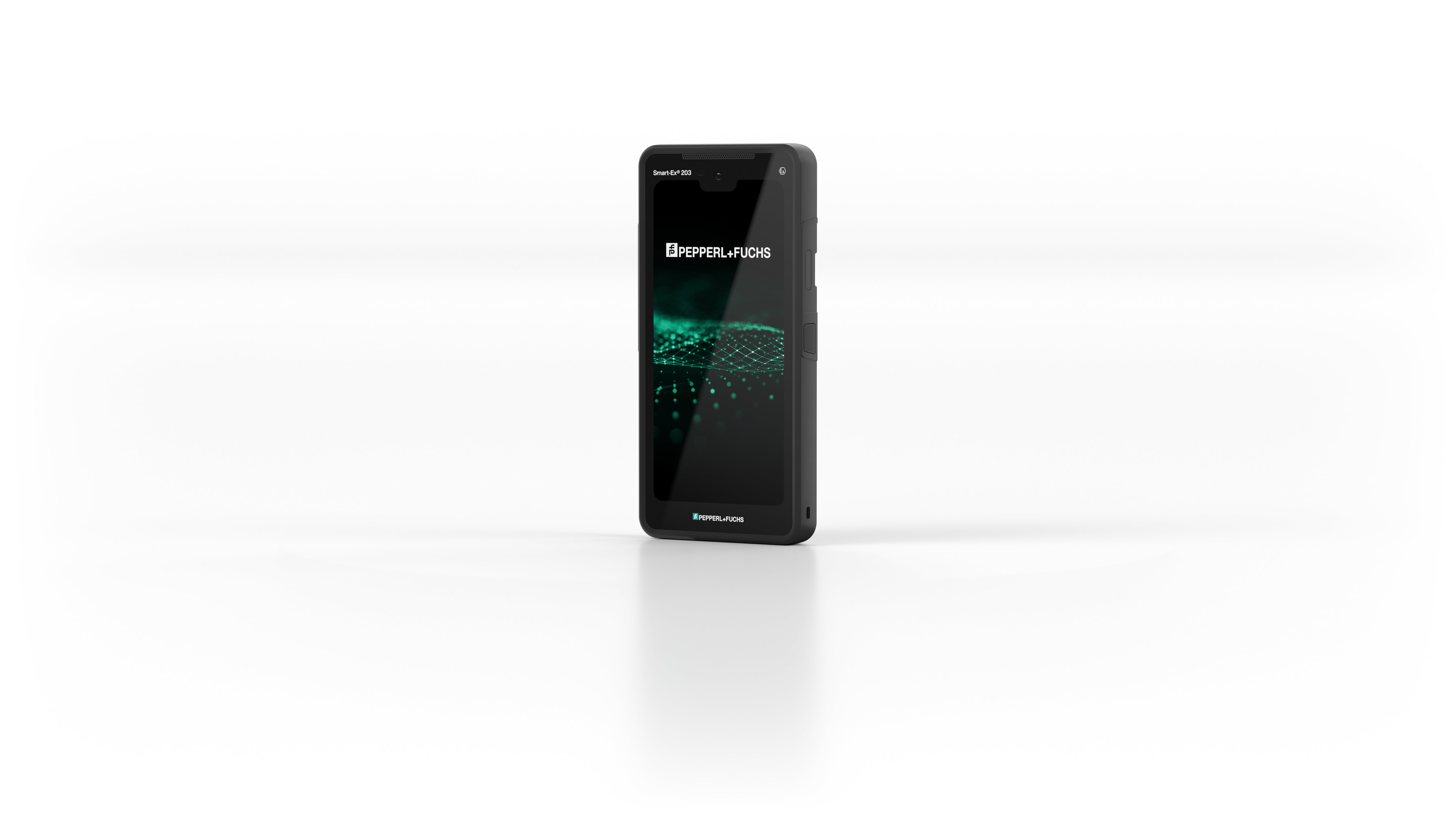
The new development from i.safe MOBILE closes this gap: The 5G radio provides secure and interference-free PoC communication via public or private 4G/5G networks on site or Wi-Fi® as a backup connectivity. The ATEX/IECEx certified 5G radio IS440.1 for Ex-zone 1/21 enables seamless group communication via a PoC bridge server with existing devices like two-way radios (TETRA, DMR and analogue PMR). The new 5G radio supports 3GPP Release 15 and has a very reliable chipset on board. The device features a user-oriented look and feel, a replaceable battery (with 2400 or 4800 mAh), large keys for PTT, SOS, talk group selection, dual SIM (with automatic network switching), a powerful front speaker (>105 dB) for noisy environments, a unique 8-pin ISM interface for connecting headphones and heavy duty headsets (HDHS) and a functional fixing clip.  

The 5G radio is mostly used in the campus network, but an alternative SIM card for the public network can of course also be inserted to have a fallback option in an emergency, another fallback option is of course the connection via Wi-Fi. In terms of connectivity, it is equipped with Wi-Fi 6, NFC (for access control, data transfer between two devices, reading NFC tags) and Bluetooth® 5.2. In addition to all major public 4G/5G frequency bands, the IS440.1 also supports the CBRS spectrum and B68 for public safety applications.

The user can download selected apps compatible with the device directly from the pre-installed i.safe MOBILE App World and update them regularly. The App World contains product-related, pretested push-to-talk and MDM solutions. With the corresponding app from App World, the IS440.1 is more than just a radio. The IS440.1 enables advanced functions such as:

  • Push-to-Talk: instant communication at the touch of a button
  • Full-duplex communication: Seamless two-way calls
  • Video streaming: visual information exchange in real time
  • Protection of lone workers: Increased safety for isolated workers

Robin Hartmann, Manager Operative Business Development of i.safe MOBILE comments: “With the development of our 5G radio, we are responding to many of our customers’ requests for a  bridge technology between existing communication devices such as two-way radios and modern 5G devices on the road to digital transformation. This gives customers the opportunity to gradually digitalize their communications.”

Further information and a dealer directory can be found at www.isafe-mobile.com

Future-proofing safety: How Fault Tree Analysis is revolutionising risk

Dr. Leszek Kasprzak, Principal Risk & Safety Consultant, and Dr. Shirin Pegg, Technical Director at Bureau Veritas, discuss how Fault Tree Analysis is helping to re-evaluate risk, and what this means for the future of Dangerous Substances and Explosive Atmospheres (DSEAR) assessment.

 DR3.jpeg

The modern-day approach to risk assessment must keep pace with technological advancements and emerging hazards. Forward-thinking methodologies are redefining the boundaries of safety and reliability within evaluation of hazardous facilities.

One of the most recent and innovative developments in risk assessment practices is the comprehensive application of Fault Tree Analysis (FTA). Unlike more traditional assessment models, FTA offers a detailed, system-level approach to identifying potential failure paths and evaluating the risk of critical events. This method allows organisations to gain a deeper, data-driven understanding of complex risk factors. Such insights not only support compliance but actively enhance safety measures and operational efficiency.

FTA and its significance in the current landscape

The answer to this lies in the multi-layered nature of modern industrial processes, where a single fault can trigger cascading failures. FTA maps out intricate dependencies and quantifies the likelihood of such chain reactions, considering elements like human error, component failures, and environmental influences. For instance, when analysing the risk of hydrogen explosion at battery charging stations potentially leading to severe injuries, the assessment shows transparently the presence of potential ignition sources, process controls and ventilation system failure; and occupancy level within the impacted area. This level of transparency is crucial for mitigating risks comprehensively and proactively.

Modernising risk assessment reports is another essential aspect of evolving safety practices. Detailed visual representations and extensive data references, sourced from reputable industry statistics and authoritative agencies, enhance comprehension, translating complex assessments into actionable insights. When reports are designed with clarity and precision, they not only inform but foster trust through well-documented methodologies and findings.

A significant challenge faced by many industries today is the risk posed by emerging technologies, particularly lithium-ion batteries. The multi-faceted hazards associated with these energy storage solutions are only beginning to be fully understood. Risk assessments need to extend beyond standard flammable risk considerations to include factors such as thermal runaway reactions, which can be influenced by environmental and operational variables. By examining oxidizers and reactive chemical interactions, risk evaluations can highlight potential failure scenarios that might otherwise be overlooked. Such forward-thinking analysis is essential for addressing next-generation industrial challenges.

The ability to anticipate and evaluate evolving risks - from hydrogen use in new energy systems to advanced battery technologies - positions risk assessment not just as a regulatory requirement but as a strategic pillar for safety innovation. Continuous refinement of methodologies ensures that organisations are not only compliant but prepared for the unexpected.

In an era where safety cannot be compromised, meticulous and forward-thinking risk assessments set a benchmark for resilience. Expertise and a commitment to proactive strategy are necessary to initiate a conversation that challenges the industry to think beyond immediate risks and toward future-proofed safety.

www.bureauveritas.com,

Cordless Industrial Vacuum Cleaner for Hazardous Dusts

quairepac_nov.jpeg

A clean work space is essential for health and safety, and the best tool for general cleaning up dust and loose product in the workplace is an Industrial Vacuum Cleaner. However, the vast majority of machines need to be plugged in to a power outlet, which necessitates appropriately positioned power outlets, and a trailing cable which itself presents a hazard.

Quirepace have introduced the cordless IV60 eGX into the range of BVC Industrial Vacuum Cleaners to eliminate this risk. This is a powerful battery powered unit which, as standard, is provided with a 3-stage filtration dry product tank consisting of a paper sack collection, microfibre main filter and 3rd stage HEPA filter. This configuration is suitable for most dry-product collection applications. The unit may be configured as both M-Class and H-Class rated units.

The unique Honda eGX electric engine is designed to replace petrol engines in the 2.5hp class and combined with the well-proven BVC YP3 turbine delivers powerful suction suitable for the toughest industrial cleaning jobs.

With a run-time of 1/2hr to 2 hrs depending on power setting, the new BVC IV60 eGX in either M-Class or H-Class specification, is ideal for spillages of potentially hazardous products, and the absence of any requirement to plug-in means BVC IV60 is immediately ready for use anywhere in the building.

In addition to the standard dry-product tank, BVC IV60 eGX is also available with wet tank, longopac®, and drop-tank options. It is also ideal for high-reach cleaning using lightweight carbon fibre cleaning poles. Like all BVC Industrial Vacuum Cleaners, a wide range of different hoses, tools and accessories are available from Quirepace’s Fareham factory and warehouse.

Contact Quirepace today and ask for a demonstration.

Quirepace Ltd

This email address is being protected from spambots. You need JavaScript enabled to view it.
www.quirepace.co.uk
www.bvc.co.uk

Early detection of explosions and fires

Early detection of explosions and fires

 With the GSME and HOTSPOT detectors from REMBE, an artificial intelligence has been created that detects fire and explosion events at an early stage. The GSME detector is an artificial nose, "trained" for pyrolysis - popularly known as smoldering gases, while the HOTSPOT detector represents an artificial eye that already detects surface temperature changes of 1 °C.

REMBE´s HOTSPOT X20 measures surface temperatures using an intelligent evaluation system, which divides the field of view into detection zones. A separate temperature threshold value can be set for each individual zone in order to tailor the detection to the process as far as possible. The HOTSPOT X20 can even identify small temperature increases (1 °C) and enables to warn the operator of a fire or glowing embers at extremely early stages. The HOTSPOT X20 can also be used in explosion atmosphere up to zone 20 and under high dust loads and monitors a temperature range in the standard version of 0-200 °C (higher temperatures possible, but typically not required).

Temperature monitoring can be particularly helpful when handling secondary fuels. Where gas measurement technology becomes very complex due to cross-sensitivities, temperature is a simple parameter for detecting process anomalies. Common mounting points are above or on conveyors so that the process flows can be monitored. If elevated temperatures are detected, the potential ignition source can be stopped before it reaches the next potentially explosive atmosphere.

Mainly hydrocarbon compounds are released when many substances thermally decompose. If there is incomplete burning without a flame and a low oxygen supply, carbon monoxide is created as well. The GSME X20 pyrolysis gas detector, for instance, has been designed for detecting these gases, even as they develop. Alongside carbon monoxide and hydrocarbon compounds, nitrogen oxide and hydrogen compounds (CO, HC, H2 and NOx) are also monitored. With the aid of an intelligent evaluation algorithm, a process behaviour can be ideally mapped and normal off-gasing be adopted. If a concentration increases above the usual level, the GSME X20 immediately triggers an alarm. The detector, is also suitable for explosion atmospheres up to zone 20, monitors concentration ranges from 0-100ppm.

Gas measurement technology can also be used for traditional energy sources. However, this must be suitable for the harsh environments. Thanks to the multi-component measurement, the GSME detector can also be used in storage facilities.

When the location and mounting position are ideally designed in an explosion protection concept, HOTSPOT X20 and GSME X20 allow explosions and fires to be prevented through early detection.


www.rembe.de


Hydrogen – Properties and its significance towards safety.

 In this article we will dive deep into further chemical and combustion properties of hydrogen to study its impact on process safety in design and operation phase of engineering project involving production, storage transport and utilization of hydrogen.

 Chemical and combustion properties-

How H2 behaves at ambient temperature and how it reacts with other metals & non-metals…

At ambient temperature the hydrogen reaction with oxygen is extraordinarily slow unless it is activated by catalyser or spark, once reaction activated by spark it can turn in to high rate ignition or explosion depending upon the surrounding physical condition and concentration of H2 and O2 .Hydrogen reacts both with non-metals (high electro negativity) and with metals (low electro negativity) to form either ionic or covalent hydrides (e.g. HCl, H2O). The electro negativity of hydrogen is 2.20 (Pauling scale) this makes hydrogen most reactive compared to others. Hydrogen can react chemically with most other materials. This property of hydrogen needs to be understood in depth to ascertain physical and chemical compatibility of metals/non-metals/other materials like composites while selecting materials for handling of pressurized /liquid hydrogen.

Flammability range/limits of hydrogen (4.1% to 72.5% vol in air)-

 Hydrogen in connection with oxygen is flammable over wide range of 4.1% to 72.5% compared to natural gas and other petroleum products and it can become explosive within wide range of concentration i.e. 18% to 59% at standard atmospheric conditions. We may draw misleading conclusion that handling and utilization of hydrogen is not as safe as natural gas and other petroleum product due to its very wide flammability range instead in actual/practical cases H2 will rarely reach the limit of its higher flammability limit if handled in well ventilated premise due to its higher diffusivity-coefficient, high buoyancy and smaller molecular weight which helps H2 to disperse quickly in case of leak (H2 is 14 time buoyant than air while natural gas is 4 times). This means that same quantity of hydrogen in gaseous form will escape at 4.6 times faster than natural gas .The flammability range of petroleum on lower threshold is only 1.2% while hydrogen has advantage up to 4.1%.

We can say that in well-ventilated unconfined space the probability of hydrogen forming explosive mixture is much less than liquid petroleum product and relatively lesser than natural gas. Early detection of leaks is critical for preventing accidents, protecting workers and the public, and avoiding potential damage to infrastructure. Hydrogen leak-detection systems employ technologies such as sensors, detectors, and monitoring equipment to identify leaks promptly. Hydrogen leaks are scientifically defined in ASME B31.12 as Grade-1,2 &3 along with its readings and mitigation measures in hydrogen value chain as below. This can be used to decide/design the location of hydrogen leak detection sensor and their sensitivity along with firefighting/hazard mitigation response in case of unlikely event.

EHS_Graph.jpeg

The flammability mixture to an extent depends upon the temperature, pressure and direction of propagation of hydrogen flame. The variations are explained well in table mentioned below (table-2.1). These results are drawn out of laboratory experiment conducted at specific laboratory conditions hence actual limits may vary slightly depending upon concentration, temperature and pressure. Hence, it’s important to build in designed factor of safety while designing process safety equipment for storage and handling of hydrogen.

graph1.jpeg

Practically the flammability limit of hydrogen depends upon the instrument & standard method used for measurement. The table 2.2 below mentions about the LEL & UFL of H2 for various international standards.

graph2.jpeg

Another factor worth paying attention to here is effect of mixture temperature (H2 & Oxygen) on LFL&UFL of hydrogen. The flammability ranges of hydrogen changes linearly in proportion to change in temperature. LEL will decrease by about 2.5% by volume (from 4% -1.5% by volume) with increase in mixture temperature from 200C to 4000C .UFL increases more significantly by about 12.5% by volume for the same change of mixture temperature.

graph_chart.jpeg

The effect increase of mixture pressure is different for LFL and UFL. In case of LFL value decreases to 5.6% for increase in pressure from 0.1-5.0MPa then is constant up to pressure of 15MPa. For UFL changes and not linear, UFL decrease from 76% to 71% for changes in pressure from 0.1 to 2.0 MPa then increase from 71% to 73.8% with pressure increase from 2.0 to 5.0MPa  again decreases significantly from 73.8% to 72.8% with pressure rise from 5.0 to 15.0MPa. Please ref to the graph mentioned below for better understanding of effect of pressure and temperature.

Hydrogen gas does not have a flash point as it is already a gas at ambient conditions. It means that cryogenic hydrogen will flash at all temperatures above its boiling point of 20 K (-2530C).

The comparative view of flammability range of Hydrogen, Methanol, Petroleum and Natural gas is provided as below. Practically wide flammability range of H2 makes it more efficient fuel for wide range of heat and power applications at the same time process safety of hydrogen must be designed keeping this in mind because this advantage is coupled with disadvantage while handling of H2.

H2.jpeg

Limiting Oxygen Index-

As we know that oxygen, fuel (liquid/gas) &Ignition sources are required to complete fire triangle so that fire is initiated. In controlled fire scenario engineering process and controls are used to control either oxygen/ fuel proportion to control the flame and heat generated out of flame. In case of hydrogen, next question comes in our mind is what is that minimum % of oxygen required for propagation of hydrogen flame and generate heat. Answer is no mixture of hydrogen, air& nitrogen at NTP will propagate the flame if mixture contains less than 5% of oxygen by volume (NASA -1997).

Ignition Properties of hydrogen-

Now let’s see how flammable hydrogen air mixture (usually  non- stoichiometric mixture) can be ignited for purpose or by accident, once we understand how hydrogen & air mixture can get ignited we can make efforts to understand how to keep it safe in storage and handling and utilization.

The minimum energy required to ignite the hydrogen +air mixture is called Minimum Ignition Energy (MIE) which is 0.02 mJ only. As this value of MIE is very low even compared with other hydrocarbon fuels it can easily be created by mechanical spark created by rapidly closing of valve, electrostatic discharge in ungrounded particulate filters, spark from electrical equipment, catalyst particles, heating equipments, Lightning strike near the vent stack. Hence it is of utmost importance to eliminate or isolate the source of spark in appropriate way from hydrogen system as if unforeseen ignition sources could occur.

Needless to say that less ignition energy is required as mixture is closer to stoichiometric level as well it depends upon temperature, pressure and composition. Practically all ignition sources generate energy more than 10 mJ hence any ignition source or spark can ignite the mixture of hydrogen and air.

As hydrogen is essentially an electrical insulator at both liquid and gaseous state, flow of hydrogen will generate the static electricity similar to other hydrocarbon fuel which can lead to generation of spark if not grounded to equalize potential of all hydrogen handling equipment. These properties of static electricity generation can be become more serious in the event of high flow rate and longer blow down time from hydrogen storage.

Auto ignition temperature of hydrogen is above 5100C which is relatively higher than hydrocarbons having longer molecule.  Objects at temperature of 3200C can ignite the hydrogen after prolonged contact. Comparative chart is provided below to compare the auto-ignition temperature of hydrogen with other fuels.

FUELS.jpeg

What happens if Hydrogen & air mixed gets in contact with spark –Travel from spark to explosion.

So far we were looking how we can keep hydrogen in its containment which is designed to store and carry. Now we will try to understand what technical properties of hydrogen as fuel in the gaseous and liquid phase are vital if it gets in contact with sparks.

Burning Velocity-Velocity indicating the speed with which smooth plane combustion wave can advance into stationary mixture. It is pertinent property of gas which is depending upon temperature, pressure and concentration. The burning velocity of hydrogen in air at stoichiometric (29.4% vol. of H2) ambient conditions is 2.55 m/s reaching a maximum of 3.2 m/s at a concentration of 40.1%, which would even increase to 11.75 m/s in pure oxygen. It is interesting to note than burning velocity is maximum at 40.1% concentration rather than at stoichiometric conditions. This effect of shifting occurs due H2 property of higher molecular diffusivity. It is interesting to note that higher diffusivity of hydrogen is actually the beneficial property of hydrogen as long it is not in contact with sparks because this property prolongs the hydrogen-air reaching to LEL limit in unconfined space. However, once hydrogen is ignited it acts as flame propagator which is not safe while handling hydrogen in entire value chain.

The higher the burning velocity, the greater the chance for a transition from deflagration to detonation (DDT). Needless to say that diffusivity of hydrogen property has double edge (beneficial & harmful) in hydrogen process engineering design. The laminar burning velocity (burning velocity) as function of concentration if hydrogen in air is shown in the graph mentioned below.

BM.jpeg

Flame propagation Speed- This is deflagration front velocity relative to fixed observer is given by speed of sound in combustion products which is 975m/s for stoichiometric hydrogen air mixture.

Detonability limits – Detonation is worst case scenario of hydrogen accident .The detonation range mentioned in technical report   ISO- 15916/2004 is 18-59% by volume of hydrogen in air. The detonation range varies on size of tube used for experiment. By conservative generalization of available data suggest the detonation range of hydrogen is within 11-70% (flammability range is 5%-75%). This is narrower and as expected within the range of flammability and that’s the cause of worry to process designer while designing the containment to store and carry hydrogen.

The time in which the flame at the ignition point develops to a detonation depends on many parameters such as temperature, pressure, mixture composition, geometry and ignition source strength. For a stoichiometric hydrogen-air mixture to detonate.

The explosion of a hydrogen-air mixture cloud results in the formation of a pressure wave, which is different and dependent on the combustion mode (slow/fast/detonation). In the deflagration of a free hydrogen-air gas cloud, the maximum overpressure is in the order of 10 kPa.

At 7 KPa pressure-   People would fall to the ground.

35KPa pressure-      Damage of ear drum is expected.

240 KPa pressures- Above which fatalities must be considered.

 Emissivity* of hydrogen flame (less than 0.01) -The thermal energy radiated from a flame corresponds to the higher heating value (HHV). Emissivity of Hydrogen flame is less than 0.1 unlike hydrocarbon is approximately 0.2 to 0.3 for lighter hydrocarbon. Hence radiations emitted from hydrogen flame are lesser than hydrocarbon. Therefore despite high flame temperature the burning hazard of hydrogen is comparatively small. Hydrogen flame has major problem in its non-visibility even in dark room unless impurities in the air are present. Another advantage is no smoke generation by hydrogen flame hence its comparatively safe in confined areas.

*Emissivity- The emissivity of the surface of a material is its effectiveness in emitting energy as thermal radiation.

 Safety measures to avoid detonation is extremely important. While deflagration of quiescent stoichiometric hydrogen air mixture in open atmosphere generates pressure wave of only 0.01MPa (below level of eardrum injury), the detonation of same mixture would be accompanied by blast of more than magnitude of higher pressure of about 1.5MPa (far above the fatal pressure of about 0.08-0.10 MPa).

Comparison of hydrogen with other fuels-

Hydrogen is unusual fuel; the leak of lower flow rate of hydrogen supports combustion as compared to other hydrocarbon fuels. H2 has lowest molecular mass, lowest density and lowest viscosity. These properties of hydrogen are turning in its favor for quick escape for confined space at the same time

 The other properties of hydrogen which are required to understand from process safety point of view and their comparison is provided in table below.

HYW.jpeg

Reference-

1. Five minute guide- Hydrogen-www.arup.com page 1-12.

2. Chapter-1 Hydrogen fundamentals –Biennal Report on Hydrogen Safety (BRHS)-6.

3. Fundamentals of hydrogen safety engineering by Vladimir Molkov volume -35 -47.

4. US Department of energy /energy efficiency & renewal energy/fuel cell laboratory.

4. Wikipedia/hydrogen & Wikipedia/emissivity.


Article wriiten by 

Mahesh Salunkhe