MIT World: Engineering >>
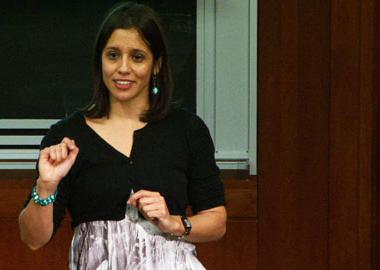 Researchers who wish to study mobility patterns might be reaching for your phone. Increasingly, cell phones are equipped with locational receivers (Global Positioning Systems or GPS) and their bread crumb trails are opening up entirely new ways to study and predict the dynamics of travel. “We are in the GPS revolution because most PCS of tomorrow will be in our hands in the (form of) the smart phone”, according to Marta González. San Francisco is a city on the forefront of this revolution: there, willing cell phone users have voluntarily uploaded their GPS trajectories.
If that is the data of the future, it is still possible to study mobility patterns today, by conducting a secondary analysis of cell phone records. González cites an example from Europe, where she worked with cell phone billing data for 7 million customers. She examined a subset of 16 million records, which represented 100,000 users. Although individual locations could not be identified, Dr. González used a proxy variable, the cell phone tower from which a call originated or was received. Using a combination of parsing and data mining, the data was scaled
Researchers who wish to study mobility patterns might be reaching for your phone. Increasingly, cell phones are equipped with locational receivers (Global Positioning Systems or GPS) and their bread crumb trails are opening up entirely new ways to study and predict the dynamics of travel. “We are in the GPS revolution because most PCS of tomorrow will be in our hands in the (form of) the smart phone”, according to Marta González. San Francisco is a city on the forefront of this revolution: there, willing cell phone users have voluntarily uploaded their GPS trajectories. If that is the data of the future, it is still possible to study mobility patterns today, by conducting a secondary analysis of cell phone records. González cites an example from Europe, where she worked with cell phone billing data for 7 million customers. She examined a subset of 16 million records, which represented 100,000 users. Although individual locations could not be identified, Dr. González used a proxy variable, the cell phone tower from which a call originated or was received. Using a combination of parsing and data mining, the data was scaled
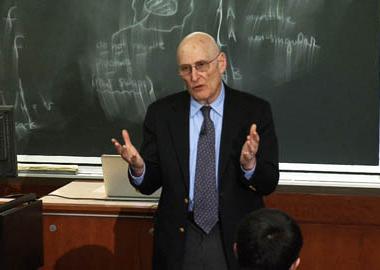 In the nineteen fifties and sixties, students of transportation focused on building infrastructure and applied lessons from the physical sciences to designing mobility. Mobility was facilely linked to the engines of economic growth and expanding GDP. In time, that perspective was replaced by a focus on transportation systems and networks. There was a newfound emphasis on environmental impacts, land use, and intermodal freight. There was also a growing concern on unpriced externalities. Today, Joseph Sussman explains, with many of those problems still unsolved, transportation has entered a new phase-- a period of immense complexity or CLIOS, which stands for complex, large scale, interconnected, open and sociotechical is an acronym that is becoming the mantra of transportation engineers. While it is not as far-reaching as "chaos" to a physicist, it is an approach with far-reaching consequences for the transportation field.
  From the MIT News Office:
 Our conversations on sustainable transportation typically begin with a review of vehicle efficiencies, and end with the characteristics of fuel, energy sources, and life cycle. In a remarkably novel approach to sustainable transportation, Krystyn Van Vliet discusses how other things matter too- namely the materials we build our bridges from, the infrastructure of the road, and of course, the tires we drive on. They are all parts of the sustainable equation. For the U.S. to achieve the reductions in C02 consistent with the 2050 Kyoto protocols, a substantial portion of that must be made by reducing the CO2 from the construction of highways and bridges.
  From the MIT News Office:
  Knowing more about the environmental impacts of aviation is increasingly essential, but according to
 .jpg) As assets become smarter and CMMS/EAM packages become more integrated across various asset classes within a manufacturing company, responsibility for facility management (including facility maintenance) has become spread over multiple departments. Historically, facility and plant maintenance were the sole responsibility of the Maintenance Department which ultimately reported to the Plant Manager or Works Manager.
As assets become smarter and CMMS/EAM packages become more integrated across various asset classes within a manufacturing company, responsibility for facility management (including facility maintenance) has become spread over multiple departments. Historically, facility and plant maintenance were the sole responsibility of the Maintenance Department which ultimately reported to the Plant Manager or Works Manager.