
MIT World: Engineering >>
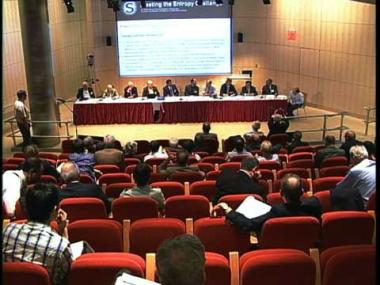 In this valedictory panel to the two-day symposium, 10 speakers offer brief takes on how the Second Law of Thermodynamics might prove useful in seeking answers to our current energy challenge.
Even before the oil embargo of 1973, Thomas Widmer recalls, Joe Keenan and his MIT colleagues wrote of an “entropy crisis.” They analyzed the flow of work in industries and saw great inefficiencies that became crippling when fuel prices spiked. Despite 30 years of improvement, says Widmer, “the effectiveness of energy use is still less than 12%.” In selling ideas to policy makers, he advises, talk about “energy productivity” rather than conservation.
Ernest S. Geskin doesn’t believe alternative energies will be viable quickly enough to make a serious difference in climate change, so his objective is to improve combustion. He outlines several methods he’s developing that increase the availability of generated heat, reduce heat losses, and integrate combustion with materials production and processing, such as in steelmaking.
James Keck says that “improving the efficiency and reducing emissions of auto engines and power plant burners requires an ability to model hydrocarbon combustion.” He
In this valedictory panel to the two-day symposium, 10 speakers offer brief takes on how the Second Law of Thermodynamics might prove useful in seeking answers to our current energy challenge. Even before the oil embargo of 1973, Thomas Widmer recalls, Joe Keenan and his MIT colleagues wrote of an “entropy crisis.” They analyzed the flow of work in industries and saw great inefficiencies that became crippling when fuel prices spiked. Despite 30 years of improvement, says Widmer, “the effectiveness of energy use is still less than 12%.” In selling ideas to policy makers, he advises, talk about “energy productivity” rather than conservation.
Ernest S. Geskin doesn’t believe alternative energies will be viable quickly enough to make a serious difference in climate change, so his objective is to improve combustion. He outlines several methods he’s developing that increase the availability of generated heat, reduce heat losses, and integrate combustion with materials production and processing, such as in steelmaking.
James Keck says that “improving the efficiency and reducing emissions of auto engines and power plant burners requires an ability to model hydrocarbon combustion.” He
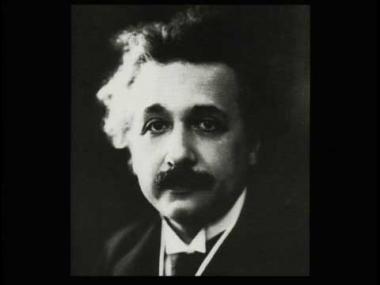 This Nobel Prize-winning scientist admits to staying up late the night before his talk to bone up on thermodynamics. He puts his research to good use, discussing the history and application of the laws of thermodynamics, which have served as “the scientific foundation of how we harness energy, and the basis of the industrial revolution, the wealth of nations.”
 The world is counting on the fulfillment of (Intel co-founder) Gordon Moore’s Law for at least another half century. In Craig Barrett’s view, solutions to the crucial challenges of our time depend on improving on already nano-sized microprocessors every few years.
  Evelyn Hu meticulously describes designing and building a new generation of optical materials from nano-sized elements. She hopes to harness “the magic of light in nanostructures.”
  Frederick Salvucci’s perspective on transportation development is an amalgam of civil engineering, history, economics, policy, and not least, the direct impact on people’s lives. Here he surveys the evolution of transportation in Boston and beyond from the 1830s to the present.
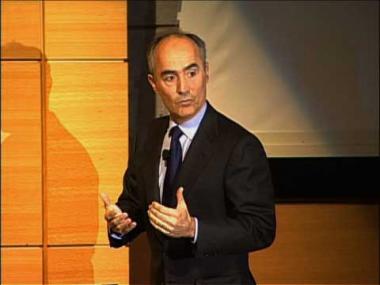 Move over, Italy. Rafael del Pino is here to claim Spain’s rightful spot as a major European player in the global infrastructure market. Founded by del Pino’s father in 1952 as a builder of sleeper cars for trains, Ferrovial has diversified into a conglomerate with a hand in construction, real estate, road building design and operation, water treatment and desalination, airport ownership and operation, among other activities, and with 104 thousand employees in 43 countries. Del Pino describes some of the milestones passed, and hurdles overcome, during Ferrovial’s 50 years of expansive growth.
  These two MIT Museum speakers hope you’ll walk away from their talk with a good case of augmentation envy – or at least a healthy respect for what technology can do for the human body and soul.
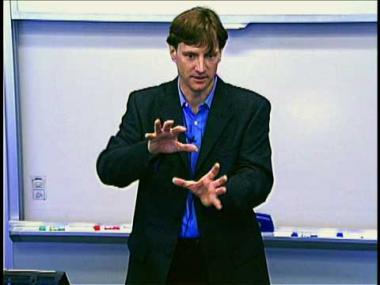 In the curious way of technological evolution, we first had computers that occupied entire rooms, watched them shrink to desktop, laptop and palm-sized devices, and now find ourselves coming full circle, and then some, Alan Benner reports. He tells this MIT class about warehouse-sized data centers, linking processors, and ensembles of processors, in dizzyingly complex hierarchies. These gigantic operations, some with their own power and air conditioning plants, are central to the enterprise of Internet behemoths Google, Amazon and YouTube, but have not yet percolated out to more traditional companies like insurance firms -- a situation Benner and his IBM colleagues would like to remedy.
  Great civil engineers finds an aesthetic appropriate for their building’s material and structure, asserts David Billington, whose life work has been the study of some of the world’s most stunning engineering feats.
 John Ochsendorf, a structural engineer, “fell in love with archaeology” during college. His senior thesis at Cornell involved a 600-year-old Incan suspension bridge made entirely out of grass. Ochsendorf learned that this apparently primitive structure owed its astonishing longevity to regular rebuilds by the locals (during a community festival), and the use of renewable, biodegradable resources. While Cornell’s engineering faculty couldn’t see the point of this research -- “grass bridges over highway overpasses”? -- Ochsendorf realized that historical structures held important lessons for modern building technology.