Find ATEX, IECEx, Explosion Protection & Hazardous Area Content...

Latest Videos

The Laser at 50

MIT World: Engineering >> 
This group of luminaries from the formative years of the laser expresses both wonder and delight at the astonishing ubiquity this technology has achieved in their lifetime. They recount their parts of a 50-year tale, and convey the excitement of scientific discovery and the pleasures of advancing knowledge in a new field.

Writer Jeff Hecht kicks off the celebration with a fast-paced, illustrated tour of laser technology. Although Einstein theorized early in the 20th century that photons could be excited to produce radiation, it was not until the 1950s that the race began in earnest to demonstrate this physics. Charles Townes and James Gordon came up with a microwave-based version of the technology, but it was graduate student Gordon Gould at Columbia who figured out it was possible to amplify visible light, says Hecht. Gould also coined the term LASER, for Light Amplification by Stimulated Emission of Radiation.

In May 1960, Theodore “Ted” Maiman cooked up the first actual device, using a synthetic ruby crystal inside a coiled flash lamp. Newspapers heralded the achievement with typical, Cold War hyperbole: “LA Man Builds Death Ray.” From that

Microchip Stand-alone I2C Real-Time Clock/Calendar (RTCC)

Engineering TV >> 
Electronic Design's Bill Wong sits down with Alex Martinez of Microchip Technology to discuss their first family of stand-alone I2C Real-Time Clock/Calendar (RTCC) devices. Applications include smart-energy, home-appliance, automotive, and consumer-electronic markets.

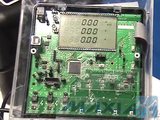
Maxim G3-PLC Smart Grid Implementation

Engineering TV >> 
Maxim Integrated Products showcases energy-measurement designs featuring Maxim's home energy measurement and G3-PLC powerline data communications for the smart grid.

Hosted by: Joe Desposito Edited by: Curtis Ellzey

Interpoint MFP Point-of-load Converter

Engineering TV >> 
Joe Desposito talks with Simon Abel of Crane Aerospace and Electronics about their new MFP point-of-load Converter and the plans for the power solution system.

Hosted by: Joe Desposito Videography by: Paul Milnamow Edited by: Terry Knight

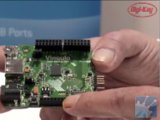
The Vinculo Platform from FTDI Chip

Engineering TV >> 
Joe Desposito talks with Fred Dart about the new Vinculo platform from FTDI Chip that engineers as well as hobbyists will find very affordable.

Hosted by: Joe Desposito Videography by: Paul Milnamow Edited by: Terry Knight

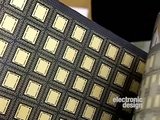
EOPLEX Multi-Layer Material Deposition Opens New Possibilities in Semiconductor Packaging

Engineering TV >> 
EoPlex QFN Multi Row (QFN-MR) Molded Array Package Substrate platform technology is a clean additive process that uses proprietary deposition techniques and materials to produce ceramic-metal or metal-polymer components, such as cell phone antennas and the micro semiconductor packages.

Hosted by: Don Tuite Videography by: EoPlex Edited by: EoPlex

IDT, The Analog and Digital Company

Engineering TV >> 
Joe Desposito talks with Ted Tewksbury, Ph.D of Integrated Device Technology about their philosophy, their current business and the future direction of the company.

Hosted by: Joe Desposito Videography by: Paul Milnamow Edited by: Terry Knight

IDT's Technology Trends

Engineering TV >> 
Paul Whytock talks with Ted Tewksbury, Ph.D of Integrated Device Technology about his companies technology trends as they look toward the future of the mobile connected world.

Hosted by: Joe Desposito Videography by: Paul Milnamow Edited by: Terry Knight

Texas Instruments: A Perfect 10 � Industry�s first 10-GHz fixed/floating point DSP: New C66x Multicore DSPs

Engineering TV >> 
TI has once again raised the power and performance bar by offering a multicore device with 10 GHz of cumulative performance in its new generation of TMS320CC66x DSPs. The C66x devices are built with multiple 1.25 GHz DSP cores and deliver combined fixed and floating point performance on a single device. Translating to 320 GMACs and 160 GFLOPs per chip, and with versions running under 10 Watts, this provides performance and power efficiency unparalleled in today�s market. With multiple device options, infrastructure system developers can now more easily design integrated, software upgradeable, power and cost-efficient platforms in markets such as mission critical, including public safety and defense, medical and high-end imaging, test and automation, high-performance computing and core networking.

Texas Instruments: Industry�s first wireless base station SoC with 4G class performance: TCI6616 SoC and KeyStone architecture

Engineering TV >> 
Operators are challenged to cost effectively keep ahead of the data deluge without compromising quality of service. 4G is needed because its packet-based nature gives operators a technological advantage in delivering data. TI addresses the challenges of 4G with its new TMS320TCI6616 System on Chip. This SoC combines unmatched DSP multicore performance with dedicated hardware coprocessors, all based on TI�s KeyStone multicore architecture specifically designed for efficient data movement. The TCI6616 is based on TI�s new TMS320C66x DSPs and delivers more than double the performance of any 3G/4G SoC in the market. The TCI6616 also boasts the industry�s first multicore DSP that processes both fixed and floating point math, an innovative capability that simplifies wireless base station software design.