
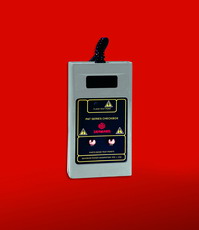
 Test instrument manufacturer Seaward Electronic Ltd. has introduced a new checkbox to verify the in-service performance of portable appliance testers.In keeping with the advice included in the latest IEE Code of Practice for In-Service Inspection and Testing of Electrical Equipment, the new Seaward PAT Checkbox is designed to check the accuracy of PAT testers and confirm that test readings remain valid during the period between formal re-calibration.
Lightweight and portable and easy to operate, the PAT Checkbox can be used to check all portable appliance testers in the Seaward range, as well as those from other manufacturers.When connected to the PAT tester being assessed, the Checkbox will automatically simulate earth bond, insulation, flash and earth leakage tests. A simple comparison of the value displayed on the PAT against the specified limits detailed on the rear of the Checkbox provides an immediate indication of the accuracy of the instrument.
 Pirana sets fresh benchmarks for performance and ease of use at a new industry-low price-point. The cost of ownership has been pared down and its stunning simplicity ensures instant access to a powerhouse of essential features - the combination guarantees rapid success in any size of company.
 Over the past 17 years, Management of Change (MOC) has received increased attention at chemical plants and refineries due to the promulgation of new OSHA regulations. Officially designated 29CFR 1910.119 Process Safety Management of Highly Hazardous Chemicals, the OSHA PSM regulations state that any time a critical component in an oil or chemical plant changes, a formal MOC program is required to ensure that the proposed change is made safely.
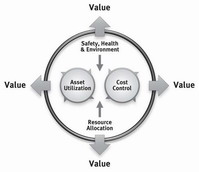 "What is actually the added value of maintenance?" is a frequently heard question in boardrooms the world over. Even though maintenance is often critically important, few maintenance managers are able to answer the question convincingly. Especially when they are asked to express the benefits in terms of economic value added or shareholder value - the language increasingly being spoken in European boardrooms .
 Fluke has introduced two new thermal imagers, the Ti25 and Ti10, designed to make thermal imaging affordable and effective for day-to-day troubleshooting and maintenance. Both models incorporate IR fusion technology, which integrates infrared and visible light images in full screen or picture-in-picture views for enhanced problem detection and analysis.
 SPM Instrument India has been awarded a contract for the first comprehensive installation of online condition monitoring equipment ever in an Indian paper mill. Emami Paper Mills Ltd in Balasore, India has selected SPM Instrument to provide equipment for continuous shock pulse and vibration severity measurements on critical parts of its latest paper machine.
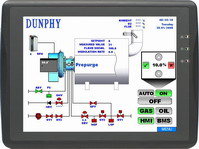 Dunphy has launched their new, in-house designed touchscreen for the Ratiotronic TM 6000 digital burner/boiler management system. The panel has all the functionality of a standard PC including IP addressable web access.
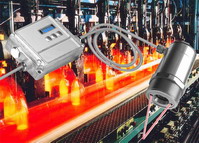 A unique, non-contact infrared temperature sensor has been launched, which is ideal for measuring the temperature of glass products and surfaces during production, as well as glass substrates used in semiconductor processing and for the manufacture of solar cell panels.