News

Easing the task of integrating AE technology into third party monitoring systems - by Trevor Holroyd

It is common knowledge that a range of Condition Monitoring (CM) techniques are available such as Vibration Analysis, Oil & Wear Debris Analysis, Thermography and Acoustic Emission. Each of these techniques has its own particular areas of strength and in this regard the Acoustic Emission (AE) technique has the noted advantage of giving real time information with early sensitivity to faults and applicability to a wide range of rotational speeds including slowly rotating (source : ISO 22096).

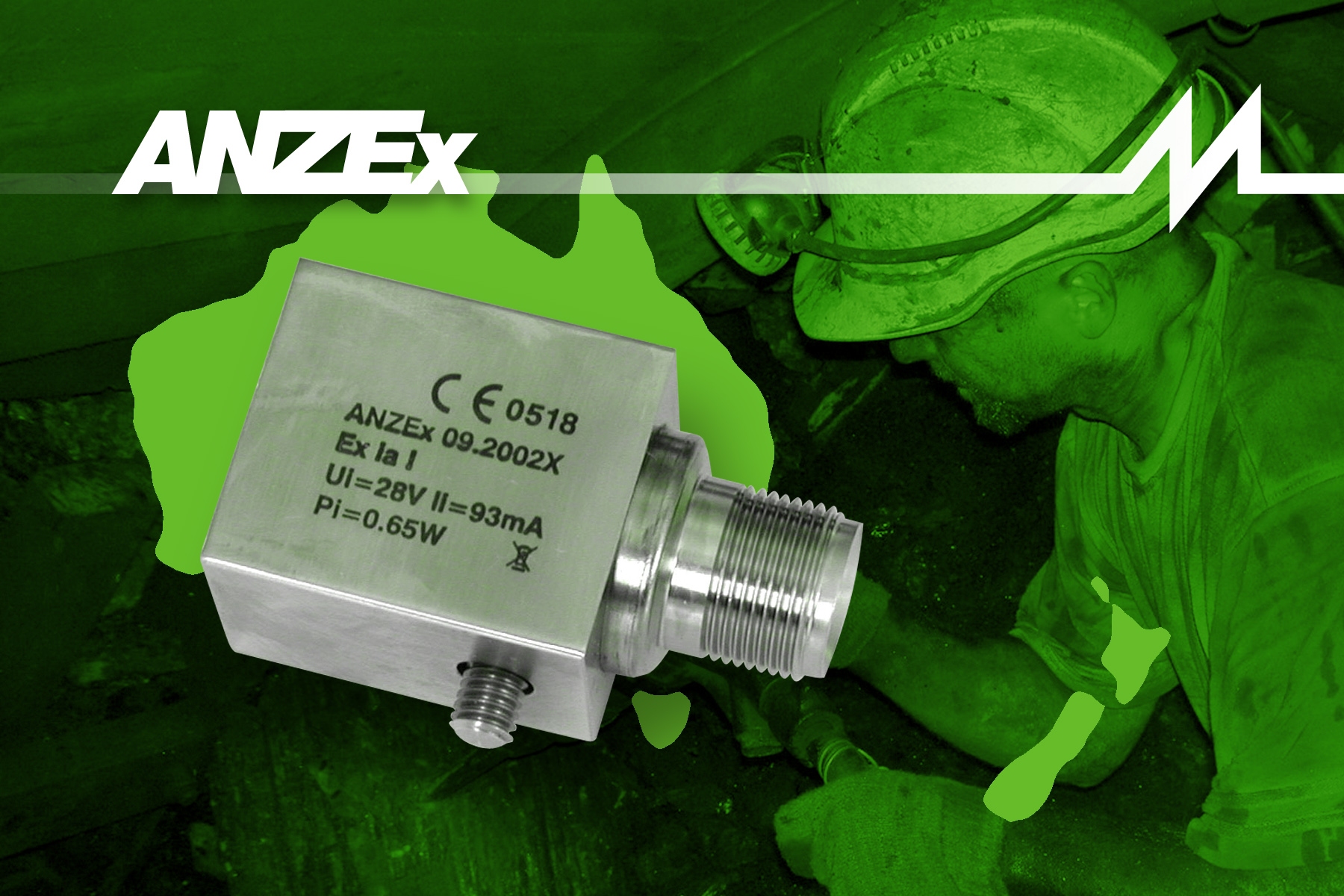
It follows that on-line monitoring systems should be capable of integrating the required mix of CM technologies for each particular spread of machine types in an installation. However the use of AE for machinery condition monitoring has historically been viewed as a separate specialist field and it has not been easy to integrate it into third party or industry standard monitoring and control systems. To address this issue Holroyd Instruments has developed a range of smart AE sensors, which have finally opened the door to the wider use of AE for continuous monitoring alongside, say, vibration, and temperature sensors.

Holroyd Instruments is a world leader in the industrial application of AE techniques to machinery condition monitoring and has pioneered autonomous signal processing algorithms which further extend these advantages by removing the need for machine specific interpretations. Whilst these algorithms have been successfully used for many years in a range of portable instruments it is only recently that they have been integrated into smart AE sensors (MHC-DS1 and MHC-SM1). These compact sensors provide simple but effective continuous monitoring of rotating machinery from motor speeds down to 0.25 rpm. They are ideal for incorporating into third party systems for data acquisition, monitoring and alarm purposes, since they have high level, slowly varying outputs of field proven signal characterisations.

In some applications however there is no infrastructure to accept trendable sensor outputs and this is typical when retro-fitting to existing installations. In these cases switched sensor outputs are preferable since they can be readily wired into spare input channels on PLC’s. Acknowledging this requirement switched alarm outputs are also built into the smart AE sensors. The alarm levels and hold-off periods, to discriminate against false triggers, are user adjustable and stored in the sensors own non-volatile memory.

The interest generated by the successful development of these smart AE sensors is fuelling further demands from the technology. For example, a growing interest with some users is in the monitoring of non-rotating and intermittent machine actions. The high signal to noise ratio of AE makes direct time domain analysis of AE signals useful in a very wide range of industrial applications. To address these applications a new development is the 24/7 Ultraspan sensor which continuously outputs a logarithmically compressed dynamic envelope of the AE signal requiring only a +24 VDC electrical supply. In this way the pertinent features of wide dynamic range and high frequency AE signals are transformed into a very easily handled form.

Another area of growing interest amongst CM specialists, which can also be addressed with the 24/7 Ultraspan sensor, is in the diagnostic analysis of rotating machinery. In this role the dynamic envelope signal is viewed in the frequency domain as a spectrum to reveal defect repetition frequencies. The high sensitivity of the AE technique combined with the benefits of envelope spectra enable the clear identification of high resolution peaks, even on very slowly rotating machinery.

As exposure to the unique capabilities of AE spreads, evermore diverse applications are being unearthed which have previously proven difficult for other CM technologies. Our experience is that the challenges posed by these applications are especially suited to being solved in a cost-effective way by highly integrated application specific (smart) AE sensors.
 
To find out more about smart AE sensors or other innovative Condition Monitoring products contact :

Holroyd Instruments Limited, Matlock, Derbyshire, UK, DE4 2AJ
Tel : +44 (0)1629 822060
Email : This email address is being protected from spambots. You need JavaScript enabled to view it.

TM :  MHC-DS1, MHC-SM1 & 24/7Ultraspan are Trademarks of Holroyd Instruments Limited

© Copyright Holroyd Instruments Limited 2009

About the author
Trevor Holroyd is the Managing Director of Holroyd Instruments Limited and has been continuously active in the development and use of AE for industrial monitoring since 1974. For more information about the contents of this article he can be contacted by email : This email address is being protected from spambots. You need JavaScript enabled to view it.

Easing the task of integrating AE technology into third party monitoring systems - by Trevor Holroyd

It is common knowledge that a range of Condition Monitoring (CM) techniques are available such as Vibration Analysis, Oil & Wear Debris Analysis, Thermography and Acoustic Emission. Each of these techniques has its own particular areas of strength and in this regard the Acoustic Emission (AE) technique has the noted advantage of giving real time information with early sensitivity to faults and applicability to a wide range of rotational speeds including slowly rotating (source : ISO 22096).

It follows that on-line monitoring systems should be capable of integrating the required mix of CM technologies for each particular spread of machine types in an installation. However the use of AE for machinery condition monitoring has historically been viewed as a separate specialist field and it has not been easy to integrate it into third party or industry standard monitoring and control systems.

New Fluke Ti25 and Ti10 Thermal Imagers put problems clearly in the picture

Fluke Europe B.V., the European sales and service organization of Fluke Corporation, the global leader in handheld electronic test and measurement technology, today announced the high-performance Fluke Ti25 and Fluke Ti10 Thermal Imagers.

Built to withstand harsh work environments, the Fluke Ti25 and Ti10 are designed as a complete, effective and easy-to-use thermal imaging solution for everyday troubleshooting and maintenance of electrical installations, electro-mechanical equipment, process equipment, HVAC/R equipment and other industrial and electrical equipment.

SDI-12 submersible level transmitter offers high accuracy and stability

A new range of submersible hydrostatic level transmitters has been launched, which can be used in depths of up to 200 metres. The transmitter offers an SDI-12 digital output and an inbuilt high accuracy temperature sensor.

The SDI-12L range of submersible level transmitters from Impress Sensors & Systems Ltd uses either a stainless steel silicon-based pressure sensor or a ceramic pressure sensor in marine-bronze. Both versions use piezoresistive technology, which provides long term stability and repeatability of measurements.

Capturing International Attention – a Conference on Facility Management

In Built to Last, authors Jim Collins and Jerry I. Porras determined that one factor in distinguishing a great company from a good one was what they called having “Big Hairy Audacious Ideas.” 

Companies that set almost inconceivable, outlandish goals tended to outperform those companies that toed the line and acted conservatively.  CWorks Systems, an 8-year-old software development company of CMMS (computerized maintenance management systems) with headquarters in Kuala Lumpur, Malaysia, is one company that believes in and is following this “big idea” road to success.

Capturing International Attention – a Conference on Facility Management

In Built to Last, authors Jim Collins and Jerry I. Porras determined that one factor in distinguishing a great company from a good one was what they called having “Big Hairy Audacious Ideas.” 

Companies that set almost inconceivable, outlandish goals tended to outperform those companies that toed the line and acted conservatively.  CWorks Systems, an 8-year-old software development company of CMMS (computerized maintenance management systems) with headquarters in Kuala Lumpur, Malaysia, is one company that believes in and is following this “big idea” road to success.

Helping business plan, review and schedule

The versatility and simplicity of TCard systems makes them the most popular type of planning systems in use today.

Interlube’s automatic lubrication systems save you both time & money!

Interlube Systems have developed a unique automatic lubrication system which is already showing huge savings in work time and running costs. The Interlube System provides continuous lubrication to all moving parts whilst the plant is still in operation .

Constant controlled lubrication means that the plant is being lubricated whilst in operation on site, this gives adequate and even lubrication all the time, something that cannot be maintained if the machine has to be "parked up" for servicing.The long term benefits includes radical reduction in worn and damaged parts caused by erratic and irregular lubrication, and plant downtime for replacement of lubrication is dispensed with.

Pipeline Corrosion Mapping at Speed – Where there’s a Wheel there’s a way!

Sonatest are proud to launch the new Corrosion Wheelprobe, which has been specifically designed for Pipeline Corrosion Mapping applications.  Continuing the proven success of Sonatest’s WheelProbe range, this new model is proving to be unrivalled in the field of corrosion mapping in terms of speed and ease of use, in addition to achieving excellent results.

Ergonomically designed, the Corrosion Wheel Probe offers smooth handling, good control and comfortable grip positions for scanning around pipes and for easy overhead work.  Circumferential and Longitudinal scanning are both completed rapidly and can be performed on pipes with diameters between 3 and 32 inches.

Pipeline Corrosion Mapping at Speed – Where there’s a Wheel there’s a way!

Sonatest are proud to launch the new Corrosion Wheelprobe, which has been specifically designed for Pipeline Corrosion Mapping applications.  Continuing the proven success of Sonatest’s WheelProbe range, this new model is proving to be unrivalled in the field of corrosion mapping in terms of speed and ease of use, in addition to achieving excellent results.

Ergonomically designed, the Corrosion Wheel Probe offers smooth handling, good control and comfortable grip positions for scanning around pipes and for easy overhead work.  Circumferential and Longitudinal scanning are both completed rapidly and can be performed on pipes with diameters between 3 and 32 inches.