
 The boiler make-up water treatment plant at the Isle of Grain Power Station is refurbished
At 30 years old, the boiler make-up water treatment plant at E.ON
The boiler make-up water treatment plant at the Isle of Grain Power Station is refurbished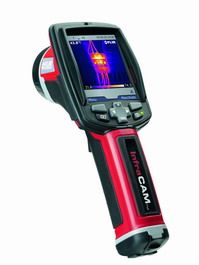 The return on investment for AMEC on its new FLIR Systems InfraCAM

The only UK Exhibition for the Maintenance and Asset Management Industry
Welcome! It is our great pleasure to invite you to our latest show addition, easyFairs MAINTEC 2008. easyFairs MAINTEC 2008 is the UK
 Founded in the UK in 1971, 4B Elevator Components, Ltd. has been an industry leader in developing high quality, innovative, and dependable material handling components for the agricultural and industrial sectors.
4B is your professional partner for the design of new bucket elevators and conveyors and upgrades of existing machines, a design service which we offer free of charge and supported by our full guarantee. We feel that our additional services are just as important as our products themselves.
A subsidiary of The Braime Group, one of the largest suppliers of material handling components in the world, 4B looks back on more than 100 years experience. With subsidiaries in Europe, America and Asia and a worldwide network of distributors, 4B can provide you with practical solutions for all applications at any location.
 With offices in Maidstone and Manchester, Alpha Electronics are one of the UK's largest independent test instrument distributors. As specialists in our field, we have available a truly comprehensive range of test equipment, along with the technical knowledge and support our customers have come to rely on over the past 15 years.
We are approved distributors for instrument manufacturers ranging from AVO to Wavetek , covering equipment from multimeters to injection test sets , and spares from instrument fuses to lead sets and crocodile clips .
With such a portfolio, our customers know they can come to us for an unbiased opinion on what test equipment is available. Our sales engineers offer technical on-site demonstrations, letting you see first hand the capability of the test instruments, and one call to our sales office removes the need to make 6 or 8 calls elsewhere.
 Dalkia provides a wide range of outsourced services that complement the core business of our clients. We deliver comprehensive Technical Facilities Services and Energy Management for a wide range of customers spanning most major sectors.
Through synergies with our group companies, Dalkia delivers multi-utility solutions including supply and management of water, electricity and gas.
In the UK we have been operating for forty years. We employ around 3,000 staff and serve more than 18,500 client sites spanning the commercial, industry, retail, healthcare and public sectors.
Sterience Ltd, a fully owned subsidiary of Dalkia, offers public and private hospitals throughout the UK a full range of decontamination solutions for re-usable surgical instruments. For more information, visit the Sterience website at www.sterience.co.uk.
Parkersell is Dalkia's market leading lighting and electrical subsidiary, providing specialist lighting services across all sectors. www.parkersell.com
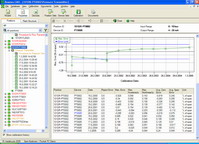 Plants can improve their efficiency and reduce costs by performing calibration history trend analysis. By doing it, a plant is able to define which instruments can be calibrated less frequently and which should be calibrated more frequently. Calibration history trend analysis is only possible with calibration software that provides this functionality.
Manufacturing plants need to be absolutely confident that their instrumentation products
 If one could get the right mix of preventive maintenance (PM) and corrective maintenance (CM), things might not be so bad. If CM could be reduced to zero, that would be grand, but that is not going to happen. Amid the propositions of RCM, TPM, RCA, the Pareto rule, best laid plans, etc., one still must contend with randomness. When our programs result in high levels of performance, the limiting factor is often randomness. Using the concept of randomness in analyzing equipment failure events is helpful in establishing the realistic limiting factors in PM and CM program development and management.
Before getting enthused about understanding the technical milieu of equipment failure modes and causes, failure intervals and maintenance task development in recovering a dysfunctional maintenance program, first look for an opportunity of a large reward for a small resource expenditure.
One large reward, for example, could be a 50% reduction in corrective maintenance resulting from a program developed and implemented in-house (small resource expenditure). That 50% number is not unrealistic.
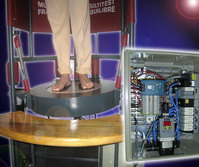 The latest Moduflex family of products from Parker Hannifin, the world
