Find ATEX, IECEx, Explosion Protection & Hazardous Area Content...

News

Cementing the benefits of specialist services from Hoist & Winch

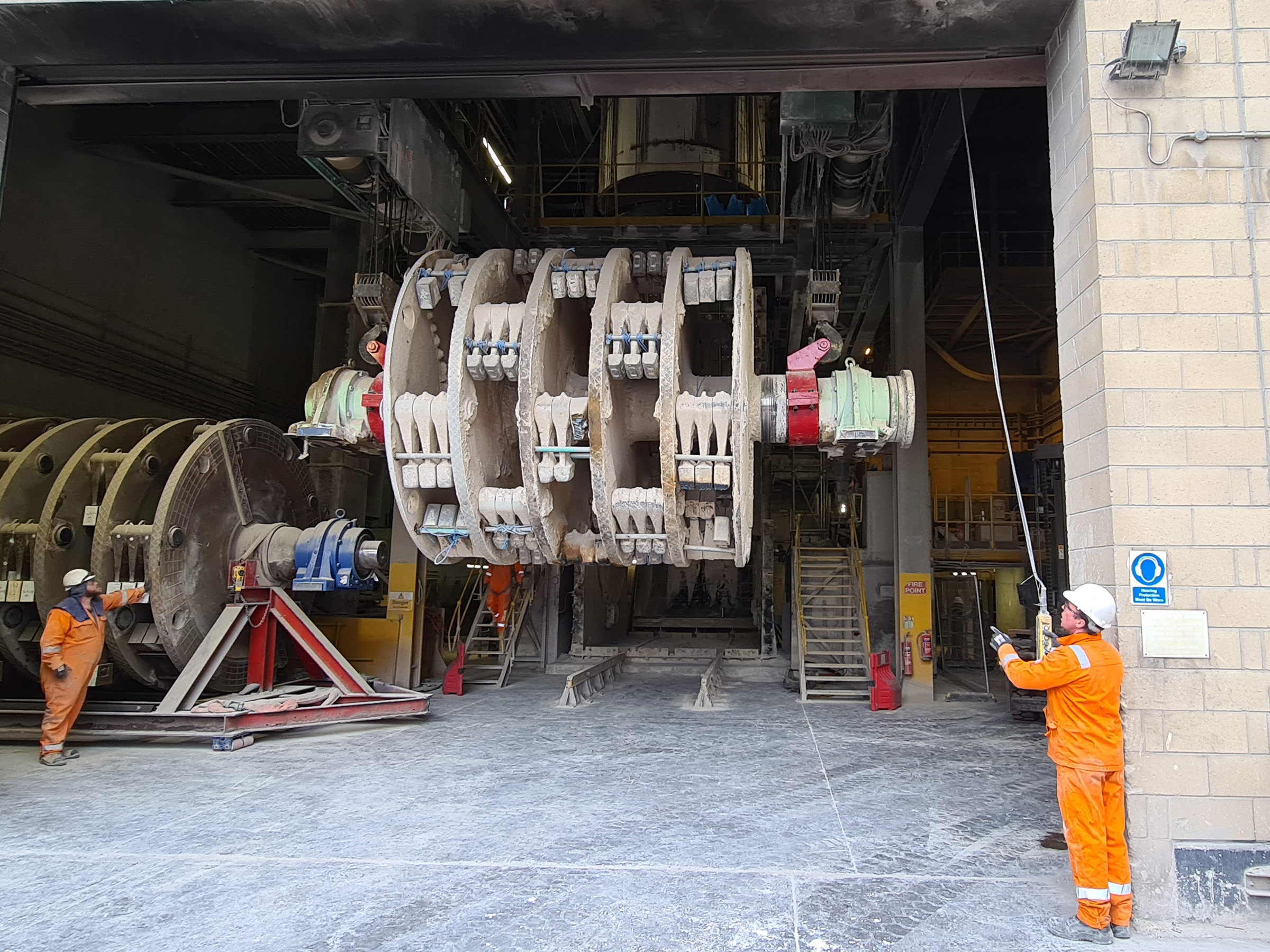
The varied and specialist services available from Hoist & Winch Ltd have come to the rescue of a cement industry customer that was looking to replace a large rotor used in its production process. Thanks to the design, manufacturing, test, certification and installation services offered by Hoist & Winch, the cement works was able to avoid the long lead times associated with buying original OEM equipment, and successfully complete a highly complex and challenging lifting operation.

In essence, the objective was to lift and replace a large rotor fitted with pivot-mounted hammers that break down the media as part of the cement manufacturing process. Located at the base of a very large production enclosure, a pair of bearing journals provides support for each end of the rotor. Hoist & Winch had to design and arrange manufacture of equipment that would help to lift the worn and replacement rotors in and out of position in a precise manner without damaging any adjacent equipment, including the main drive motor and gearbox.

The cement works last performed this particular maintenance lift to replace a worn rotor in 2010 using a pair of lifting lugs that had since been disposed of. New replacement lugs were only available from the original supplier of the cement production process equipment on a very long lead time, which did not meet the requirements of the customer’s programme.

With a total design weight of 80T, rotor lifting was courtesy of a pair of tandem-controlled 41T SWL (safe working load) wire rope hoists located on monorail beams arranged at 90° to the rotor bearing journal stub shafts.

                                                                                                                                                            Continued ……

Kicking off the scope of work and working closely with a long standing trusted Sub Contractor, Hoist & Winch set about designing two 41T SWL rotor lifting lugs. As the basis for this task, the company used the customer’s drawing of the 600mm diameter rotor stub shaft profile and site photographs of the original lifting lugs. Other assignments here included accurate surveys of the existing hoist runway beam centres and the hoist unit hook profile. Hoist & Winch then produced general assembly drawings for a final dimensional check on site and customer approval of the design concept.

As well as manufacturing the rotor lifting lugs, the Hoist & Winch scope included design and manufacture of a special mandrel that would allow proof load testing of the lifting lugs prior to delivery to site. Each 41T SWL rotor lifting lug had to undergo a test rig mounted, 200% static proof load test. Hoist & Winch also performed non-destructive testing (NDT) involving visual, X-ray and magnetic particle inspection (MPI) procedures, while dynamic load testing of the rotor lifting lugs took place at the customer’s site using the new replacement rotor as the test load in advance of the lifting operation.

After passing all testing requirements, Hoist & Winch issued a LOLER (Lifting Operations and Lifting Equipment Regulations) Thorough Examination Report and Proof Load Test Certificate for the new rotor lifting lugs, along with 3.1b Material Certification for all materials used.

To see the project to its conclusion, Hoist & Winch witnessed the customer’s use of the rotor lugs during a planned plant shutdown for the lifting operation to take place. In so doing, the company also provided standby breakdown cover for the pair of tandem-controlled 41T SWL wire rope hoists.

“This project demonstrates how our diverse and comprehensive portfolio of services can come to the aid of almost any lifting requirement,” says Andy Allen, Director of Hoist & Winch Ltd. “Our professional team has decades of experience in lifting equipment services, for all applications. If your plant has any kind of lifting demand that would benefit from the input of industry experts, our team can help, beginning with a no-obligation discussion about the task in hand.”

                                                                                                                                                            Continued ……

Visit www.hoistandwinch.co.uk for further information and to view recent case studies.

C’est magnifique as Amazon Filters reveals top performing distributor

French industrial filter specialist Sofise has won the Amazon Filters’ Distributor of the Year Award for 2021/22.

The 18-year-old company, headquartered in the Vénissieux commune of Lyon, achieved the honour for successful sales growth across the long-standing partnership’s key sectors, including chemicals and coatings, and pharmaceuticals.

Serving more than 1,000 business customers throughout France, Sofise gained wholehearted praise at the award presentation in Vénissieux.       

Francis di Trapani, Amazon Filters’ Country Manager for France, said: “We have partnered with Sofise for 15 years and established a strong relationship based on meeting customer needs swiftly and reliably. 

“It has been a great pleasure to see Sofise performing so well over the past 12 months and we look forward to continued success in achieving new joint targets.”

With Francis at the presentation were members of the Sofise team including Managing Director Christophe Lextrait, Operations Manager Eric Dufour and Sales Manager Pascal Pierre.

Christophe said: “We are thrilled to receive this award from our partners Amazon Filters. Together we have established a market-leading body of knowledge and expertise in serving industrial filtration markets in France and Belgium.”

Simon Hughes, Amazon Filters Business Development Director, said: “Sofise work with great professionalism, integrity and adaptability focused on customer satisfaction.

“They are a great partner for us as a UK manufacturing company who seek to develop and grow internationally.

“They fit hand in glove with our ongoing investment programme focused on quick and able manufacturing capacity at our production centre in Surrey.”

The letters in the name Sofise reflect the company’s activities in providing solutions and filtration services. ‘So’ represents ‘solutions’, ‘fi’ refers to ‘filtration’ and ‘se’ is from ‘services’.

For more information, visit www.amazonfilters.com

WELTEC BIOPOWER builds its first biogas plant in Taiwan

Taiwan's government aims for a climate-neutral economy by 2050

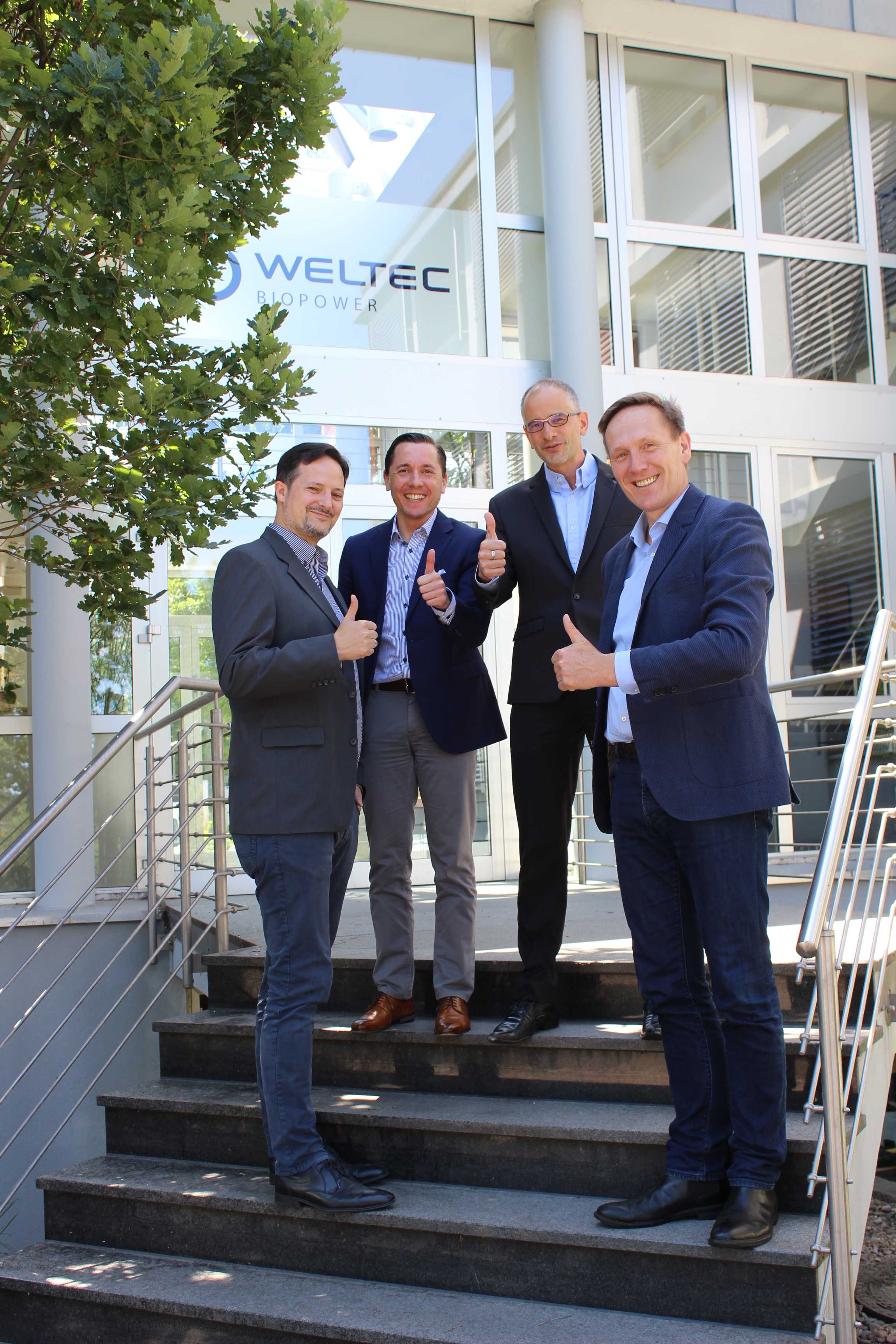
Together with its Asian partner Melchers Taiwan, the manufacturer WELTEC BIOPOWER is building a biogas plant in the southwest of the island state. For the 360-kilowatt plant, the German biogas specialist is supplying a proven turnkey solution based on high-quality stainless steel technologies. For the project, WELTEC is responsible for the engineering, the execution and the complete service including biological analyses. Taiwan is already the 26th country in which WELTEC BIOPOWER is building a biogas plant.

Construction at the operator's headquarters in Tainan City, on the southwest coast of Taiwan, is scheduled to begin in 2023; commissioning is planned for 2024. "Because this is our first biogas plant in the country, we are particularly pleased to be able to contribute our proven technology to this project," says Vladimir Bogatov, the Area Sales Manager responsible for the Asia-Pacific region at WELTEC BIOPOWER.

In addition to the electricity fed into the grid, part of it will be used for the plant's own use. The heat from the biogas plant is also used to heat the operator's production facilities directly at the plant and via a local heating network: among other things, it is used to supply a pigsty that is equipped by WELTEC's parent company WEDA Dammann & Westerkamp. The circular economy concept envisages using the pig manure produced as the main substrate for the operation of the biogas plant.

The stainless steel fermenters take into account the special requirements of the island state: due to its tectonic position, Taiwan experiences strong earthquakes with far-reaching consequences with above-average frequency. The special stainless steel construction and high stability of the biogas plant is adapted to the high earthquake probability and the local wind load specifications. Another advantage is that only a small amount of work is required for the on-site construction, as the project is intensively accompanied by the WELTEC team from the headquarters in Vechta.

"We are extremly happy with our partnership with WELTEC BIOPOWER, one of the world's leading companies in the field of biogas plant construction. The plant quality, the high technical standard, the expertise in project implementation, especially in Asia and the after-sales support in plant efficiency immediately convinced us and our customers of the cooperation," explains the Managing Director of Melchers Taiwan, Tudor Pascu. „And the fact that WELTEC BIOPOWER has already realised several projects in Japan, South Korea and China may prove to be a strategic advantage for further biogas projects in Taiwan in the future," Vladimir Bogatov looks ahead.

Such framework conditions should also contribute significantly to Taiwan becoming a climate-neutral economy by 2050 as planned. At the end of March 2022, this goal was published by the government in Taipei as part of a new roadmap. The roadmap envisages billions of dollars in state investment for this project. It is expected that especially already experienced market players such as Melchers Taiwan and WELTEC BIOPOWER will play an important role in this process and are eager to cooperate with the authorities to support the implementation path.

_IP67 / IP69K - Applicable up to 140°C: RHEINTACHO FQ series

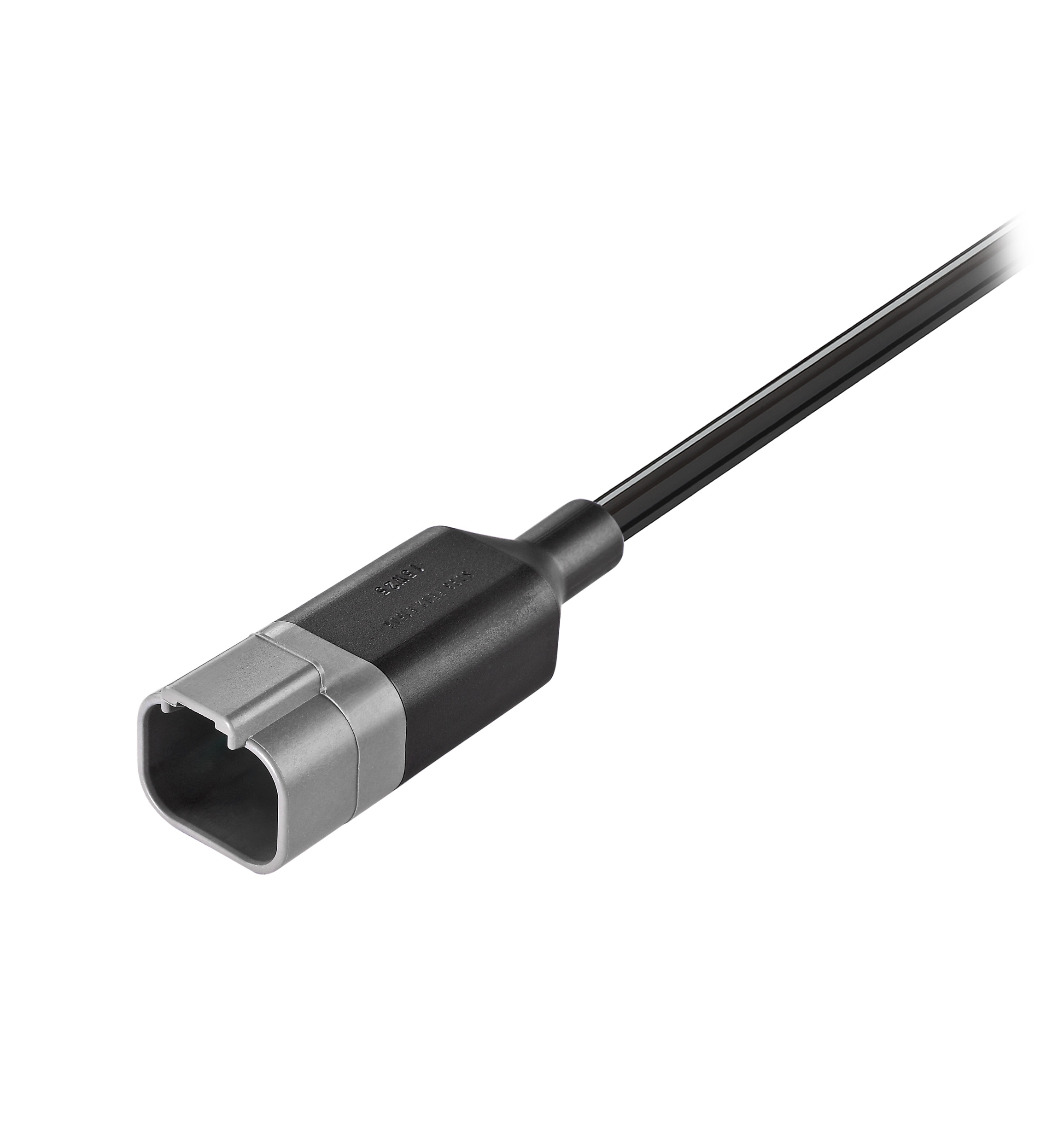
IP67 / IP69K - Applicable up to 140°C: RHEINTACHO FQ series The speed sensor for demanding cases Three new variants with DEUTSCH DT04 connector and M12 connector complement the already well-established sensor series for the detection of speed and direction of rotation. The overmoulding on the back of both connector variants achieves a very good seal. Perfect for use in critical ambient conditions. The FQ series thus achieves protection classes IP67/IP69K up to the plug connection.

 Due to different sensor lengths, cable outlet directions and the variety of available connectors, the series offers the user a high degree of flexibility. Adaptation to very individual requirements is thus possible. And if none of the available models fits, RHEINTACHO with its recognised expertise in customised development will be happy to provide an individual solution.

 The electronic design of the FQ series is available in two versions, independent of the mechanical versions: Frequency range from 0.1 Hz - 20kHz and 0Hz- 40kHz. A variant with additional temperature detection is in preparation.

The high temperature resistance combined with the high protection class make the FQ series the ideal sensor for innovative, electric drive solutions. Sales and Marketing Manager Wolfgang Sexauer is certain: "We are following the development of electric and hybrid drive concepts for construction and agricultural machinery with great interest.

 With the FQ series, we provide the perfectly matching speed sensor. At bauma Munich, bauma China and CONEXPO-IFPE we are looking forward to interesting discussions on this topic". You will find RHEINTACHO at the following trade fairs: bauma Munich - Hall A3/ Stand 313 bauma China - German Pavilion CONEXPO IFPE - South Hall / Stand S-80040

www.rheintacho.de


Water jetting standards get WJA Audited Member boost

The Water Jetting Association has introduced an Audited Member programme giving its members a powerful new opportunity to promote the  standards they set to customers.

The initiative gives users of water jetting services greater assurance that contractors displaying the Audited Member logo meet the WJA’s high standards.

It has been made possible by the introduction of an audit procedure that requires new and renewing members to provide more information and evidence to show services are aligned with WJA codes of practice.

David Malin, Chairman of the WJA Technical Committee, whose members have been overseeing the development of the auding procedure, said: “We’re excited by the opportunities presented by our Audited Member programme.

“It’s going to help the WJA safeguard trusted water jetting standards and, thanks to the quality of the data we’re gathering, will play a key role in helping us to raise them over time.

“Equally important, also, is the opportunity it provides members to promote their services, and make the most of the advantages of being members of the WJA.”

Companies and organisations that use water jetting services, along with regulatory bodies, look to the WJA to set and uphold vitally-important safety and technical standards, said David Malin.

He added: “At the same time, our members join the WJA because they share our values and know customers will be assured by their association with us. The Audited Member programme will help us achieve both outcomes.”

The WJA has now added a range of new questions to its application forms for new members and for companies renewing their membership.

These are designed to extend the amount of information the WJA gathers about the safety and technical standards and processes companies work to, including equipment management and training.

The auditing process is closely aligned to standards detailed in the WJA’s codes of practice – the Blue Code for high and ultra-high water jetting, the Red Code, for use of water jetting in sewers and drains, and the new Purple Code, for pressure washing.

It also requires members and renewing members to abide by the principles laid down in the WJA Charter of Professional Conduct, covering issues that include professional behaviour, competence, incident investigation, and equality.

High and ultra-high pressure water jetting contractors – under the C1 and C1P (Provisional) categories – have been the first to undergo the auditing process. Auditing for members and prospective members in C2 to C6 categories will be rolled out over time.

All members who pass the auditing process will be allowed to display an ‘Audited Member’ logo on their websites, and promote the enhanced status they have achieved to customers and prospective customers.

Development of the auditing system has been led by Jeff Haigh, a WJA Ruling Council member and a qualified auditor.

Under the auditing system, all the new information provided in application forms is being carefully examined. Gaps or inconsistencies are resolved with applicants. Only then can the applications move to the next stage in the approval process.

The WJA also retains the option of carrying out visits to work sites or to company offices as part of the auditing process.

The WJA is grateful for the patience and cooperation of members during the introduction of such a fundamental new programme, said Jeff Haigh. Learning would be fed into later phases of its roll-out.

He added: “This is designed to be a positive process. The WJA wants to support applicants at every stage, sharing information and expertise that will help them with their applications, and to meet the standards we all want to achieve.”

www.waterjetting.org.uk

How to easily manage thousands of asset inspections

A very large chemicals processer increased the efficiency of asset safety inspections with inspection templates and automated reporting using reliable Unitags and SafeTrak software.

brady_july_26.jpg

A large chemical processing plant was keeping track of asset inspections on paper. With thousands of ladders, handrails and floor gratings on the list of assets that need regular safety inspection, the paper trail became exceedingly complex and time intensive to manage.

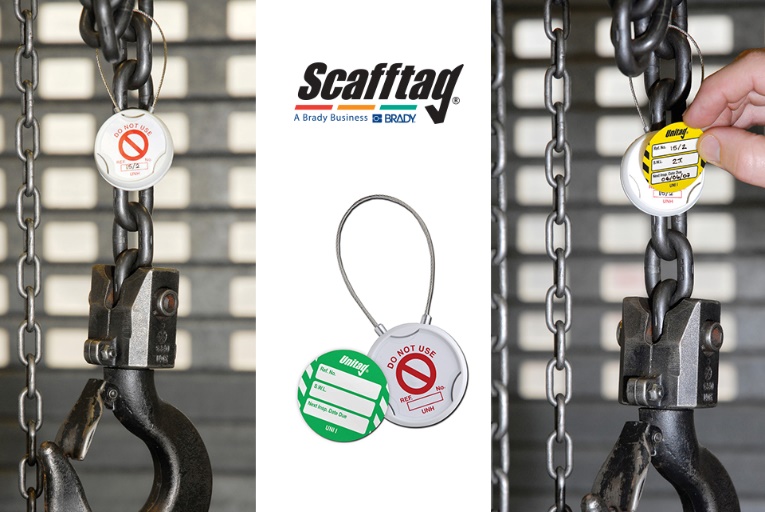
The plant was already using Unitag to communicate which assets were inspected, and deemed safe, or out of use. To keep employees safe and the facility compliant in an efficient way, a solution was needed to replace time-consuming handwritten inspection reports.

Solution: A digital asset inspection trail with SafeTrak

Scafftag proposed the SafeTrak software to replace the entire inspection paper trail with an online tool. All assets that need inspection can be set up in SafeTrak to make inspection planning and follow-up a lot more practical. Asset inspections can be planned at regular intervals, and to each type of asset a standard or custom inspection template can be linked.

In-house inspectors receive a notification on their ATEX-compliant handheld from SafeTrak and can start an asset inspection by scanning the asset’s RFID-enabled Multi-Tag from Scafftag. A pre-defined inspection template guides the inspectors in the field, and a report is shared automatically with stakeholders on inspection completion.

Assets are identified in the field with the RFID-enabled Unitag that can resist intensive cleaning processes. The tag’s RFID-chip can be programmed to link the actual field asset to its corresponding inspection history and asset details in SafeTrak.

To answer specific customer needs, Scafftag customised the flexible SafeTrak software in just 3 months. This enabled our customer to quickly and easily implement the solution in its existing inspection processes.

Results: Fast asset inspection and automated reporting

The chemicals processing plant can now inspect assets faster in a more accurate and easier way. More assets are inspected in a shorter time-span. Digital inspection reports are automatically generated and shared, and the time-consuming asset inspection paper trail is no longer needed.

Discover a wide range of tools and equipment in the free guide >>

Scafftag – A Brady Business

www.scafftag.co.uk

Links:

https://www.scafftag.co.uk/safetrak-inspection-software.html?sfdc=7014V000002lfOA&utm_campaign=SFID-Scafftag&utm_source=msl&utm_medium=web-advertorial&utm_content=case-asset-inspections-unitag-safetrak

https://www.scafftag.co.uk/form-optimise-equipment-safety?sfdc=7014V000002lfOA&utm_campaign=SFID-Scafftag&utm_source=msl&utm_medium=web-advertorial&utm_content=case-asset-inspections-unitag-safetrak

New Electric and Diesel-powered Hydraulic Power Packs for Portable Machine Tools

Enerpac announces the new PP-Series electric and diesel-powered power packs to supply hydraulic flow to Enerpac portable machine tools, including flange facing machines, clamshell cutters, hot tapping machines and decommissioning tools. The hydraulic power packs are also compatible with other brands of portable machine tools.

The Enerpac PP-Series includes a total of four hydraulic power packs comprising two electric and two diesel powered models. Variable pumps within the power packs allow pressure and flow to be adjusted for specific applications.

Electric PP-Series Power Pack


Portable machine tool operators with access to an electric power supply can choose between the electric powered hydraulic power pack 11 or 15 kW models - each available with a choice of voltage options for use throughout the world.

Machine Specific Control Pendants

Many manufacturers of hydraulic power packs provide a simple general-purpose control pendant as standard with each unit. Although this is adequate for simple machining tools, it is of little use to control other machine types such as gantry mills, or 3-axis milling machines.

To meet these different applications, customers buying an Enerpac Electric PP-Series Power Pack can get exactly what they need. The range of pendant options offered provides a perfect match to suit the specific machine tool. In addition, for operator safety emergency stop buttons are provided on the power pack and the control pendant.

Diesel PP-Series Power Packs

For working in remote locations, customers have a choice of 19 and 44 kW units. These more powerful power packs are the optimum choice for larger machine tools used for operations such as hot tapping and decommissioning.

Both the Enerpac Diesel PP-Series PP19 and PP44 units are diesel powered and meet the EU Stage V and EPA tier 4 final regulations for emissions. Each includes a 50-liter diesel tank, which, in the case of the PP44, can provide up to 12 hours run time at maximum torque. Also included in the diesel power packs is a spark arrester for added safety in explosive environments.

Unlike the electric units which work with pendants to provide control, the PP19 and PP44 power packs require a separate hydraulic control panel and machine specific hose kits. The hydraulic control is connected to both the machine tool and the hydraulic power pack. The control panel houses all the controls needed for a specific machine’s requirement.  In addition, the Diesel PP-Series power pack features a pressure-less switch to remove pressure and flow.

Choice of Hose Kits

A 10-meter hose kit is supplied as standard and longer hose kits are available as accessories for single-supply, dual-supply and triple-supply applications. Triple supply hose kits allow three hydraulic motors to be connected to the power pack simultaneously, along with spindle control the operator can also select the required axis (x or y) from the pendant.

Machine operators choosing an Enerpac Electric PP-Series Power Pack can also benefit from an optional cart to enable easy positioning and storage within a workshop environment.

Site Ready

For ease of handling and deployment, the Enerpac PP-Series electric and diesel-powered power packs are enclosed within a protective frame and Forklift truck and vertical lift points

For more information on the Enerpac PP-Series electric and diesel-powered power packs, visit www.enerpac.com.

Proposed Amendment to UKCA Ex Rules for ATEX There is a ‘proposed’ amendment being circulated that has not yet been voted on by the UK Government (so we cannot say it will happen or not). If the vote passes in late Autumn, the UKCA legislation will be c

There is a ‘proposed’ amendment being circulated that has not yet been voted on by the UK Government (so we cannot say it will happen or not). If the vote passes in late Autumn, the UKCA legislation will be changed once again to allow ‘EU Notified body’ ATEX Certificates (aligning with UK Designated Standards) to be used in lieu of Approved Body certificate in a ‘self-declaration’ for 5 years, or until a variation is required. This also applies to the ATEX QAN (when it expires you will need a UKCA QAN).

You will need the UKCA Declaration of Conformity to UK Designated Standards and the UKCA Marking on your product (but if the proposed is passed a ‘sticker’ may be used for temporary UKCA Ex Marking)

All new products requiring certification must have a UKCA Appointed Body Certificate in 2023 (so only Certificates with an issue date up to December 31st, 2022, would be accepted and only until they have a variation or for 5 years, whichever is sooner)

There are obviously major concerns with having two different sets of requirements at the same time with no apparent mechanisms for monitoring or controlling conformity, particularly in the field of explosion prevention. The UKCA Ex Group have raised the problems with the relevant parties. An official post on this will be made on the UKCA EX Approved Bodies Group (UKEX-ABG) www.ukex-abg.org.uk

EX_PIC.png

Free Downloads

You can download graphic and CAD files for the UKCA Mark, the CE Mark and the Hexigon Ex Mark at 

https://www.exveritas.com/downloads/


ION Science appoints four directors for strategic evolution and developing success

ION Science, a leading manufacturer of gas detection equipment and OEM PID (photoionisation detection) gas sensors, have appointed four directors to headline its new board and deliver ION Science’s ambitious plans for further growth. The board will be instrumental in forging and delivering a long-term strategic growth plan and to deliver repeated profitable results.


Duncan Johns has led the company for more than 23 years, but ION Science’s high business performance meant additional capacity was required to ensure the appropriate support was available to deliver pioneering plans for further growth. As such, it was imperative to get the right people on the board to lead the ongoing development and change.

Steve Newcomb joined early last year as an experienced operations director. As a professional engineering business leader, Steve has more than 30 years’ experience within technical manufacturing and engineering sectors, both within multinational corporate and private SME businesses. Steve’s experience is invaluable in operations, supply chain, engineering, and manufacturing. However, Steve has also demonstrated his experience as a senior board member and has been promoted to Deputy Managing Director, supporting all aspects of the business when Duncan is involved elsewhere.

Jason Evans, who joined late last year as Commercial Director, brings a strong background in high performance technologies from both privately owned SMEs and publicly listed global businesses. His previous work has covered markets that include MedTech, consumer electronics, digital imaging, and a variety of high energy RF industries. His solid understanding of global markets will help provide further focus on delivering growth and driving shareholder value.

Garfay Liu has been with the company for three years. Whilst heading up the R&D function for the last three years, he has now been promoted to R&D Director.  Garfay has more than 15 years’ experience in managing technology product developments for commercial, medical, and industrial applications. His leadership style has helped grow high performing technical teams applied to product development, and he will be instrumental in technology research, applications, and new product development.

Nicki Howard joined the company last year as head of Finance and was promoted to Finance Director in April this year. Nicki brings 17 years of finance experience, knowledge of effective financial controls and processes, and a desire to work inclusively across the business. Nicki trained professionally in PwC’s audit practice, where she worked on a variety of SMEs and large listed clients in various industries. More recently, she worked as a Group Financial Controller at a large, global manufacturing company, which provided transferable experience and skills applicable to ION Science.

Managing Director Duncan Johns commented on the appointments: “We have made good progress on developing our product roadmap, and this has led to considerable additional recruitment and changes to the structure of teams, which has itself created further roles. It is exciting bringing in great new talent, as well as internally promoting others, to create this strong strategic board to support ION Science through the next stage of its journey".

The new strategic board appointments are a fitting development for ION Science. In addition to the new hires, a new research and development building was commissioned late in 2021 and is due for completion in early 2023. The building will support dedicated research and development activity, further strengthening ION Science’s position as an OEM leader for PID technology and gas detection.

To find out more about ION Science, please visit:

Explosion safety What explosion safety measures are available and how can spray dryers be protected while keeping costs to a minimum?

Explosion safety concerns almost everyone. The following article explains the available protective systems as well as a cost-effective way to protect spray dryers.

Explosion safety measures

The obvious steps include organisational measures such as regular maintenance of the plant components, comprehensive, thorough cleaning of all parts as well as the production facilities themselves, and training of the responsible personnel. Nevertheless, there is plenty of potential for improvement in many areas.

Explosion prevention concepts are designed to prevent a build-up of explosive dust or gas/air mixtures and/or ignition sources. The goal here is to reduce the probability of explosions occurring. Various options are available: dedusting and cleaning, inerting, earthing, vibration monitoring, camera systems for nozzle monitoring and the use of CO detection systems.

But even if all these precautions have been taken, reliable or complete explosion safety is often not guaranteed.

Explosion protection, by contrast, involves reducing the effects of an (inevitable) explosion and is the central, most frequently applied explosion safety concept.

Certified protective systems are used to safeguard employees, affected plant components and the entire environment. All available options for explosion protection are briefly described below.


Conventional venting via explosion vents

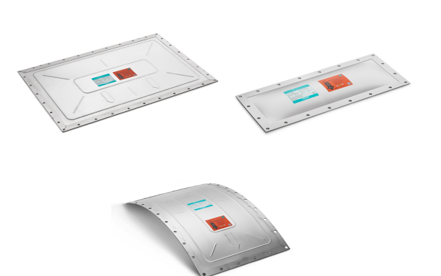
Explosion vents are often used in systems located outside buildings or for plant components mounted on an exterior wall. For example, dryers, silos, filters and elevators located outdoors are protected in this way. In the event of an explosion, the explosion vent protects the corresponding system by opening, thus dissipating the overpressure in the vessel and releasing the explosion outside to a safe area. Since virtually no two industrial processes are the same, various types of explosion vents are available, which differ in terms of their shape, material, temperature and pressure/vacuum resistance. Nowadays, even processes that are subject to strict hygiene requirements can be protected using explosion vents. For example, the EGV HYP hygienic explosion vent instantaneously protects critical systems such as spray dryers with or without wet cleaning, fluid bed dryers, filters and mixers, thus providing a cost-effective protection solution that ensures compliance with the requirements of hygienic design.
Screenshot_2022-07-22_113910.png


Fig. 1: Explosion vents differ in shape and structure depending on the application.


Flameless explosion venting for plants inside buildings

For plants located inside buildings, explosion vents are not suitable due to the lack of a sufficiently large safety area into which the escaping dust and flames can be directed. Since this represents an enormous safety risk for personnel and plant components alike, this problem is often solved by means of vent ducts, also called relief ducts. However, the latter often preclude a process-optimised plant design and are usually very expensive, since the pressure that the duct and the system must withstand increases in proportion to the distance from the explosion source. This cost increase is due to the fact that the vessels to be protected require increased compressive strength.

Flameless venting is an economical and effective solution. Different manufacturers use various technologies to ensure flameless venting.

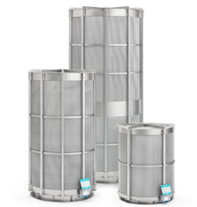
REMBE, the inventor of flameless venting, offers three different products: Q-Rohr, Q-Box and Q-Ball. The special stainless steel mesh filter inlet used in the products cools down flames efficiently so that no flames or pressure escape. The typical pressure increases and noise during an indoor explosion are reduced to a barely perceptible minimum, ensuring the protection of both man and machine. In addition to the special stainless steel mesh filter, Q-Ball, Q-Rohr and Q-Box consist of an explosion vent with integrated signalling, which informs the process control system about the burst of the explosion vent.
Picture2.png

Fig. 2: Flameless venting Q-Rohr

Explosion isolation

In every production facility, individual plant components are interconnected by means of pipelines. The purpose of explosion isolation systems is to seal these pipelines in the event of an explosion to prevent the propagation of pressure and flames, thereby protecting the adjacent plant components. A distinction is made here between active and passive isolation systems.

Active systems use sensors or detectors to detect an explosion as it occurs. They register the rising pressure or flames as they form and activate the associated isolation device, e.g. a quench valve. Due to their structural design, passive isolation systems, which are ideal for dust applications, react purely mechanically to a build-up or loss of pressure. Explosion isolation flap valves are a popular example of such a solution. They are kept open during normal operation by means of the currents present in the pipeline. In the event of an explosion, the valve closes due to the expanding pressure front, effectively preventing the propagation of pressure and flames.


Explosion suppression

In addition to the methods already mentioned, explosion suppression is another aspect of explosion protection. In this case, the idea is to eliminate the explosion before it can fully form. This is made possible by detectors that use sensors to detect pressure or flames and immediately trigger the extinguishing agent canisters that are also installed in the system. The latter disperse a highly effective extinguishing agent within milliseconds and thus nip the explosion in the bud. If required, an explosion suppression system can also be used for explosion isolation.

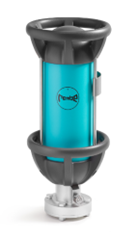
The Q-Bic extinguishing barrier from REMBE was developed in strict compliance with the hygiene requirements for spray-drying plants. Thanks to the convex dirt protection cap, neither water nor dust deposits can accumulate on the Q-Bic. The blue-green QXP extinguishing powder prevents cross-contamination and the patented SJX nozzle ensures optimum application of the extinguishing powder. The Q-Bic is particularly suitable for large pipes attached to dryers and filters or complex shaft geometries such as conveyors and elevators.
Picture3.png

Fig. 3: REMBE extinguishing barrier Q-Bic


Protection of spray dryers and cyclones – a case study

The task is to protect a spray dryer and a connected cyclone; the product is discharged via the cyclone.

The technical data at a glance:

  • Drying temperature: 90˚C
  • Dust specifications:
    • organic dust St1
    • KSt value: 150 bar*m/s
    • Pmax: 8 bar
    • lower explosion limit: 255g/m3
    • strength of all system elements: tested Pdesign of min. 0.3 bar

A safety concept is required that incorporates as few explosion safety products as possible. This is a common requirement; however, it can only be met by considering the plant as a whole and taking all technical specifications, as well as the latest research findings, into account.

In the present case, explosion isolation of the spray dryer from the cyclone is not necessary. At first glance, this contradicts the statement made earlier that isolation is absolutely necessary to prevent an explosion from propagating. However, scientific evidence shows that decoupling can be dispensed with if a Pred of max. 0.3 bar is determined for the entire plant, since any hazardous pre-compression in the neighbouring equipment can then be ruled out.

Protection for the spray dryer

VDI guideline 2263, or more precisely Sheet 7.1, states that under the following circumstances a reduced volume can be assumed when calculating the necessary vent areas / protective systems:

1.         No integrated fluid bed

2.         No recirculation of fine dust into the head of the spray dryer

3.         The average dust concentration inside the spray dryer is lower than the lower explosion limit of the dust.

If these three conditions are met, as in the present case, either a reduced volume of 1/3 of the total volume or the volume of the cone can be assumed. The larger volume must be selected in each case.

For the spray dryer in question, 1/3 of the total volume, i.e. 19.85 m3, was selected.

Observance of VDI guideline 2263, Sheet 7.1. allows an additional reduction in addition to the volume, resulting in smaller required vent areas. If it can be assumed that, due to the process, the optimum dust concentration for an explosion will never be present, the protective systems can be designed with a reduced KSt value. Due to the nature of the process – the product is to be dried after all – it has been scientifically proven that a maximum concentration of 250 g/m³ cannot occur in the spray drying system.

The inclusion of the latest research results and current guidelines in the design thus leads to a reduction in the volume to be considered and the KSt value. This in turn allows the creation of a safety concept that is not only safe but also cost-effective. By comparison, without taking these reductions into account, the vent areas for the spray dryer to be protected would have been up to 340% larger. From the operator's point of view, this is over-engineering, because larger relief areas always mean greater effort to modify the respective plant components and, last but not least, higher acquisition costs.

The following table shows how the protection system for the spray dryer under consideration might look with and without the described design requirements:

Protective systems in use

Conventional design

Design according to the latest research findings

Explosion vents, free venting to outside areas*

4 x EGV HYP hygienic explosion vents (586x920mm) (with EHEDG approval)

1 x EGV HYP hygienic explosion vent (586x920mm) (with EHEDG approval)

Flameless explosion venting

5 x Q-Box 586x920 with EGV HYP hygienic explosion vent

2 x Q-Box 586x920 with EGV HYP hygienic explosion vent

Combination of vent ducts and explosion vents

5 x EGV HYP hygienic explosion vents (586x920mm) (with EHEDG approval)

+ duct cover

1 x EGV HYP hygienic explosion vent (586x920mm) (with EHEDG approval)

+ duct cover

Suppression

3 x extinguishing agent bottles (45 l)

2 x extinguishing agent bottles (45 l)

* Rather unusual in the industry, as the plants are typically located inside buildings and "free" explosion venting is therefore not possible.

For round vessels such as spray dryers, selected flameless explosion venting systems, e.g. the Q-Box, can be installed by means of an adapter flange. Since the entire plant is located inside a building and the operator wanted an explosion protection system with the lowest possible maintenance requirements, flameless venting was chosen in this example.


Protection for the cyclone

For the associated cyclone, the original safety characteristics of the dust in question must be taken into account. Cyclones are usually vented via the vortex finder, which must be included in the design as a vent duct. Therefore, it is also crucial to know the exact dimensions of this plant component. In this particular case, the cyclone is protected by a DN 800 Q-Rohr equipped with an ERO hygienic explosion vent. By ensuring that the smooth surface of the explosion vent faces the processing area, all hygiene requirements from production are met.

The product discharge area below the cyclone is equipped with an explosion-proof and flame-proof rotary valve.


Risk of tampering with safety systems

Even the highest quality protective systems can only do their job if they are installed correctly and protected against tampering. The risk of tampering is an important issue, and also one that is sometimes ignored.

Recently, REMBE engineers have found indications of such deficiencies increasingly frequent during plant inspections:

For example, safety devices are disabled, electronic signalling and warning devices are bridged, mechanical elements are secured with too few fasteners and bolts. The reasons for this are complex and certainly not easy to understand.

The protective systems from renowned manufacturers such as REMBE are therefore designed from the ground up to ensure a high degree of in-built safety that is immune to tampering. For example, screw connections are replaced by non-detachable riveted connections; bolts are designed to be self-locking and captive.

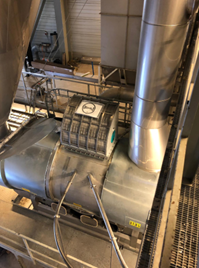
This is particular essential for more complex components such as devices for flameless venting. These systems are typically installed indoors, but always in locations where free venting, e.g. via explosion vents, is not possible. However, if the part responsible for flameless venting fails or has any weak points, this could have devastating consequences for the surrounding area, which would be left defenceless against the flames and pressure of an explosion.
Picture4.png

Fig. 4: REMBE Flameless venting on a fluidbed

www.rembe.de