
News
A Major Technological Shift in Flameproof Glanding.
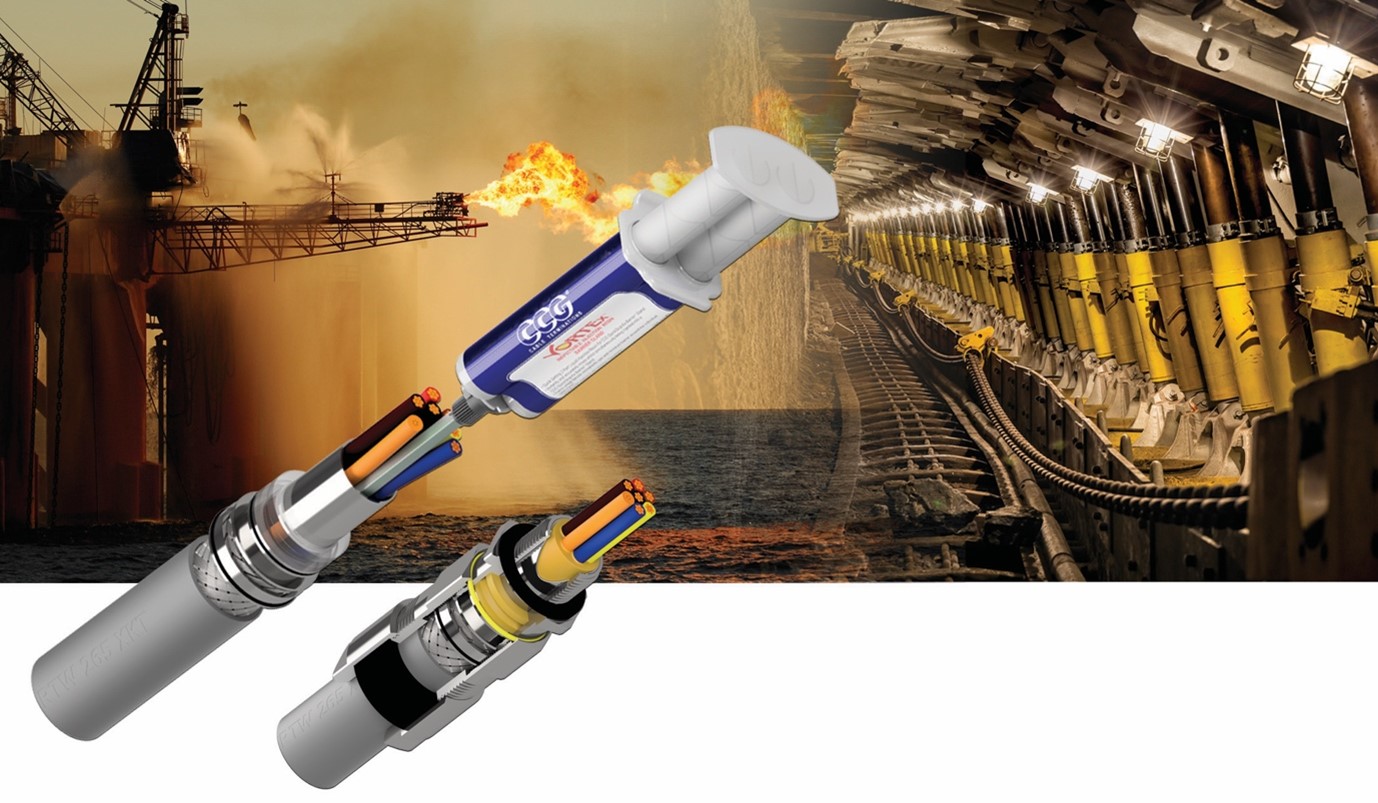
For nearly 50 years CCG’s Ex certified cable glands have been recognized globally by electrical engineers for the Built-in SafetyTM features of the Captive Component Gland® design.
Having major safety advantages over other makes of glands which have loose components, CCG’ Ex certified glands have their critical seals, single orientation armour clamping cones and cone rings (for SWA and braid cables) held captive within the gland. This Built-in SafetyTM design means that these components do not need to be individually assembled when the gland is installed and therefore cannot get lost or wrongly fitted. This equates to an extremely easy safe and speedy installation process.
Building on this already solid international reputation for innovation, in 2013 CCG revolutionized the international cable gland market with the introduction of the award-winning QUICKSTOP-Ex® Injection Resin flameproof barrier gland.
Recognizing that explosive gasses or liquids can migrate down the interstices of cables in hazardous areas thus bypassing traditional cable gland inner seals, the IEC 60079-14 installation standards require that barrier glands be fitted on Ex d (flameproof), Ex nR (restricted breathing) and Exp (pressurized) equipment, and on cables which run from hazardous areas to non-hazardous areas.
A barrier gland is designed to fill all the interstices and gaps and seal around the individual cable conductors within the cable inner bedding, thus giving a 100% barrier seal against explosive gasses and liquid migration down the cable. Traditional inner rubber compression/tapered seals can never achieve this level of sealing.
The IEC 60079-1 standard requires that Ex d glands with rubber type compression / tapered displacement seals withstand a pressure of 30-bar, this test is to simulate an internal explosive pressure generated within a flameproof enclosure. However, these tests are performed on solid steel mandrels and do not take into consideration the real-life properties of cables experienced in the field which are that they have bedding susceptible to creep or cold flow, and are never completely filled, solid or gas-tight. This means that although traditional glands with compression / tapered seals will easily pass the 30-bar pressure test on a steel mandrel they will perform very differently when installed on the multitude of different types of cables found installed in modern hazardous areas plants. Unfilled or multicore cables become mini pipes whereby explosive pressures generated in flameproof enclosures force hot gasses down cables bypassing the traditional gland seals and flame paths. This not only causes damage to the cable but also creates the potential for an external explosion. With onsite temperature fluctuations, explosive gasses or liquids can also migrate down cables from a zoned area into non-zoned areas such as a control room or non-certified equipment. (The infamous SeaGas explosion incident in Australia is a good example of this type of gas migration.)
 |
CAPTION: EXPLOSIVE GAS TRANSMISSION THROUGH UNFILLED CABLE, BYPASSING TRADITIONAL FLAMEPROOF SEALS
Although traditional two-part putty mixed barrier glands have been on the market for many years, these barrier glands took a long time to install as the putty had to be hand-mixed and installed and took a few hours to set. They also had a wide margin of error as it relied on the skill and subjective opinion of the installer to install the gland correctly. With the increased awareness of the updated IEC 60079-14 requirements and the increased mandatory requirement for barrier glands over the traditional “rubber taper/compression seal” type glands, CCG designed a faster easier and safer means of installing barrier glands. The QUICKSTOP-Ex® Injection Resin Barrier Gland uses a two-part quick setting resin which is instantly and accurately mixed and injected into the gland seal pot by means of a double injection tube and a vortex mixing nozzle. Being a liquid, the resin flows around the cable conductors filling all the voids and then bonds in just minutes with a 100 % gas blocking seal quickly achieved.
After a request from one of CCG’s major international oil and gas customers for an inspectable version of the QUICKSTOP-Ex® gland, the 2nd generation VORTEx® Inspectable Injection Resin Barrier Gland® range was launched at the Offshore Europe Expo in 2019. The resin colour was changed to a bright yellow and a clear resin chamber was introduced so that the installer could easily inspect the resin fill.
Despite the Covid-19 economic downturn, CCG has seen tremendous uptake in the VORTEx® range of glands having supplied two major expansions in the Shell and SANTOS coal seam gas fields in Australia, the Sriracha Thai Oil refinery project and the Saudi Aramco Zuluf, Abu Safah, Berri and Safaniya Oil Field development projects.
As international safety standards and specifications change and engineers become more aware of EEHA safety-related issues, Ex d I/II certified VORTEx Injection Resin Barrier Gland® technology is not just a simple game-changer, it is the major technological shift in cable gland design and safety, making flameproof glands with old-style compression / tapered seal technology all but redundant.
 |
Enquiries:
- Tel: + 44(0)1642 430346
- Email: This email address is being protected from spambots. You need JavaScript enabled to view it. / This email address is being protected from spambots. You need JavaScript enabled to view it.
