MIT World: Engineering >>
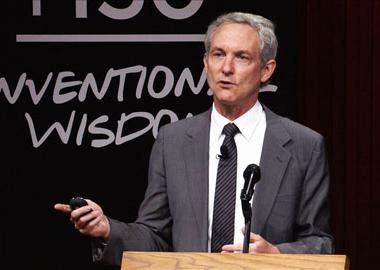 It’s Day 95 in MIT’s 150 days of sesquicentennial celebration, and all thoughts turn to the evolution of computer science and MIT’s pivotal role in that history. As Victor Zue puts it so succinctly, “Computers sure have changed.” They are even invading biology, and President Hockfield (who is also a Professor of Neuroscience) sees this history as another branch in the tradition, initiated by William Barton Rogers, of education bringing the “useful arts” (or as we now say, technology) to bear on the economic development of the United States.
Tom Leighton asserts that “To say computers are transforming everything is an understatement.” Leighton offers a brief lesson in theoretical computer science, defining an algorithm through the example of searching for the prime factors of a given number N, and identifying the key follow-up questions: Can you prove it works? How long does it take? How good is it? Then the big question: Does theoretical computer science matter? Leighton cites some powerful examples of the field’s impact on our lives, from encryption to Google’s page-rank algorithm to the content delivery system of
It’s Day 95 in MIT’s 150 days of sesquicentennial celebration, and all thoughts turn to the evolution of computer science and MIT’s pivotal role in that history. As Victor Zue puts it so succinctly, “Computers sure have changed.” They are even invading biology, and President Hockfield (who is also a Professor of Neuroscience) sees this history as another branch in the tradition, initiated by William Barton Rogers, of education bringing the “useful arts” (or as we now say, technology) to bear on the economic development of the United States. Tom Leighton asserts that “To say computers are transforming everything is an understatement.” Leighton offers a brief lesson in theoretical computer science, defining an algorithm through the example of searching for the prime factors of a given number N, and identifying the key follow-up questions: Can you prove it works? How long does it take? How good is it? Then the big question: Does theoretical computer science matter? Leighton cites some powerful examples of the field’s impact on our lives, from encryption to Google’s page-rank algorithm to the content delivery system of
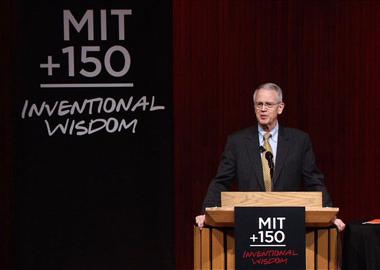 Personal reminiscence and professional observations share the stage in the second panel of this symposium on computation.
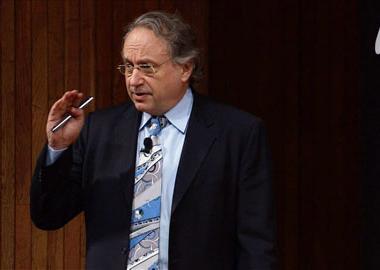 Moore’s law and energy efficiency emerge as themes in these two lectures on past and future progress in microprocessors and robotics.
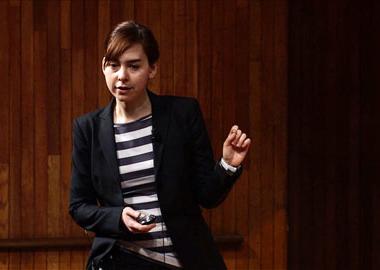 Three “young Turks” of computation science, in the words of moderator John Guttag, discuss recent, and quite varied, research.
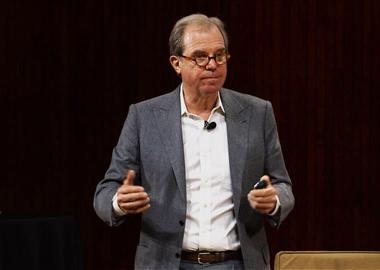 In three presentations that look back to digital-age milestones, and glimpse ahead to what may come next, speakers share some previously undisclosed stories, great enthusiasms, and a few concerns.