
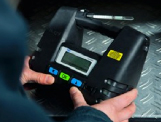
 Draeger Safety UK says its new X-act 5000 is a major step forward in measuring hazardous gases in the oil and gas industry. The new X-act 5000 uses a unique new pump concept, which when used in conjunction with Draeger-Tubes, allows spot-check measuring and sampling of gases – the first ever dual function of its kind.
This is designed to make life easier for oil and gas industry operatives who routinely use gas detector tubes to test for potentially hazardous atmospheres. As well as speeding up the entire gas testing process by up to 20%, the state-of-the-art pump also eliminates operator error by automatically transferring and storing all measurement data, improving personal safety levels and efficiency.
Optimised for a range of offshore scenarios, including confined spaces such as leg-working, tank testing and potentially explosive gas atmospheres, the X-act 5000 is the first line of defence for measuring and detecting gas hazards including including hydrocarbons, hydrogen sulphide, benzene and oxygen depletion.
Kevin Honner, a portable gas detection specialist from Draeger, says: “Early feedback suggests that the new Draeger X-act 5000 is proving popular with our customers in the oil and gas industries, helping to transform the landscape of both short and long-term gas/air measurement and testing.
“This is hardly surprising, not only from a personal and plant safety perspective, but also when considering test efficiency. Our customers are increasingly under pressure to keep to strict project timescales and the X-act 5000 allows them to do exactly that. By eliminating manual intervention and boosting personal safety, the device provides fast and reliable sampling, whilst freeing up time so that operators can concentrate on other tasks.
“We pride ourselves on the fact the Draeger name is synonymous with innovative safety solutions that protect lives, and we are delighted to launch yet another product into the marketplace that does just that.”
 CSA-Sira provides a comprehensive range of courses for those working in potentially explosive atmospheres and the environmental monitoring industry. Training covers: IEC; ATEX 94/9/EC & 137; DSEAR; IEC 61508 Functional Safety; MCERTS Environmental Monitoring (Air & Water); IECEx Certification of Personnel Competence & Competence Professional Schemes.
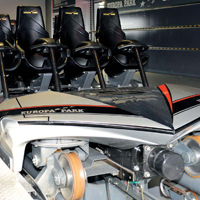 Rollercoasters have come a long way in engineering terms. With their origins in fifteenth century Russia, they are now the stuff of adrenalin junkies worldwide. And the latest generation of these machines have taken performance to another level, creating forces that demand the highest standards of engineering and maintenance. And it is for this reason that one of a new breed of hypercoasters relies on Loctite® engineering adhesives for its threadlocking and retaining needs.
 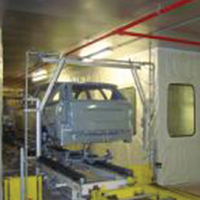 Fraser Anti-Static Techniques and EXIM – TECH (its representative for Slovakia and the Czech republic) have worked together with KIA Motors Slovakia to overcome contamination issues directly caused by static charged particles at the outer entrances of the chassis paint spray lines. Their originally installed system of contaminant removal pre-painting was not performing effectively.
 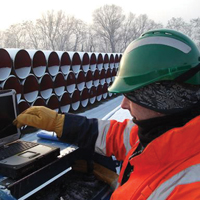 Specialist pipe measurement technology company for the oil and gas industries, Optical Metrology Services (OMS) Ltd, has successfully completed a series of pipe measurement surveys for GRTgaz, France’s largest natural gas operator.
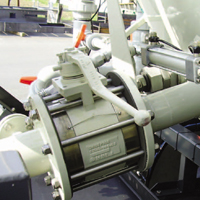 PFA lined pumps and valves fixed to road and rail tankers and wagons are helping to ensure the safety of European roads, railways and waterways as the amount of dangerous liquids being carried increases.
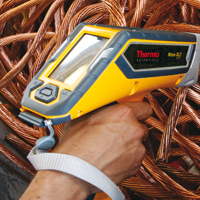 A specialist manufacturer of high quality components for critical industrial applications has employed the latest analytical technology to guarantee the metallic composition of the products it provides. Employing a portable XRF analyser from Ashtead Technology, UK based Wulfrun is able to quickly check the quality of raw materials, work in progress and final products, in order to meet the tight specifications required by the market sectors for which quality is critical.
  Workers often face many hazards in industrial environments; not least those that may cause serious eye injuries.
 With nearly 270 years of experience in the design and manufacture of high performance handling and lifting equipment, the J D Neuhaus company has updated their ‘logo and slogan’ to a design which more closely represents their latest products, including new developments, designed for applications in some of the toughest markets and environments.