
News
The Importance of Baseline Safety Practices to Maximise Gas Detection Systems’ Effectiveness and Protect Workers
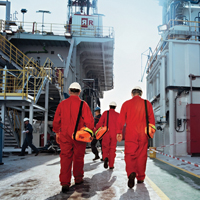
With an increasing number of workers in highly volatile areas, there has never been a more important time for gas detection technologies that safeguard workers from the deadly effects of toxic chemicals such as methane, carbon monoxide among others.
And, luckily, gone are the days of the 19th and early 20th centuries, when coal miners would send canaries (Read More) down to the tunnels to act as an early detection system against life threatening gases.
These days, companies such as Dräger, have worked tirelessly to create a range of intuitive gas detection technologies to protect workers from life-threatening events at the hands of harmful chemicals such as methane and carbon monoxide.
In order to get the most out of these powerful instruments and ensure they are performing to their highest potential and protecting workers, there needs to be a great focus and awareness of the importance of implementing baseline safety practices.
First things first, take the time to determine the most appropriate gas detection system for your worksite.
Now this might sound like common sense and a bit like going back to basics, but whatever gas detection system you require – there are some questions that need to be considered. The following is a good start but not exhaustive.
Advertisement - Hover to see more
Advertisement - Hover to see more
Advertisement - Hover to see more
For example:
- Is it portable or fixed gas detection that is required?
- If it is portable monitoring that you require, what will the team find the easiest-to-wear option to encourage appropriate use?
- What are the environmental conditions that the technology will need to withstand?
- What are the potential worksite hazards? And based on the worksite hazards, what type of sensors will be most effective?
- How much training and of what type is required to bolster the safety potential of the system?
By answering these questions, you will be more prepared and in a better position to establish the correct gas detection system for your business, enabling alignment between the overall company’s needs and the onsite team. This will help you to determine the most appropriate gas detection system to correctly support the safety goals of your worksite.
There are no exceptions – safety must always come first
Gas detection technology is one of the many steps required to prevent life-threatening situations and ensure complete worker safety.
Industries using gas detection equipment rely on these instruments to identify potentially fatal hazards and ultimately save lives. It’s critical this equipment works correctly and that companies implement a strict schedule of testing, calibration and maintenance.
In order to fully maximise the use of gas detection systems and the safety they provide, it is necessary for businesses to ensure that they are used by a team which has received the necessary training and education, and are made aware of the required implementation of the following practices:
Bump Testing:
It is necessary to bump test gas detection systems with a measured concentration of the target gas so that businesses can have total confidence that it works and will successfully alarm workers to gas conditions that can be life threatening.
By carrying out bump testing, businesses can eliminate any concern about the performance of the system’s hardware and software. For maximum safety, the testing should be carried out every day prior to use so that companies and their employees can perform their work safely and confidently.
Calibration:
Calibration is vitally important to ensure the accuracy of the gas detector’s readings as it confirms from the outset that the detectors will provide results that meet or exceed defined criteria.
With sensors possessing a limited lifespan, calibration also helps to determine the condition of the sensor on the gas detector.
Life spans do vary for different gas detectors. For example, the projected life span for catalytic bead combustible sensors is 3 to 5 years; oxygen sensors’ is 2.5 to 5 years; infrared gas sensors is 5 to 10 years and electrochemical toxic gas sensors is 1 to 4 years.
Regular Review of Data:
Regular review of the data that gas monitors are equipped to provide, such as where, when, and in what conditions they were used, is a good and helpful exercise to carry out. By reviewing the data, employers will be able to monitor and make adjustments to current processes and procedures that contribute to greater productivity and worker safety.
There are also additional steps, in addition to the day-to-day testing, that companies can take to further enhance their workers’ safety. Providing ongoing education and training to employees is a good start because after all, a gas detection system is only as effective as the people who are responsible for using it. By ensuring an educated and trained workforce, a life threatening event will be less likely to happen, and will ultimately improve productivity and as a result the bottom line.
Employers should consider training in the following areas to maximise the safety and productivity of their workforce: hazardous gases present onsite; calibration and maintenance; limitations of gas detection equipment and sensor technology; and hands-on operation and instrument review. Taking these extra measures, could mean the difference between life and death.
About the author, Kevin Honner
Kevin Honner is one of Dräger’s specialists in Portable Gas Detection with many years’ experience in gas measuring instrumentation, both in industrial gas analysis and for the last twenty years in gas detection. He has spent over four years with Dräger working with a range of gas detection products. He holds a Chemistry Degree from the University of Oxford.
Draeger UK
Tel: +44 (0)1670 561 322 | This email address is being protected from spambots. You need JavaScript enabled to view it.
www.draeger.com | http://www.draegershop.co.uk
