
News
Is your equipment certified to the correct level for its use?
Carrying out inspections with testing equipment certified to a suitable protection level is crucial to ensuring the testing operation does not jeopardise the safety of hazardous environments. This article explains the key details to understand in regard to the correct equipment to use, and where.
Zones & Division
Under ATEX, IECEx and UKEX (to name but a few) Hazardous Areas that contain explosive gasses, must be identified and categorised into a Zone according to the severity of risk.
- Zone 0 for locations where the risk of explosion is permanent
- Zone 1 when the risk is likely to occur
- Zone 2 when the risk may occasionally occur
In North America, a two Division system is used,
- Division 1 = Zone 0 or Zone 1
- Division 2 = Zone 2
Equipment
All equipment taken into and used in these hazardous areas must be certified to a suitable equipment protection level (EPL) for that Zone. For example,
- Zone 0 requires the highest level of protection - “Ga”
- Zone 2 requires a lower level of protection - “Gc”
This equipment must be designed such that it cannot generate conditions that could ignite the explosive atmosphere, for example, by a spark or a hot surface.
Finally, this equipment must be inspected, tested, and certified safe by a notified body, and the equipment manufacturer must commit to regular audits to ensure product is being built to the certified design. Then the equipment may be marked with a ‘Ex’ Marking label showing its group, protection level and protection concept used.
Protection Concepts
Depending on the type of equipment there are various Protection Concepts used to design a product and obtain an ‘Ex’ certification.
Intrinsically Safe
For equipment that contains electronic components including batteries, the intrinsically safe protection concept ensures that under both normal use and with applied fault conditions, no arc or spark can be generated, and no component can heat up enough to cause an explosion.
Some intrinsically safe design criteria,
- The output energy at the terminals is limited so a spark cannot ignite an explosive atmosphere.
- The equipment must be anti-static and not be able to hold a static electricity charge.
- Voltages must be electrically ‘clamped’ to safe levels.
- The use of redundant safety components.
- If a battery or component fails, it should not produce high temperatures that could be incendiary.
In both IECEx, ATEX and North American systems, intrinsically safe equipment can be used in any Zone or Division with the correct equipment protection level.
Explosion-proof or Flame-proof
Explosion-proof is generally a North American term, but it has the same meaning as flame-proof as used by IECEx and ATEX.
This protection concept assumes that the surrounding explosive atmosphere can enter into the equipment enclosure and internal explosions are likely. The equipment enclosures are constructed in such a way that an internal ignition of a flammable atmosphere cannot get outside of the enclosure, thus preventing the ignition of surrounding flammables gasses. The enclosure effectively quenches the flame.
Under the IECEx and ATEX systems, flame-proof equipment cannot be used in Zone 0 areas, regardless of equipment protection level.
In North America, explosion-proof equipment may be used in both Division 1 and Division 2 areas with the correct equipment protection level.
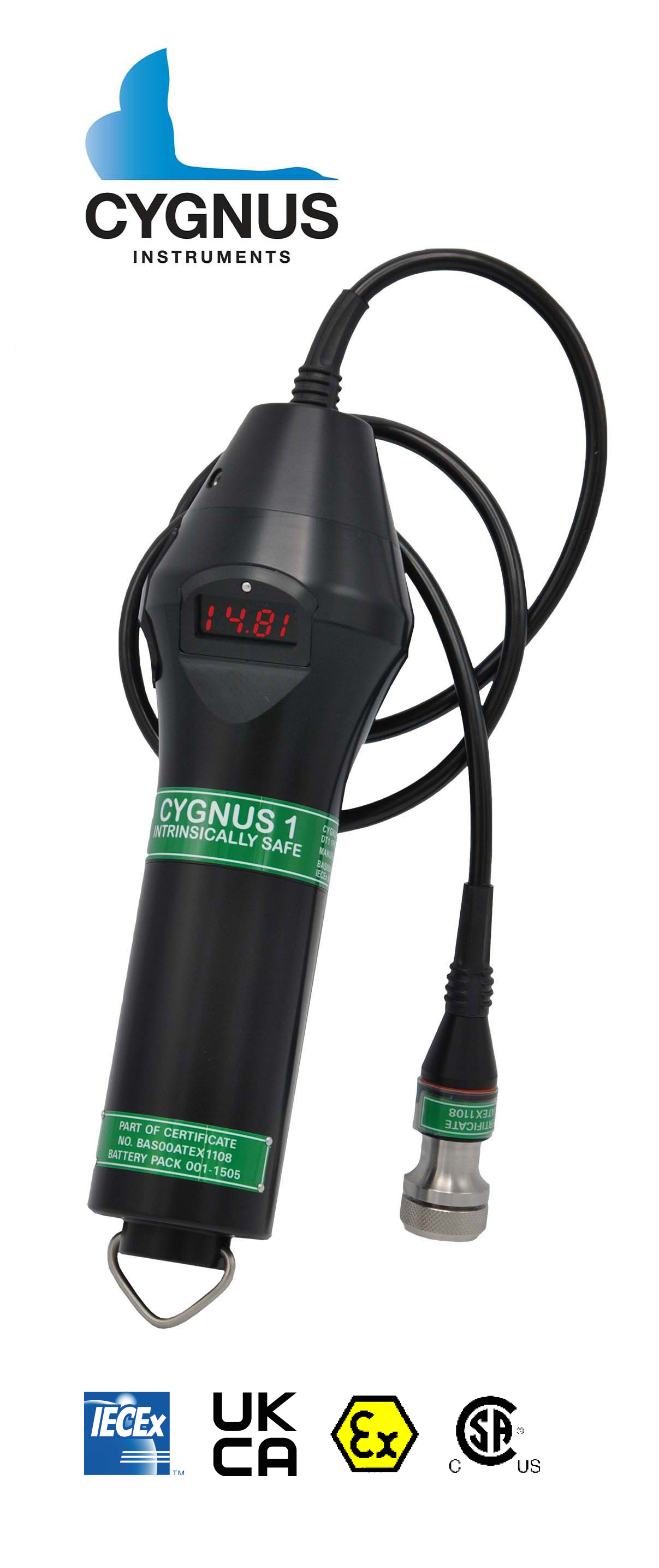
Cygnus 1 Intrinsically Safe Ultrasonic Thickness Gauge
Cygnus 1 Intrinsically Safe ultrasonic thickness gauge is the only one of its kind in the world certified to Zone 0 for ATEX, IECEx and UKEx, and Class 1, Division 1 for CSA-US - specifically designed for measuring metal thickness to determine wastage or corrosion in Zone 0, Zone 1 hazardous and potentially explosive environments. This heavy-duty unit boasts an extremely rugged, dust-tight and splash-proof construction with IP65 rating. It is supplied ready to use and comes with two rechargeable battery packs, offering up to 12 hours continuous operation. NO plant shutdown or hot work permit is required.
Like all Cygnus gauges, Cygnus 1 employs the Multiple-Echo technique to read through coatings - giving accurate remaining metal thickness; and guaranteeing crucial savings in time and money as it eliminates the need to remove and re-apply coating. What’s more, it avoids the risk of exposing the material under test to further corrosion.
For more information visit www.cygnus-instruments.com, call +44 (0) 1305 265533 or email This email address is being protected from spambots. You need JavaScript enabled to view it.. Quote HES2022 for 10% off a gauge.
