
News
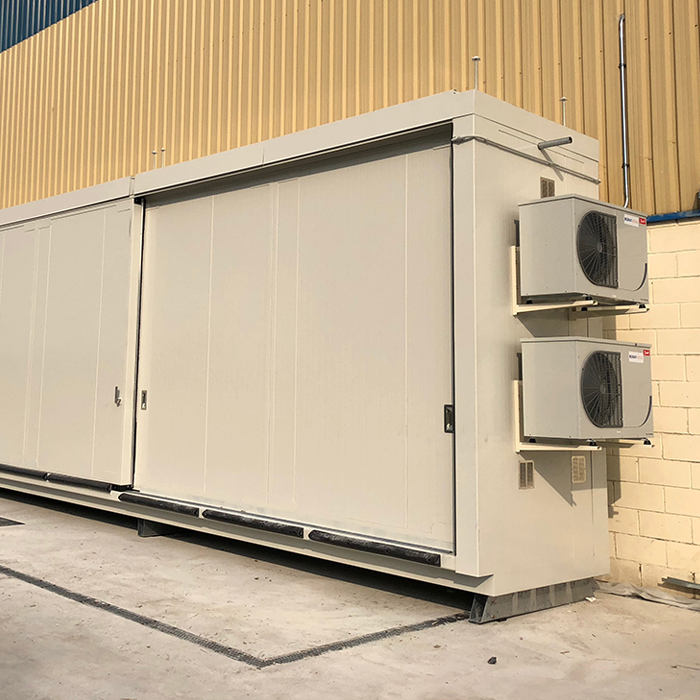
Insulated and temperature controlled storage for chemicals
When the liquids you are storing and using are sensitive and would be adversely affected by fluctuations in temperature it’s important that the location where they are stored is a controlled environment. This can be achieved with the use of insulated, and where appropriate, temperature controlled fully bunded stores, which can also be supported by individual heated “jackets” which provide temperature control when the drum or IBC is being taken to the production area. A good example of a product group that requires to be within a specified temperature range before it can be used are resins; which by their very nature are viscous and can harden and become unusable it the temperature range is not maintained.
Volatile chemicals sometimes have a low auto ignition temperature which means they will automatically ignite at a certain temperature. Any chemical, whether liquid, solid or gas, that ignites spontaneously at a temperature of 54.4˚C or below is defined as pyrophoric (ignites spontaneously on contact with air). Oxidisers including oxygen, nitric acid, hydrogen peroxide and sodium nitrate also require precise temperature monitoring due to their pyrophoric nature.
The temperature range information required for each product will of course be detailed in the SDS (Safety Data Sheet) but it’s also worth taking the time to consult with the manufacturer to ensure you have crossed the T’s and dotted the I’s. Apart from ensuring your valuable product is in the optimum condition for use, controlling the temperature stops the product from becoming volatile and potentially dangerous. In the case of a product that’s temperature drops below its freezing point; it will expand and potentially cause the container to rupture and spill its contents.
With the use of modern, certified insulated panels it is much easier to create an environment that is specific to your individual requirements and this can include making the storage unit fire rated.
In simple terms you need a bunded storage unit that will maintain a stable environment whatever the requirements of the chemicals being stored; whether it needs to be: cold, cool, warm or hot; without being affected by the ambient temperature. Where there is a requirement for electrics to be used to maintain the temperature and or provide lighting and you are storing flammable or combustible materials; the electrics will need to be intrinsically safe (of non-sparking design) and zoned accordingly.
Flammable liquids are classed as: Extremely flammable Liquids which have a flashpoint lower than 0°C and a boiling point (or, in the case of a boiling range, the initial boiling point) lower than or equal to 35°C.
Highly flammable Liquids which have a flashpoint below 21°C but are not extremely flammable are classified as highly flammable.
Flammable Liquids which have a flashpoint equal to or greater than 21°C and less than or equal to 55°C and which support combustion when tested in the prescribed manner at 55°C.
Note: Flash point is the lowest temperature at which a liquid can form an ignitable mixture in air near the surface of the liquid. The lower the flash point, the easier it is to ignite the material.
The auto ignition temperature of a substance is the temperature at or above which a material will spontaneously ignite (catch fire) without an external spark or flame.
Please remember to consult with your insurance provider and local authority fire brigade on matters such as the location of the storage unit as they will have valuable insight that could save you time and money going forward. Also you might want to consider the services of an outside company to assess/review your site; as an outside pair of eyes will often see things that have become commonplace to you.
Empteezy is an ISO 9001, ISO 14001 & ISO 45001 accredited company with more than 35 years’ experience of manufacturing spill containment and spill response products and we are happy to offer a free of charge and without onus site assessment to anyone responding to this article quoting INS2020.
