
News
Hot Work In Explosive Atmospheres
 Hot Work In Explosive Atmospheres
Ineffective management of combustible materials in a high risk environment presents numerous health and safety risks with significant consequences.
Using ‘hot’ tools to carry out cutting, soldering or welding in a hazardous area increases the risk of fire, or even worse, an explosion. One of the many causes of explosive atmospheres is the presence of flammable gases. In large enough quantities, flammable gases mixed with air and the presence of an (Read More)
ignition source have the potential to result in catastrophic consequences.
Fires and explosions remain an overly common occurrence in any industry where flammable gases, vapours, mists or combustible dusts are present. The plethora of risks present in these environments makes the success of completing hot work, whilst also attempting to control and manage risks, very challenging. Preventing the release of dangerous substances, which can create explosive atmospheres is of course the preferable method of controlling the risks associated with working in explosive conditions. Preventing sources of ignition is another widely used way of reducing the risk. In certain industries and sectors this is not always possible. In the oil and gas industry, the presence of numerous combustible materials and gases means the risks are amplified ten-fold. Using the correct equipment can assist efforts to make hot work safer, greatly.
In order to effectively mitigate the risks associated with carrying out work in explosive environments, employers are required to follow a range of directives and regulations which have been put in place to ensure safety and welfare is paramount at all times. When it is apparent that a working environment is considered to be an explosive atmosphere, that area must be assessed on its likelihood and persistence and zoned accordingly. Areas which have been zoned should then be protected from ignition sources by selecting equipment and protective systems which meet the requirements of the relevant ATEX product regulations.
It is important to understand that whilst there is a need for significant cost saving within the oil and gas industry, safety should never be compromised. As many believe the only option to carrying out inherently risky hot work in a zoned area is by conducting any routine maintenance works in costly full or partial shutdowns it is avoided altogether, therefore making working environments unsafe. Pressure to meet deadlines and keep cost efficiencies at a maximum is resulting on less focus on necessary safety measures. Many people do not fully understand just how dangerous conducting hot work in zoned areas can be and are therefore willing to take risks as the consequences are not fully appreciated. In 2012, an incident at the Houston-based Black Elk Energy’s West Delta 32 production platform resulted in a major fire at the facility. It was suggested that the use of a cutting torch ignited flammable vapors which created an explosion in connected oil tanks, resulting in the death of one worker and causing several others to be critically injured.
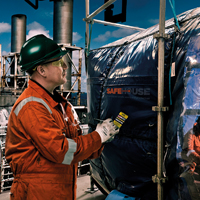
15 years ago Safehouse drew on specialist knowledge of the oil and gas industry to create the world’s first fully accredited and certified pressurised flexible enclosures to provide a safe environment for hot work in potentially flammable hazardous areas. Habitats are pressurised modular flexible enclosures with integral monitoring and control systems which are constructed on site to create a safe working environment for personnel to conduct maintenance work, including hot work. Habitats achieve the creation of a safer and better working environment through containment, pressurisation, modular construction, air extraction and temperature control. Although initially developed for use in oil and gas industry, the habitat can be applied to any industry or sector where the creation of a safe area within an otherwise hazardous working environment can be beneficial.
The habitat concept was initially created to effectively manage the risks associated with hot work offshore, ensuring safety levels are maintained at all times. Through the development of innovative solutions, there is the opportunity to protect personnel and reduce the impact hot work has on productivity. Now more than ever, pressurised habitats remain the safest and most cost effective way of effectively managing the risks associated with explosive atmospheres by utilising ATEX equipment and working within the recommended guidelines.
Safehouse Habitats (Scotland) Ltd
T +44 (0)1382 814122
http://www.safehousegroup.com
