
News
Don’t Confuse Climbing Helmets with Industrial Helmets for Working at Height warns JSP
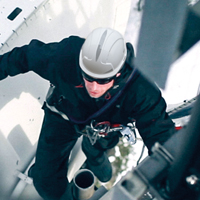 Don’t Confuse Climbing Helmets with Industrial Helmets for Working at Height warns JSP
Climbing helmets designed for leisure activities are increasingly being used on construction sites, especially where scaffolding is present.
But, cautions JSP, climbing helmets that only conform to climbing helmet standard EN12492 and not also to industrial safety standards EN397 or EN14052 may not perform adequately as industrial helmets, posing serious risks to workers that they may not be aware of. (Read More)
Matthew Judson, JSP’s Technical Director, explains: “Many workers and health and safety officers mistakenly think that climbing helmets are suitable for wear on scaffolding, because if the helmets are hit by a falling object they are held on the head by the chinstrap. However, wearing these helmets can be dangerous. The chinstrap on industrial safety helmets is designed to break and the helmet to come off if the person should fall and become caught up by the helmet, causing less harm to the worker.”
Advertisement - Hover to see more
JSP’s EVOLite® Skyworker™ industrial safety helmet is certified to climbing helmet standard EN12492 as well as to EN397. JSP has added features, including side impact protection, to its renowned EVOLite® helmet so that it also performs to the climbing helmet standard and can be used for both purposes.
There are three basic differences between climbing helmets and industrial safety helmets:
The amount of the load passed to the wearer’s neck used in testing. When a 5kg flat striker is dropped from two metres onto the top of a climbing helmet, the force through the neck must not exceed 10 kilo Newtons (kN); a 5kg hemispherical striker dropped from two metres onto a high performance industrial helmet is only allowed a maximum load of 5 kN. So, permanent or serious injuries to the neck are more likely with a climbing helmet.
Industrial safety helmets have deliberately breakable chinstraps to avoid strangulation.
Climbing helmets are allowed larger ventilation holes, which could be penetrated by falling objects, such as a piece of metal, chisel or screwdriver.
Matthew adds: “JSP advises people to determine what the risk is, assess it, and then choose the right product for the right risk environment. It is all about understanding the differences between leisure and industrial safety helmets and choosing a product, such as JSP’s Skyworker™, that will be safe for use in the workplace as well as for climbing. Workers have a right to expect to be protected at work, and not go home with serious injuries that would be avoidable with the correct helmet.”
More information is available from:
www.jsp.co.uk
by emailing This email address is being protected from spambots. You need JavaScript enabled to view it.
or calling +44 (0)1993 826050
